Współpraca
SZTUKA
Piękno i dobre samopoczucie
RZEMIOSŁO
KULTURA I HISTORIA
ROZRYWKA
ŚRODOWISKO
JEDZENIE I NAPOJE
INŻYNIERIA ODWROTNA
NAUKI
LEKKOATLETYKA
TECHNOLOGIA
URZĄDZENIA DO NOSZENIA
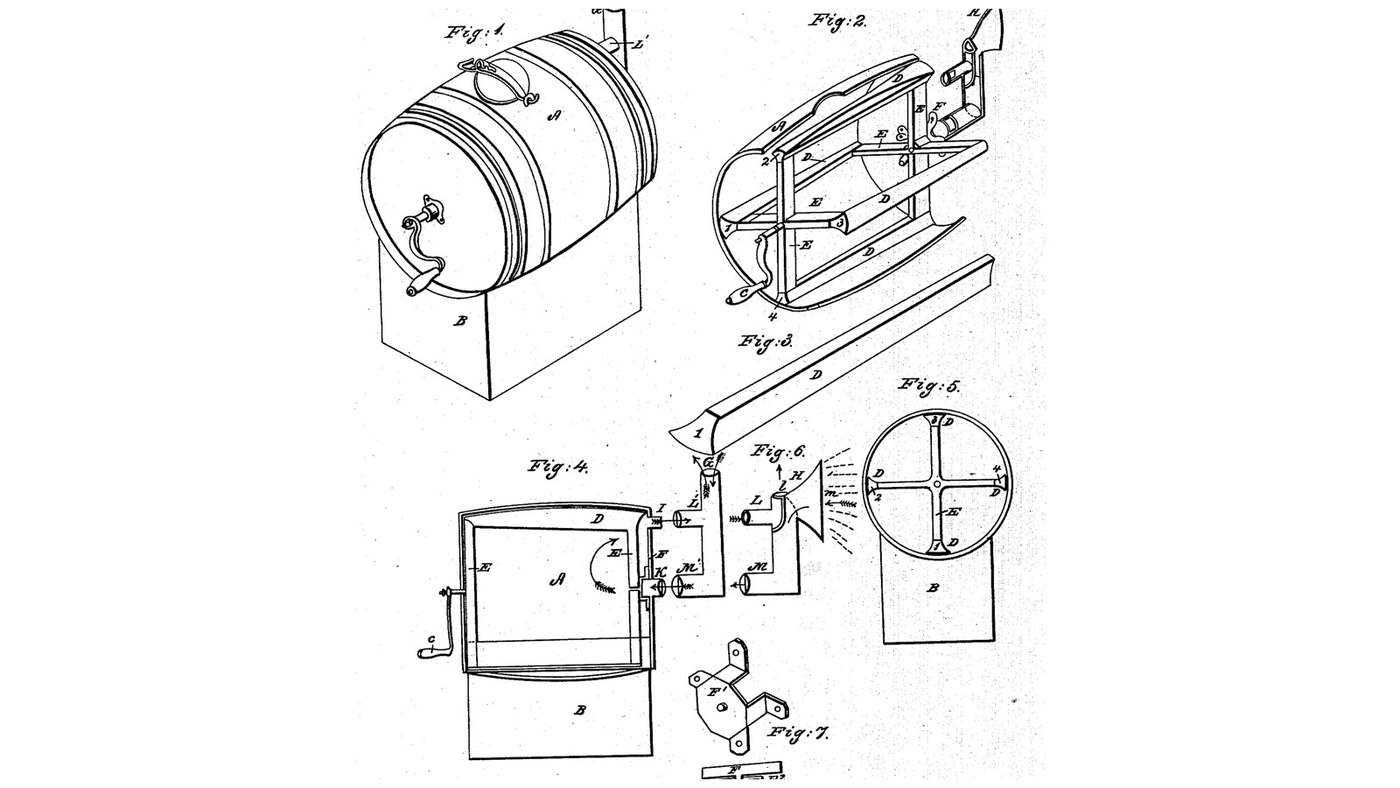

Atmospheric Barrel Churn: Reversed Concave Dashers Close to the Staves, Fresh or Warmed Air Piped to the Middle
Henry Rohrer of Strasburg township, Pennsylvania, received US 26,377, dated 6 December 1859, for improvements to the common barrel churn, which he named the "Champion atmospheric churn". Four concave, tapering dashers run close to the staves with their wide and narrow ends alternating, so they rub as well as beat. Two tubes through the rear head let fresh air into the middle and steam and musty air out; in winter a funnel-mouthed pipe set near a hot stove brings warm air instead.
The patent gives no sizes; every size here is ours.
Średniozaawansowany
About 2 days, plus printing
Instrukcje
1
1
Rohrer's temperatures, and the dashers' sweep
Rohrer's temperatures, and the dashers' sweep
Wczytywanie notatnika Jupyter…
2
2
Air into the cream, three weeks before
Air into the cream, three weeks before
Clow pumped air in at the bottom. Rohrer lets it in by pipes alone, warmed from the stove when needed.
3
3
Read US 26,377
Read US 26,377
"The concaved, tapering sides of the dashers with the wide end of the one followed by the narrow end of the other in its revolutions, produces side eddies as well as being beaten and partially retained by the concaved side; thus a thorough mixing is produced, while a constant supply of fresh air is admitted through the pipe G to the center of the churn"
4
4
Print the step F
Print the step F
A raised open step 80 x 80 mm and 55 mm deep, open at the sides, with a 17 mm socket for the rear pivot. PETG, 0.2 mm layers, 40 % infill, 4 walls.
5
5
Barrel A, base B and hatch
Barrel A, base B and hatch
Use a wooden barrel about 450 mm long inside, 320 mm across at the heads. Cut a 120 mm hatch in the bilge with a hardwood lid. Bore the front head 17 mm in its centre for the shaft. Bore the rear head 21 mm in its centre for tube K and 21 mm 120 mm above it for tube I. Make a cradle of two shaped hardwood saddles on a base board so the barrel lies level. Fill the barrel with water overnight so it swells tight, then empty it.
Materiały do tego kroku:
 Beczka drewniana1 sztuka
 Deska z drewna liściastego2 sztuk
 Klej do drewna1 sztuka
 Wkręty do drewna12 sztuk
Potrzebne narzędzia:
 Wyrzynarka
 Kompas
 Wiertarko-wkrętarka akumulatorowa
 Zestaw wierteł łopatkowych
 Pilarka stołowa
 Ścisk stolarski listwowy
 Miara zwijana
 Woda
6
6
Dashers D and crosses E
Dashers D and crosses E
Shave four hardwood dashers 400 mm long, tapering from 70 to 35 mm wide, with a 20 mm deep concave face on the inner side and the outer edge left straight. Make two crosses of hardwood 15 x 24 mm, 290 mm across, and screw the dashers to their ends, outer edges 150 mm from the centre, the wide ends alternately at the front and the rear. Fix the front cross on a 16 mm stainless shaft through the front head with a crank C outside, and a 16 mm pivot on the rear cross's centre.
Materiały do tego kroku:
Deska z drewna liściastego2 sztukWkręty do drewna16 sztuk Pręt ze stali nierdzewnej1 sztuka
 Shaft Collar2 sztuk
 Kołki z twardego drewna1 sztukaKlej do drewna1 sztuka
Potrzebne narzędzia:
 Strug kabłąkowyPilarka stołowaWiertarko-wkrętarka akumulatorowa
 Zestaw wierteł
 Piła do metalu
 Pilniki (pilnik ręczny)
 Zestaw wkrętaków
 Papier ściernyMiara zwijana
7
7
Step F, tubes I and K, pipes G and H
Step F, tubes I and K, pipes G and H
Screw the printed step over the rear head's centre hole, its socket on the axis. Seal two 20 mm stainless tubes, 70 mm long, through the rear head: K in the centre under the step, I above it. Make the atmospheric pipe G: an upright stainless tube open at its top, joined to I and K by short tubes and elbows. For winter make pipe H: a stainless funnel, mouth m, on a tube to K, with a tee on the tube from I open as the vent l; set the funnel near a warm stove, never on it, and use silicone tube for the joints.
Materiały do tego kroku:
 Rura ze stali nierdzewnej2 sztuk
 Wężyk silikonowy1 sztuka
 Lejek ze stali nierdzewnej1 sztuka
 Uszczelniacz silikonowy1 sztukaWkręty do drewna4 sztuk
 Filament PETG1 sztuka
Potrzebne narzędzia:
 Drukarka 3D z filamentem (FDM)Piła do metaluPilniki (pilnik ręczny)
 Palnik propanowy
 Imadło warsztatowe
 Rękawice żaroodporneZestaw wkrętaków
8
8
The build in 3D
The build in 3D
FreeCAD model of this build, the barrel, heads and cradle cut through the middle: the four alternately reversed dashers on their two crosses, the shaft and crank, the step F on the rear head over tube K, tube I, and the atmospheric pipe G outside. The frame was turned through a quarter turn.
9
9
Churn
Churn
Fill the barrel about half full with heavy cream, about 15 litres. Bring it to 15-18 °C, checked with the thermometer; in winter put pipe H on with its funnel near the warm stove, otherwise pipe G. Close the hatch and turn the crank steadily, timing it. When the butter comes, open the hatch, take out the butter, drain the buttermilk, wash the butter in cold water until it runs clear, salt and weigh it.
Materiały do tego kroku:
 Śmietanka kremówka15 l
 Sól morska gruboziarnista1 sztukaWoda1 sztuka
Potrzebne narzędzia:
 Termometr z sondą pozostawianą w potrawie
 Stoper
 Cyfrowa waga kuchenna
 Duża misa ze stali nierdzewnej
10
10
Troubleshooting
Troubleshooting
Atmospheric barrel churn troubleshooting.
Flow
Loading...
11
11
History and honest limits
History and honest limits
**Henry Rohrer** of Strasburg township, Lancaster County, Pennsylvania, US 26,377, 6 December 1859, "Churn". He knew of other ways of bringing air to cream, and claimed the tubes I, K in the rear head with the pipes G and H, mouth m, partition l and tubes L, M, with the dashers D on an open step F. He says he "tested in my own buttery to my entire satisfaction". The patent gives no sizes; every size here is ours. His temperatures, 60 to 65 °F, are 15.6 to 18.3 °C.
Materiały
15- 1 sztukaZastępnik
- 2 sztukZastępnik
- 2 sztukZastępnik
- 32 sztukZastępnik
- 1 sztukaZastępnik
- 2 sztukZastępnik
- 1 sztukaZastępnik
- 2 sztukZastępnik
- 1 sztukaZastępnik
- 1 sztukaZastępnik
- 1 sztukaZastępnik
- 1 sztukaZastępnik
- Zastępnik
- 1 sztukaZastępnik
- 1 sztukaZastępnik
Wymagane narzędzia
22- 1 vendor sell this, none ship to you yetZastępnik
- Zastępnik
- 1 vendor sell this, none ship to you yetZastępnik
- Zastępnik
- 1 vendor sell this, none ship to you yetZastępnik
- Zastępnik
- 1 vendor sell this, none ship to you yetZastępnik
- Zastępnik
- Zastępnik
- Zastępnik
- Zastępnik
- Zastępnik
- Zastępnik
- Zastępnik
- Zastępnik
- Zastępnik
- Zastępnik
- Zastępnik
- Zastępnik
- Zastępnik
- Zastępnik
Pliki projektowe
2Według tego planu powstaje

Powiązane blueprinty
Te blueprinty dzielą się wiedzą — technikami, materiałami lub zasadami
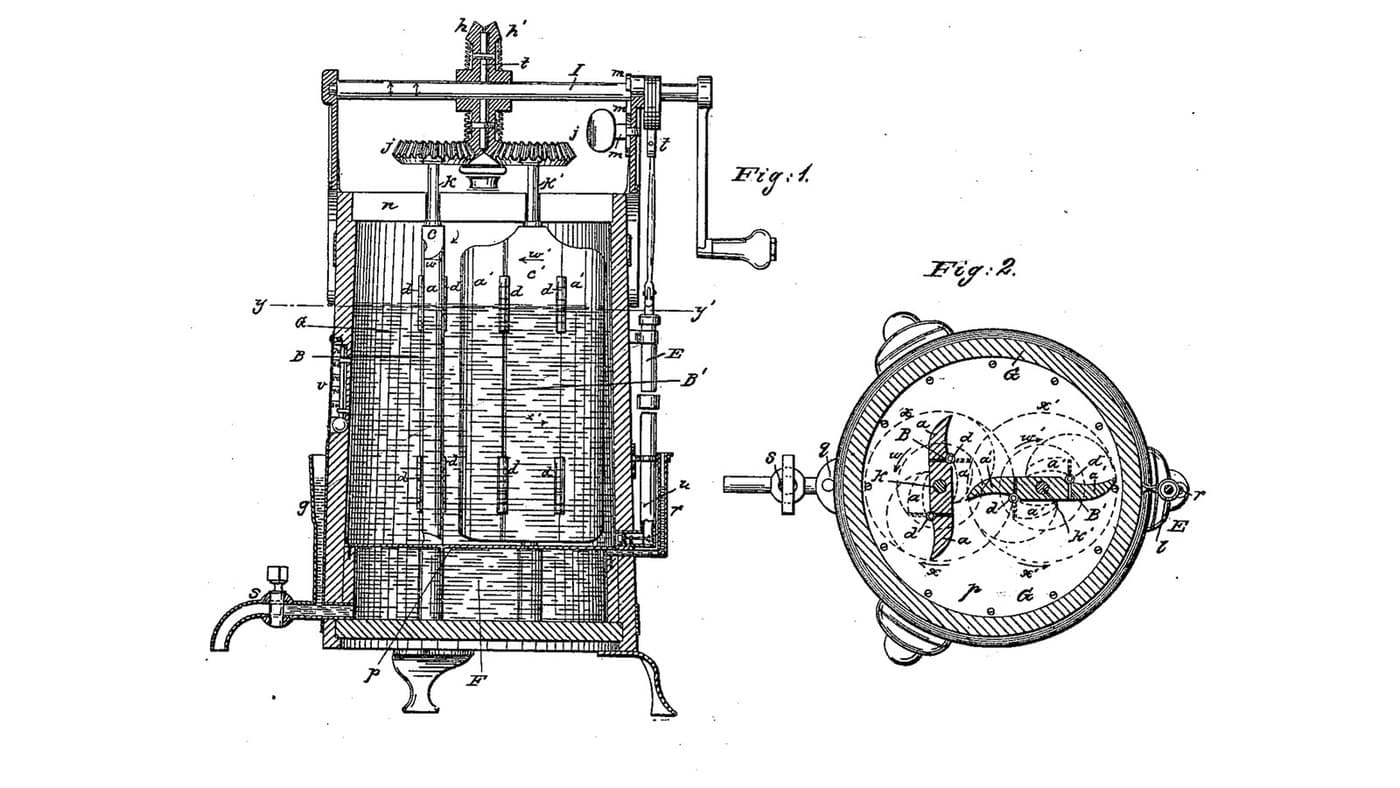
Contrary Hinged-Dasher Air-Pump Churn: Two Crossing Dashers Fold to Gather, a Pump Blows Air Through the Cream
autor: Buttercup
JEDZENIE I NAPOJE
4
0
0
0
0
0
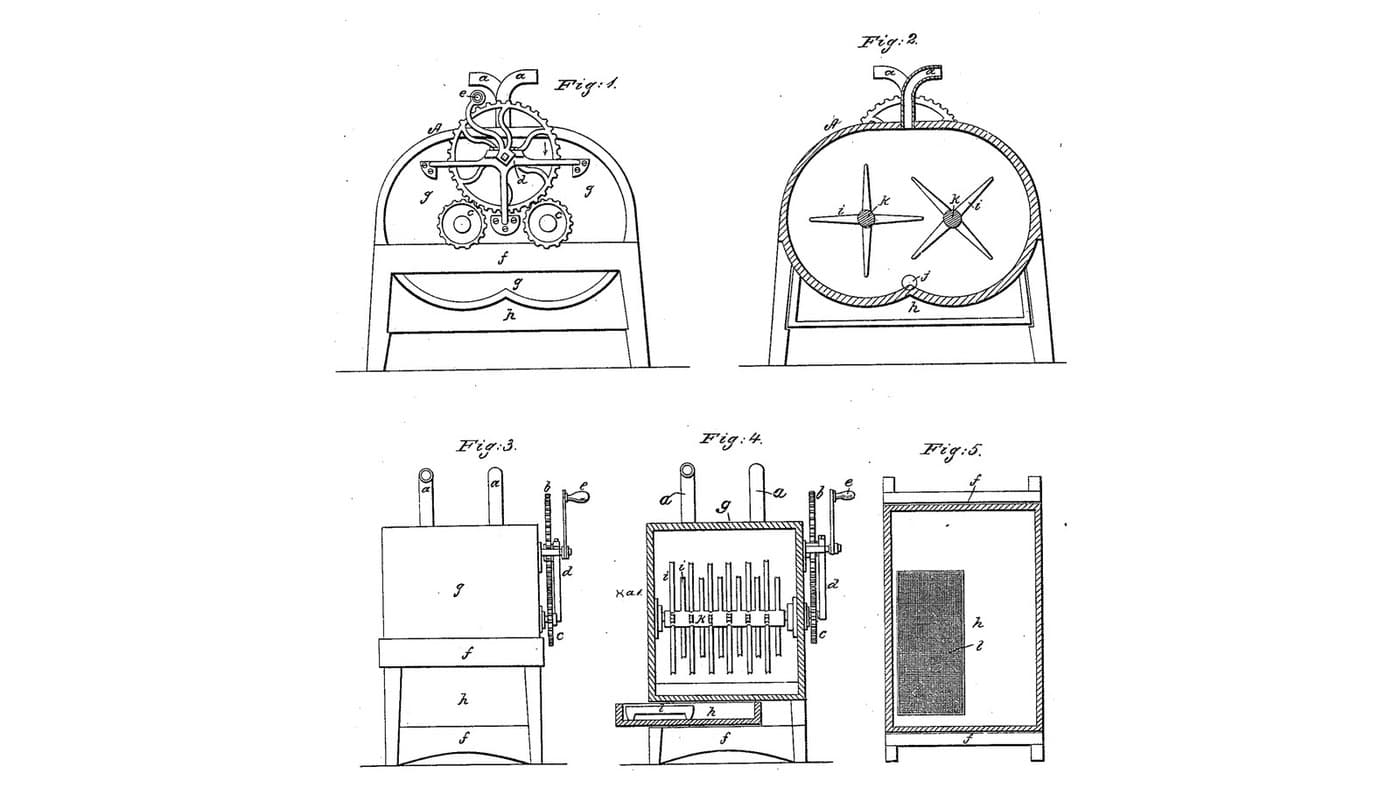
Double Rotary Crag Churn: Two Shafts of Four-Edged Arms Turn Through Each Other in Twin Half-Cylinders
autor: Buttercup
Obróbka drewna
11
0
0
0
0
0

Churning Butter from Cream — The 5,000-Year-Old Fat Separation
autor: TheChef
RZEMIOSŁO
63
0
0
0
0
0
CC0 Domena publiczna
Ten plan jest udostępniany na licencji CC0. Możesz go swobodnie kopiować, modyfikować, rozpowszechniać i wykorzystywać do dowolnych celów, bez konieczności uzyskiwania zgody.
Wesprzyj Makera kupując produkty przez jego plan, za co zarabia Prowizja Makera ustalony przez sprzedawców, lub stwórz nową iterację tego planu i dołącz go jako połączenie w swoim własnym planie, aby dzielić się przychodami.