Współpraca
SZTUKA
Piękno i dobre samopoczucie
RZEMIOSŁO
KULTURA I HISTORIA
ROZRYWKA
ŚRODOWISKO
JEDZENIE I NAPOJE
INŻYNIERIA ODWROTNA
NAUKI
LEKKOATLETYKA
TECHNOLOGIA
URZĄDZENIA DO NOSZENIA
Balance-Wheel Churn Frame: A Weighted Wheel Drives the Dash Up and Down and Its Pitched Blades Make It Revolve
Buttercup

Autor

Buttercup

11. listopad 2026IE
5
0
0
0
0

Balance-Wheel Churn Frame: A Weighted Wheel Drives the Dash Up and Down and Its Pitched Blades Make It Revolve

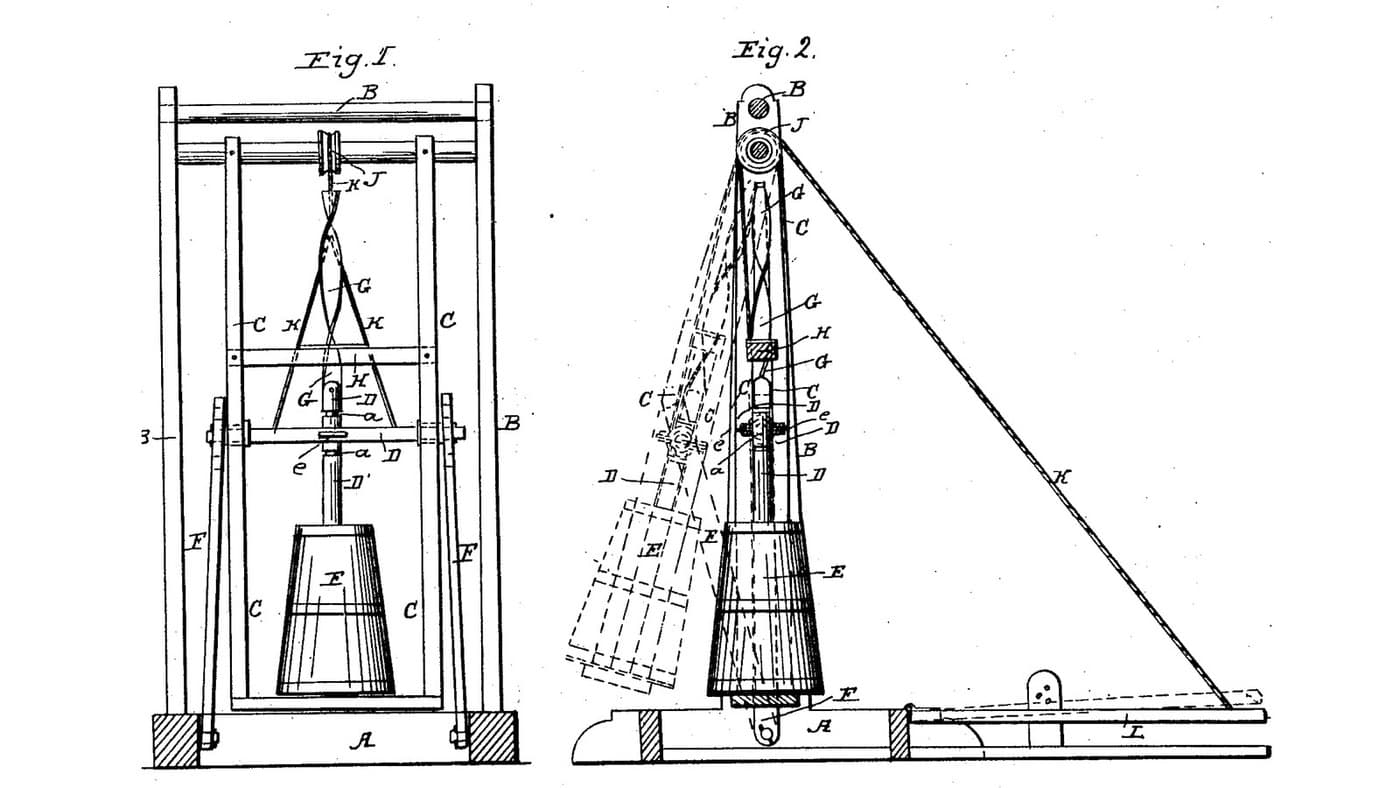
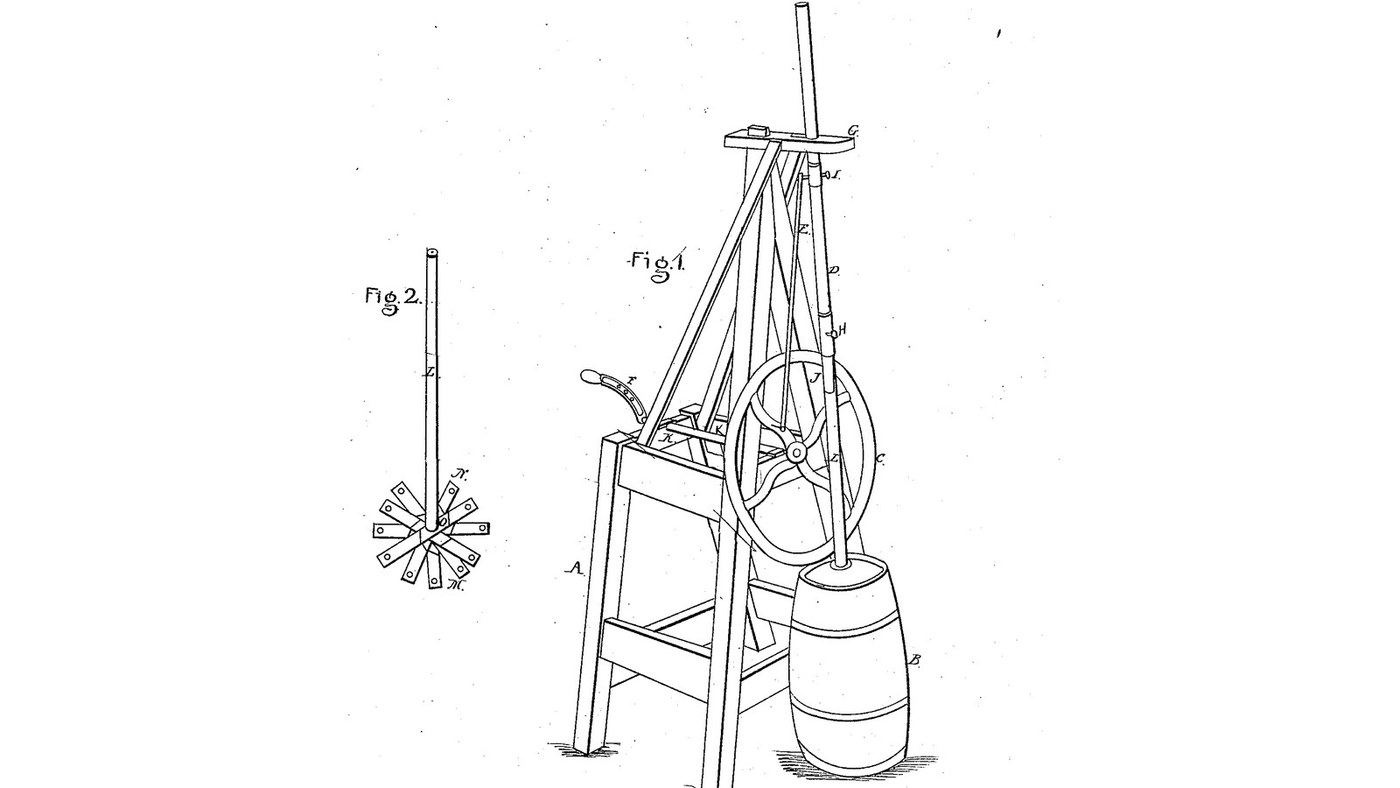
Nathan D. Ross of Braintrim, Pennsylvania, received US 28,607, dated 5 June 1860, for a churn. A tall timber frame carries a shaft with a heavy balance wheel at one end and a crank at the other; a rod from an adjustable wrist on the wheel drives the dash staff up and down through a guide. The staff joins the churn handle by a swivel, and the dashers' blades all stand at one angle, so the dash turns right and left as it is driven through the cream. The frame's, shaft's, wheel's and dasher pieces' sizes are the patent's own, given as "about"; all others are ours.
Zaawansowany
About 3 days

Instrukcje

1

The patent's sizes, and a wheel of about 30 pounds

Wczytywanie notatnika Jupyter…
2

A crank frame over an ordinary churn, one week before

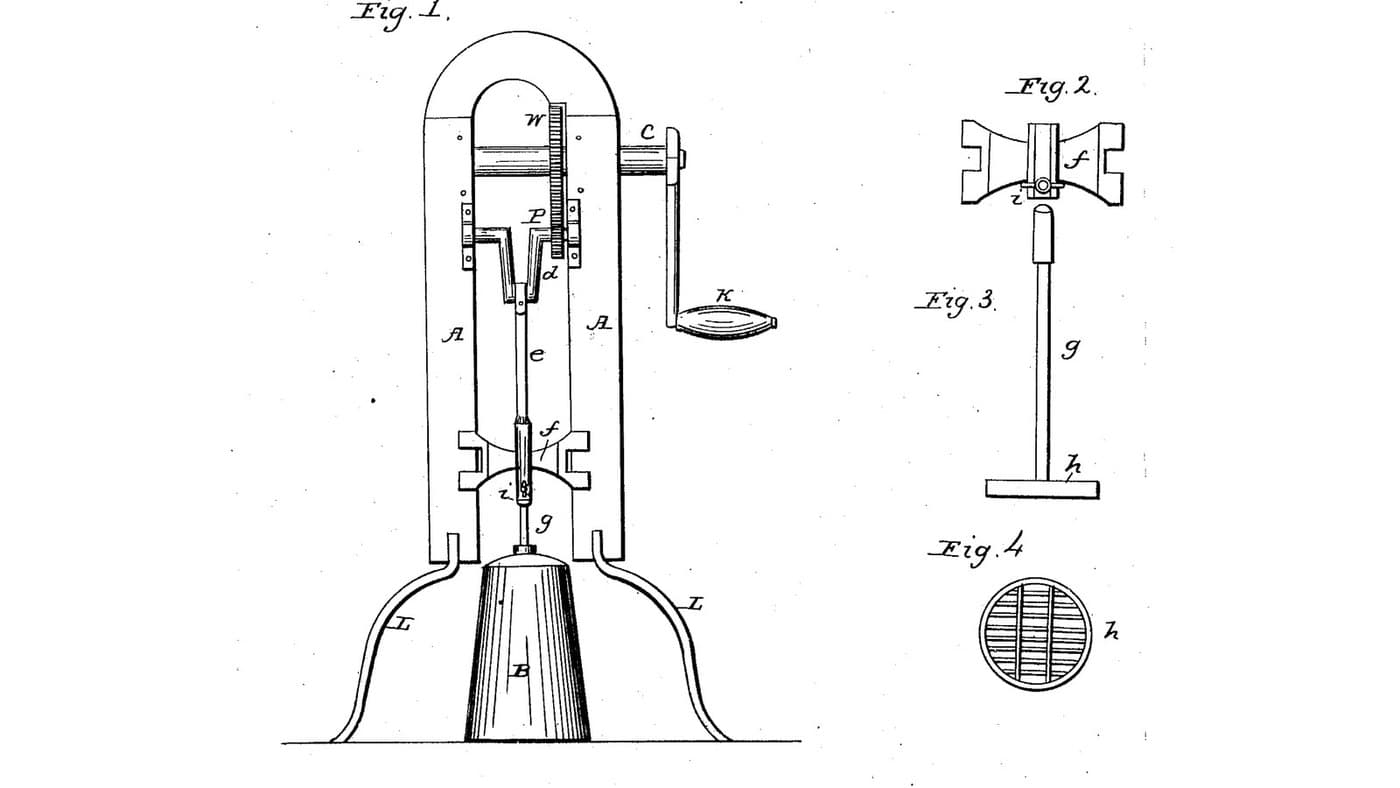
Evans gears his crank up. Ross gives his a heavy balance wheel and an adjustable stroke.
3

Read US 28,607

"The nature of my invention consists in lengthening or shortening the stroke and lowering and raising the dash so as to give it the right position in the churn at the same time giving the dash an independent revolving motion to the right and left and giving the operator power over the work to be done."
4

Frame A, cap G and braces

From 51 mm square timber (the patent's two inches) cut two front posts about 1.83 m long and two back posts about 0.91 m. Set the feet about 0.91 m apart; lean the front posts in so they meet at the top, and the back posts at the same angle. Join front and back posts on each side with two side cross pieces about 0.81 m between shoulders, at 300 and 860 mm up, and front and back with cross pieces at the same heights, cut to the bevel. On the top of the long posts fix a cap G reaching 410 mm forward, bored 32 mm near its end for the staff, and brace it with two timbers down to near the tops of the short posts.

Materiały do tego kroku:

Tarcica sosnowaTarcica sosnowa6 sztuk
Klej do drewnaKlej do drewna1 sztuka
Wkręty do drewnaWkręty do drewna40 sztuk
Śruba zamkowaŚruba zamkowa8 sztuk
Nakrętka samohamowna z wkładką nylonowąNakrętka samohamowna z wkładką nylonową8 sztuk

Potrzebne narzędzia:
Pilarka stołowaPilarka stołowa
Komplet dłut do drewnaKomplet dłut do drewna
KątomierzKątomierz
Wiertarko-wkrętarka akumulatorowaWiertarko-wkrętarka akumulatorowa
Zestaw wiertełZestaw wierteł
Zestaw wierteł łopatkowychZestaw wierteł łopatkowych
Ścisk stolarski listwowyŚcisk stolarski listwowy
Klucz nastawnyKlucz nastawny
Miara zwijanaMiara zwijana
5

Shaft K, balance wheel C and slide crank F

Bolt a hardwood bearing block bored 26 mm to the middle of each top front and back cross piece, and pass a 25 mm mild steel shaft K through them (the patent's about one inch). Glue two 18 mm plywood discs into a wheel 600 mm across with a rim 50 mm wide and four arms, and screw a ring of 60 x 12 mm mild steel flat bar round it so it weighs about 14 kg, near the patent's 30 pounds. Cut a slot 13 mm wide from 60 to 140 mm out along one arm for the wrist, a 16 mm bolt with a nut. Fix the wheel on the shaft's front end. On the back end fix a crank F of flat bar with three holes for the handle, so it can be lengthened or shortened.

Materiały do tego kroku:

Deska z drewna liściastegoDeska z drewna liściastego1 sztuka
Pręt okrągły ze stali niskowęglowejPręt okrągły ze stali niskowęglowej1 sztuka

Płyta sklejkowaPłyta sklejkowa1 sztuka
Klej do drewnaKlej do drewna1 sztuka
Płaskownik ze stali miękkiejPłaskownik ze stali miękkiej2 sztuk
Wkręty do drewnaWkręty do drewna24 sztuk
Śruba zamkowaŚruba zamkowa4 sztuk
Nakrętka samohamowna z wkładką nylonowąNakrętka samohamowna z wkładką nylonową4 sztuk
Shaft CollarShaft Collar2 sztuk
Kołki z twardego drewnaKołki z twardego drewna1 sztuka

Potrzebne narzędzia:

WyrzynarkaWyrzynarka
Ścisk stolarski listwowyŚcisk stolarski listwowy
Wiertarko-wkrętarka akumulatorowaWiertarko-wkrętarka akumulatorowa
Zestaw wiertełZestaw wierteł
Piła do metaluPiła do metalu
Imadło warsztatoweImadło warsztatowe
Pilniki (pilnik ręczny)Pilniki (pilnik ręczny)
Klucz nastawnyKlucz nastawny
6

Rod E, staff D, socket I, socket H and swivel J

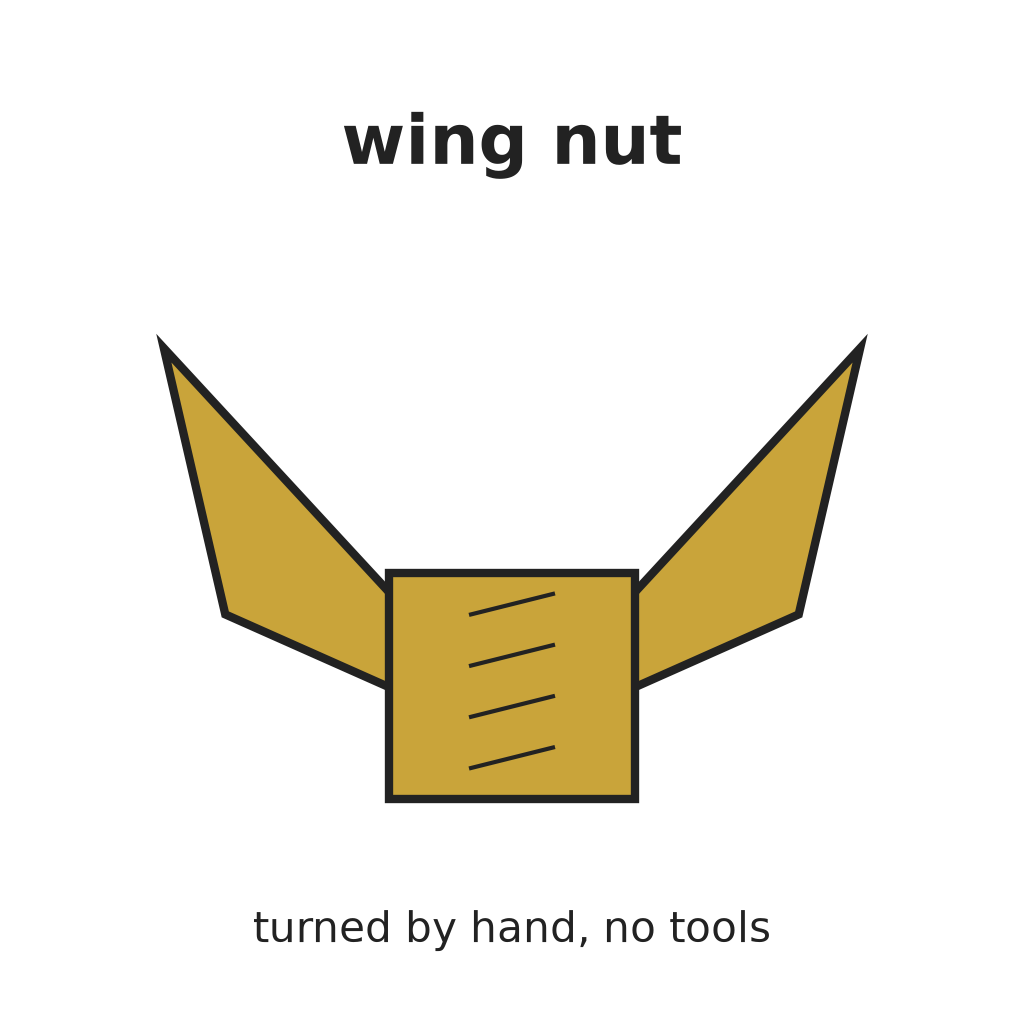
Cut a 32 mm hardwood staff D about 1.25 m long and pass it up through the cap. Make a hardwood socket I to slide on it, with a lug for the rod and a thumb screw (threaded rod, nut and wing nut) to fix it. Cut a hardwood rod E 730 mm between holes, from the wrist to the lug. Fit a hardwood socket H on the staff's foot, bored 16.5 mm, with a thumb screw through its side; turn the top of the churn handle L down to a 16 mm pin with a groove, so the thumb screw rides in the groove and the handle turns freely: the swivel J.

Materiały do tego kroku:

Kołki z twardego drewnaKołki z twardego drewna2 sztuk
Deska z drewna liściastegoDeska z drewna liściastego1 sztuka
Pręt gwintowanyPręt gwintowany1 sztuka
Nakrętka sześciokątnaNakrętka sześciokątna2 sztuk
Nakrętka skrzydełkowaNakrętka skrzydełkowa2 sztuk
Śruba zamkowaŚruba zamkowa2 sztuk
Nakrętka samohamowna z wkładką nylonowąNakrętka samohamowna z wkładką nylonową2 sztuk
Klej do drewnaKlej do drewna1 sztuka

Potrzebne narzędzia:

Pilarka stołowaPilarka stołowa
Wiertarko-wkrętarka akumulatorowaWiertarko-wkrętarka akumulatorowa
Zestaw wiertełZestaw wierteł
Zestaw wierteł łopatkowychZestaw wierteł łopatkowych
Piła do metaluPiła do metalu
Pilniki (pilnik ręczny)Pilniki (pilnik ręczny)
Klucz nastawnyKlucz nastawny
7

Handle L and dashers M

Cut a 28 mm hardwood handle 420 mm long. For each dasher halve together two hardwood pieces 38 x 19 mm (the patent's 1 1/2 x 3/4 inch), 260 long, at right angles, and plane each blade on both sides down to about 6 mm at its edges, every blade bevelled the same way so they all stand on one angle, about 30 degrees. Fix two such dashers on the handle's foot, 60 mm apart.

Materiały do tego kroku:

Kołki z twardego drewnaKołki z twardego drewna1 sztuka
Deska z drewna liściastegoDeska z drewna liściastego1 sztuka
Klej do drewnaKlej do drewna1 sztuka
Pręt ze stali nierdzewnejPręt ze stali nierdzewnej1 sztuka
ZawleczkaZawleczka2 sztuk

Potrzebne narzędzia:

Pilarka stołowaPilarka stołowa
Komplet dłut do drewnaKomplet dłut do drewna
Strug ręcznyStrug ręczny
KątomierzKątomierz
Wiertarko-wkrętarka akumulatorowaWiertarko-wkrętarka akumulatorowa
Zestaw wiertełZestaw wierteł
8

The build in 3D

FreeCAD model of this build: the frame with its leaning posts, cap G and braces, the shaft K on its bearings with the balance wheel and slide crank, the rod E from the wrist to the socket I on the staff, the swivel and handle with two pitched dashers in the bucket, cut open.
Plik projektowyBLENDCC0 - Free
9

Churn

Pour about 10 litres of heavy cream at about 15 °C, checked with the thermometer, into the bucket, stand it under the staff with the handle through its lid, and join handle and staff at the swivel. Set the socket I on the staff so the dash just clears the bottom at the low point, and the wrist for the stroke you want. Turn the crank F, timing it; the wheel carries the stroke round and the dash turns as it goes. When the butter comes, loosen the swivel's thumb screw, lift the handle out, take out the butter, pour the buttermilk into a bowl, wash the butter in cold water until it runs clear, salt and weigh it.

Materiały do tego kroku:

Śmietanka kremówkaŚmietanka kremówka10 l
Sól morska gruboziarnistaSól morska gruboziarnista1 sztuka
WodaWoda1 sztuka
Wiadro 20-litroweWiadro 20-litrowe1 sztuka

Potrzebne narzędzia:

Termometr z sondą pozostawianą w potrawieTermometr z sondą pozostawianą w potrawie

StoperStoper
Cyfrowa waga kuchennaCyfrowa waga kuchenna
Duża misa ze stali nierdzewnejDuża misa ze stali nierdzewnej
10

Troubleshooting

Balance-wheel churn troubleshooting.

Flow

Loading...
11

History and honest limits

**Nathan D. Ross** of Braintrim, Wyoming County, Pennsylvania, US 28,607, 5 June 1860, "Churn". He did not claim the up-and-down motion of dasher and handle, but the revolving of the dashers and handle by the series of dashers and blades. The frame, shaft, wheel and dasher-piece sizes are his, given as "about"; he gives the wheel's size and weight but not its material; ours is plywood with a steel ring; the bucket, stroke, rod and blade angle are ours.

Materiały

20

Wymagane narzędzia

18

Pliki projektowe

1

CC0 Domena publiczna

Ten plan jest udostępniany na licencji CC0. Możesz go swobodnie kopiować, modyfikować, rozpowszechniać i wykorzystywać do dowolnych celów, bez konieczności uzyskiwania zgody.

Wesprzyj Makera kupując produkty przez jego plan, za co zarabia Prowizja Makera ustalony przez sprzedawców, lub stwórz nową iterację tego planu i dołącz go jako połączenie w swoim własnym planie, aby dzielić się przychodami.

Dyskusja

(0)

Zaloguj się aby dołączyć do dyskusji

Ładowanie komentarzy...