Współpraca
SZTUKA
Piękno i dobre samopoczucie
RZEMIOSŁO
KULTURA I HISTORIA
ROZRYWKA
ŚRODOWISKO
JEDZENIE I NAPOJE
INŻYNIERIA ODWROTNA
NAUKI
LEKKOATLETYKA
TECHNOLOGIA
URZĄDZENIA DO NOSZENIA
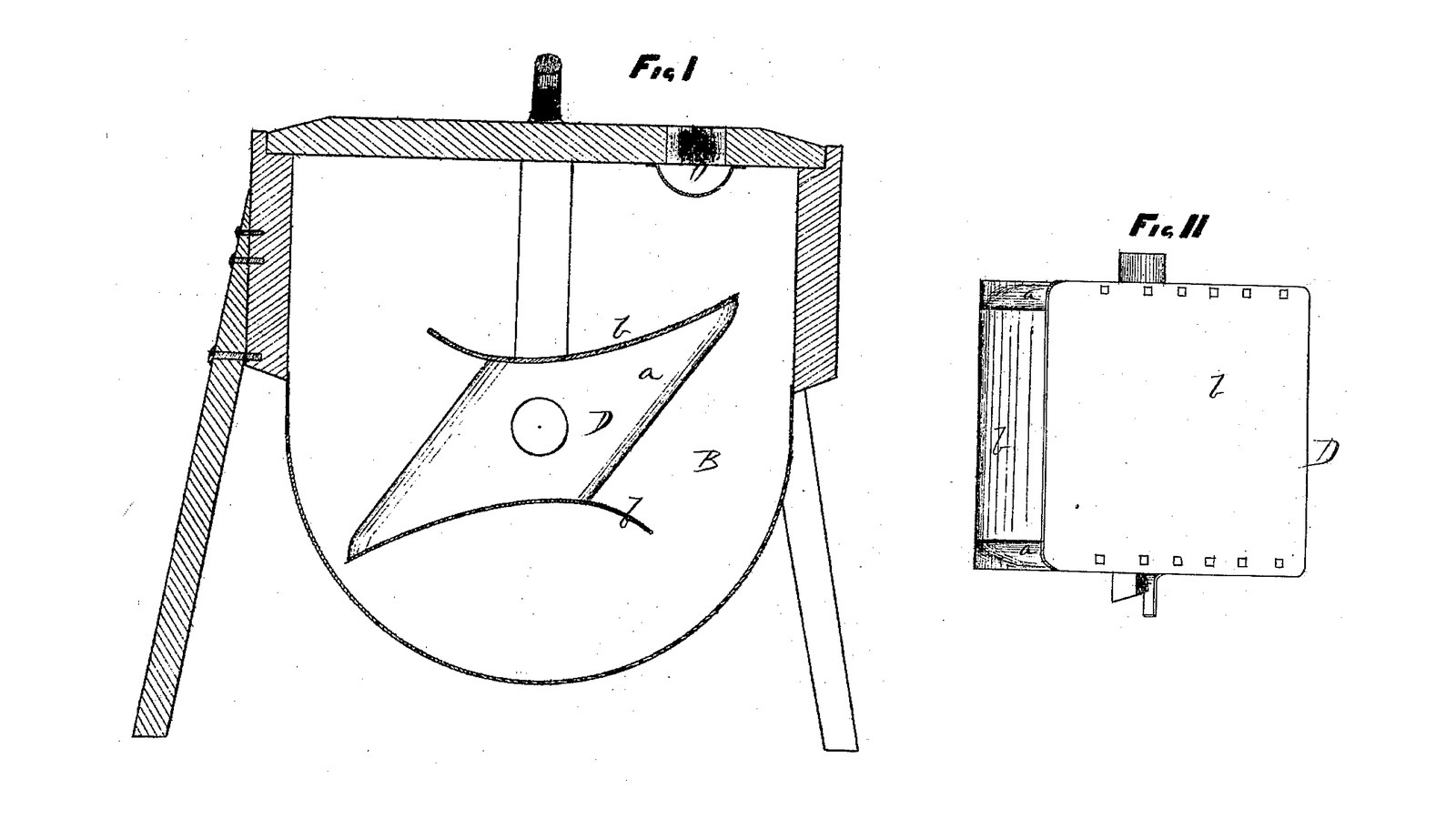

Oblique Box-Dasher Churn: A Hollow Slanted Dasher, Open on Two Sides, Churns Fast and Gathers the Butter Inside It Turned Slow
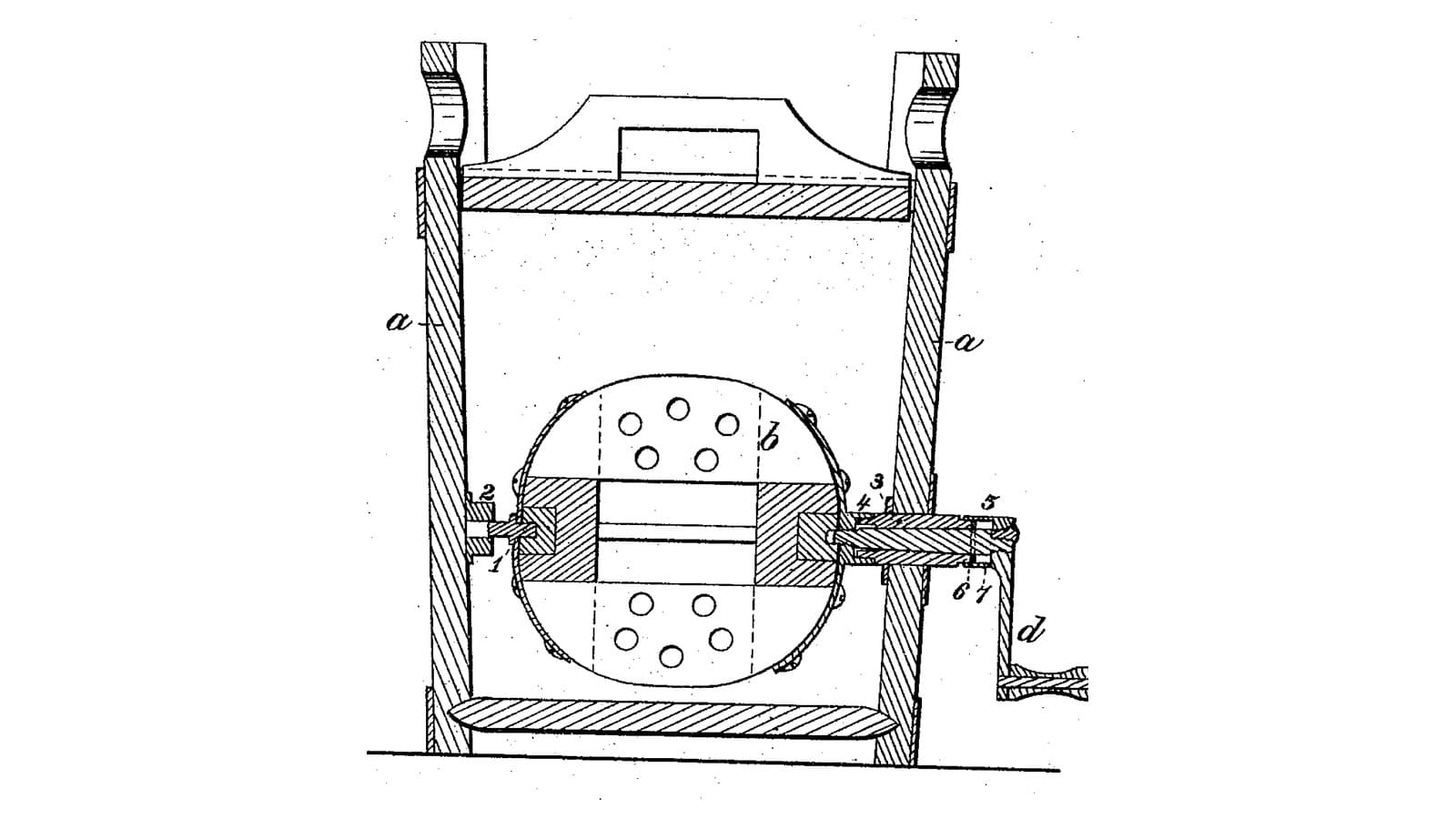
Moses D. Wells of Morgantown, Virginia, received US 31,756, dated 19 March 1861, for a churn dasher shaped as a slanted open box: two flat end plates carrying the journals, two curved face pieces with lips at opposite corners, and two open sides. It turns on a horizontal axis in a box whose bottom is curved to its sweep. Turned fast it churns; turned the same way slowly, it gathers the butter inside itself, the lips keeping it from being thrown out, so it lifts out in a lump.
The patent gives no sizes; every size here is ours.
Średniozaawansowany
About 2 days
Instrukcje
1
1
Churning fast, gathering slow
Churning fast, gathering slow
Wczytywanie notatnika Jupyter…
2
2
A round-bottomed box with a turning dasher, eight months before
A round-bottomed box with a turning dasher, eight months before
Park's box works the butter with pins. Wells's hollow dasher gathers it inside itself.
3
3
Read US 31,756
Read US 31,756
"The dasher being hollow, a few slow turns of the same causes the butter to collect within the box so as to be removed in a lump. ... The object of the diagonal lips b', b', is, to gather the butter against, and prevent it from being thrown out of the box in turning it around."
4
4
Body B with a curved bottom, legs and lid
Body B with a curved bottom, legs and lid
Glue up two hardwood ends 22 mm thick, 350 mm wide and 320 tall. On each draw the inside: a 300 mm half circle with its centre 160 mm up, and straight sides rising 150 mm above the centre to the top. Rout a groove 1.6 mm wide and 8 deep on that line. Cut a slot 16.6 mm wide down from the top edge to the centre, rounded at its foot, as the journal bearing, and a hardwood keeper that fills the slot above the journal. Bend a 1.5 mm stainless sheet 416 mm long into a U to fit the line, set it in both grooves with silicone sealant, and screw hardwood sides 22 mm thick outside its straight parts. Screw four hardwood legs 40 x 40 mm, 390 long, to the ends, splayed out. Cut a hardwood lid 444 x 350 x 22 mm, notched over the keepers, with a 25 mm air opening o.
Materiały do tego kroku:
 Deska z drewna liściastego4 sztuk
 Blacha ze stali nierdzewnej1 sztuka
 Uszczelniacz silikonowy1 sztuka
 Klej do drewna1 sztuka
 Wkręty do drewna30 sztuk
Potrzebne narzędzia:
 Pilarka stołowa
 Kompas
 Wyrzynarka
 Frezarka górnowrzecionowa
 Komplet dłut do drewna
 Młotek gumowy
 Wiertarko-wkrętarka akumulatorowa
 Zestaw wierteł
 Zestaw wierteł łopatkowych
 Ścisk stolarski listwowy
 Zestaw wkrętaków
 Miara zwijana
5
5
Print the end plates a (two)
Print the end plates a (two)
An end plate of the dasher: 15 mm thick, the slanted outline of Fig. 1 with curved top and bottom edges, a 50 mm boss at the centre. Print two; drill each 16 mm at the centre for a journal. PETG, 0.2 mm layers, 30 % infill, 4 walls.
6
6
Dasher D: end plates a, face pieces b with lips b', journals
Dasher D: end plates a, face pieces b with lips b', journals
Cut two strips of 1.5 mm stainless sheet 360 mm long, each 160 mm wide; bend each to a curve of about 300 mm radius following the end plates' curved edges, with a 20 mm lip b' at one long edge turned on round the corner. Screw them to the end plates' curved edges, the lips at diagonally opposite corners, leaving the two slanted sides open. Push a 16 mm stainless journal into each end plate's boss and pin it: one 40 mm long, the other 90 mm for the crank. Lay the journals in the slots and drop in the keepers. Pin a crank of mild steel flat bar, 120 mm throw, with a hardwood handle, on the long journal.
Materiały do tego kroku:
 Filament PETG1 sztukaBlacha ze stali nierdzewnej1 sztukaWkręty do drewna16 sztuk
 Pręt ze stali nierdzewnej1 sztuka
 Zawleczka3 sztuk
 Płaskownik ze stali miękkiej1 sztuka
 Kołki z twardego drewna1 sztuka
Potrzebne narzędzia:
 Drukarka 3D z filamentem (FDM)
 Nożyce do blachyMłotek gumowyWiertarko-wkrętarka akumulatorowaZestaw wierteł
 Piła do metalu
 Pilniki (pilnik ręczny)
 Imadło warsztatoweZestaw wkrętaków
7
7
The build in 3D
The build in 3D
FreeCAD model of this build, cut open: the round stainless bottom in grooved ends with slotted bearings and keepers, the legs and lid with its air opening, and the slanted hollow dasher with its curved, lipped face pieces and crank.
8
8
Churn and gather
Churn and gather
Pour about 10 litres of heavy cream at about 15 °C, checked with the thermometer, into the box, so it stands below the axis, and put on the lid. Turn the crank briskly, timing it. When the butter comes, turn the same way slowly for a few turns until it gathers inside the dasher. Lift off the lid and keepers, lift the dasher out by its journals, take out the butter, pour the buttermilk into a bowl, wash the butter in cold water until it runs clear, salt and weigh it.
Materiały do tego kroku:
 Śmietanka kremówka10 l
 Sól morska gruboziarnista1 sztuka
 Woda1 sztuka
Potrzebne narzędzia:
 Termometr z sondą pozostawianą w potrawie
 Stoper
 Cyfrowa waga kuchenna
 Duża misa ze stali nierdzewnej
9
9
Troubleshooting
Troubleshooting
Box-dasher churn troubleshooting.
Flow
Loading...
10
10
History and honest limits
History and honest limits
**Moses D. Wells** of Morgantown, Monongalia County, Virginia (now West Virginia), US 31,756, 19 March 1861, "Churn-Dasher". He claimed "the oblique box dasher D constructed and operating substantially as set forth, that is to say, with two flat sides, two curved sides, and two open sides, and turned in the same direction for churning, and for gathering the butter, but at various velocities". He says only that the journals have "suitable connections to facilitate the removal of the dasher"; ours lie in open slots under keepers. The patent gives no sizes; every size here is ours.
Materiały
13- 4 sztukZastępnik
- 1 sztukaZastępnik
- 1 sztukaZastępnik
- 1 sztukaZastępnik
- 46 sztukZastępnik
- 1 sztukaZastępnik
- 1 sztukaZastępnik
- 3 sztukZastępnik
- 1 sztukaZastępnik
- 1 sztukaZastępnik
- Zastępnik
- 1 sztukaZastępnik
- 1 sztukaZastępnik
Wymagane narzędzia
21- 1 vendor sell this, none ship to you yetZastępnik
- Zastępnik
- 1 vendor sell this, none ship to you yetZastępnik
- Zastępnik
- Zastępnik
- Zastępnik
- 1 vendor sell this, none ship to you yetZastępnik
- Zastępnik
- Zastępnik
- Zastępnik
- Zastępnik
- 1 vendor sell this, none ship to you yetZastępnik
- Zastępnik
- Zastępnik
- Zastępnik
- Zastępnik
- Zastępnik
- Zastępnik
- Zastępnik
- Zastępnik
Pliki projektowe
2Według tego planu powstaje


Powiązane blueprinty
Te blueprinty dzielą się wiedzą — technikami, materiałami lub zasadami
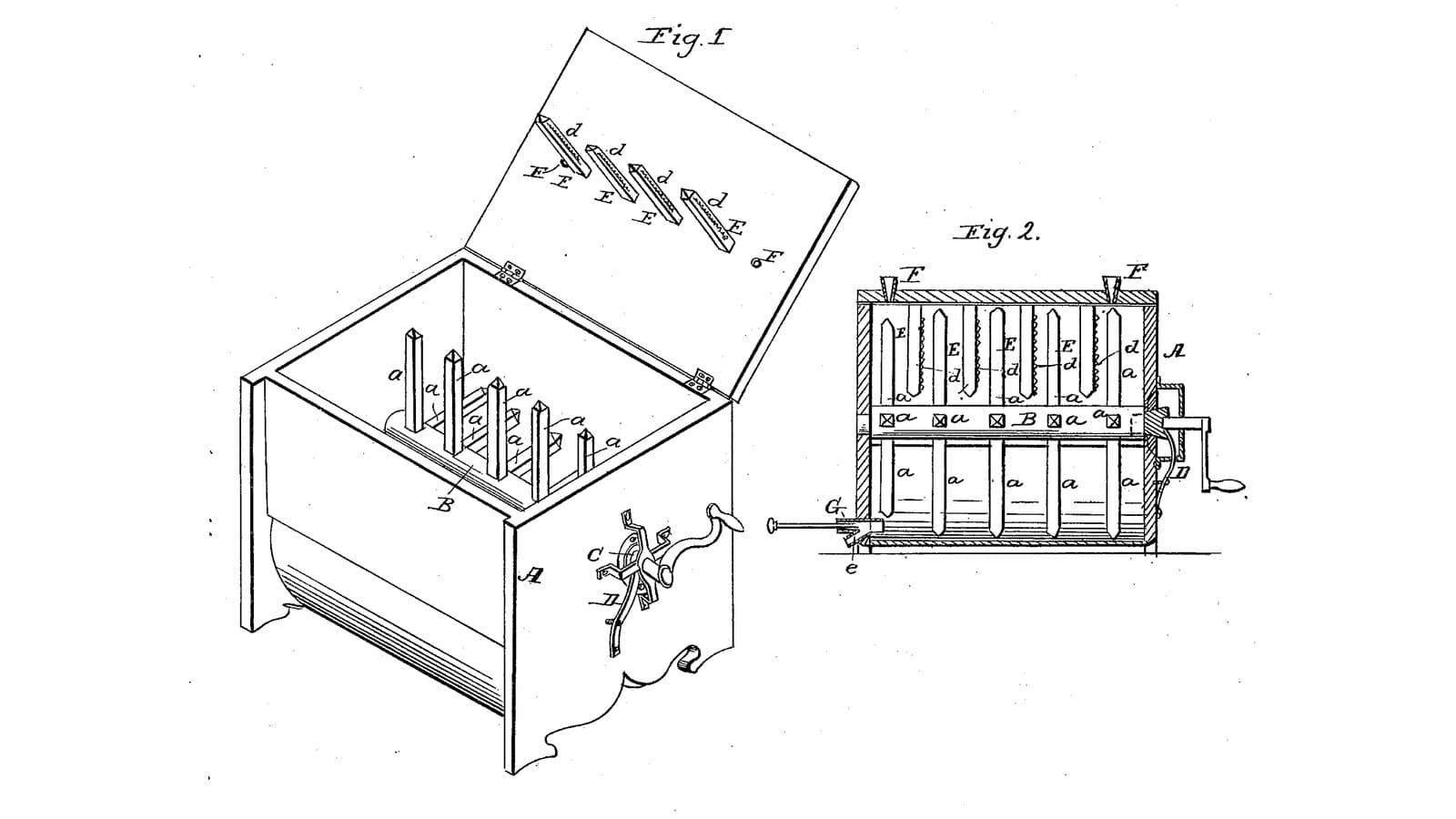
Pin-Cylinder Box Churn: A Cylinder of Square Pins Turns Through a Row of Pins in the Lid, Then Washes the Butter in the Churn
autor: Buttercup
Obróbka drewna
8
0
0
0
0
0
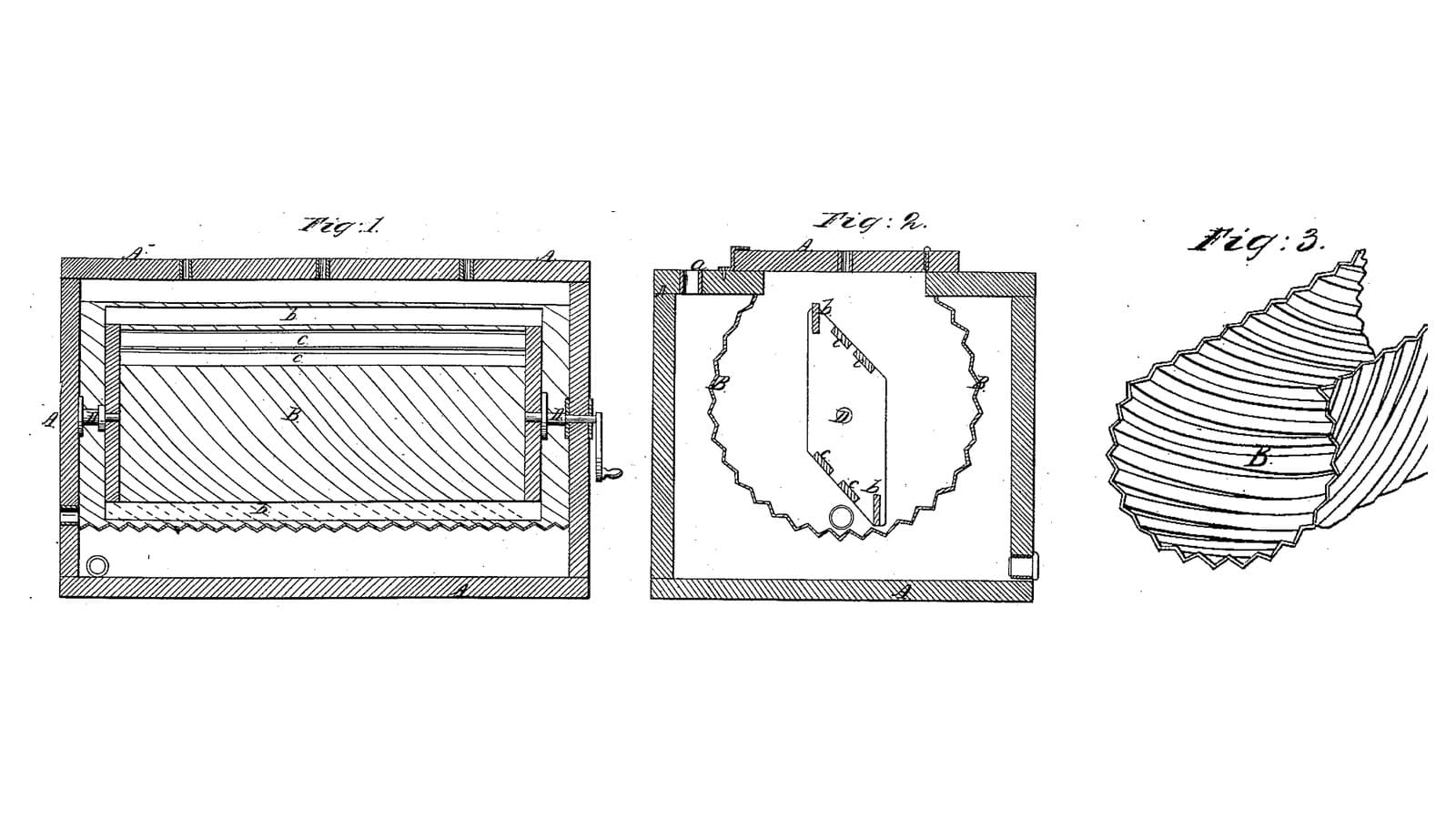
Spiral-Corrugated Water-Jacket Churn: A Bevelled Strip Dasher Throws Cream Against Diagonal Corrugations in a Warmed or Cooled Chamber
autor: Buttercup
Obróbka drewna
10
0
0
0
0
0
Sealed Screw-Axis Drum Churn: The Dasher's Axis Screws Into It Through a Pipe in the Side, a Sprung Washer Keeps It Tight
autor: Buttercup
Obróbka drewna
10
0
0
0
0
0

Churning Butter from Cream — The 5,000-Year-Old Fat Separation
autor: TheChef
RZEMIOSŁO
63
0
0
0
0
0
CC0 Domena publiczna
Ten plan jest udostępniany na licencji CC0. Możesz go swobodnie kopiować, modyfikować, rozpowszechniać i wykorzystywać do dowolnych celów, bez konieczności uzyskiwania zgody.
Wesprzyj Makera kupując produkty przez jego plan, za co zarabia Prowizja Makera ustalony przez sprzedawców, lub stwórz nową iterację tego planu i dołącz go jako połączenie w swoim własnym planie, aby dzielić się przychodami.