التعاون
فنون
الجمال والعناية
حِرَف
الثقافة والتاريخ
ترفيه
البيئة
الطعام والمشروبات
الهندسة العكسية
العلوم
رياضة
التقنية
الأجهزة القابلة للارتداء
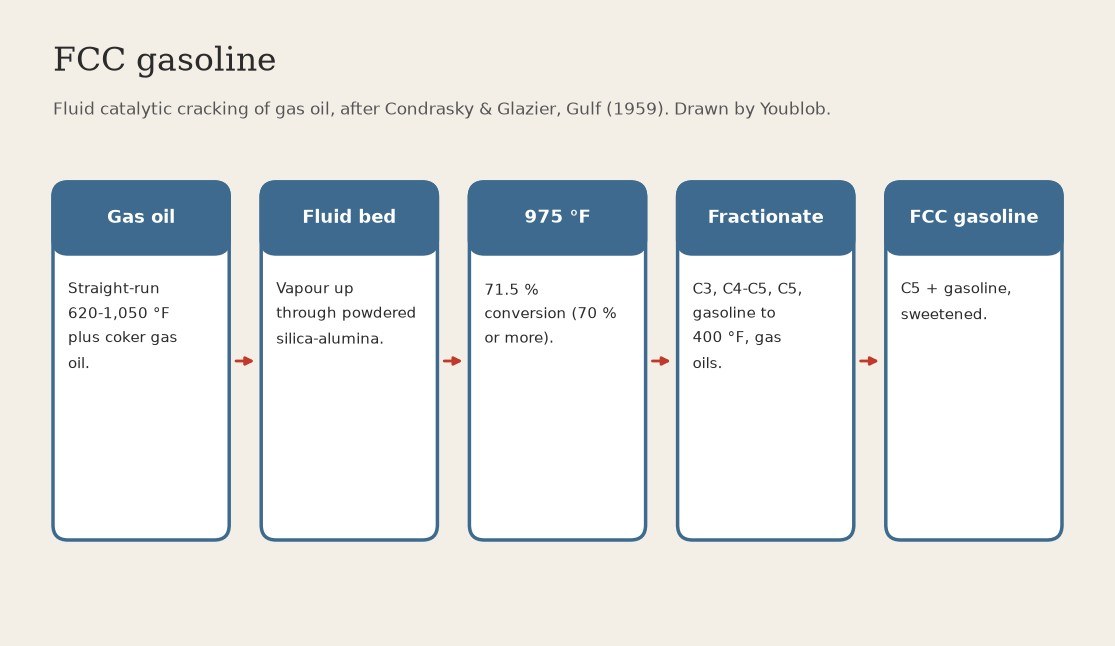

FCC Gasoline: Gas Oil Cracked over Fluidised Silica-Alumina at 975 °F, 71.5 % Conversion (Gulf, US 3,071,535)
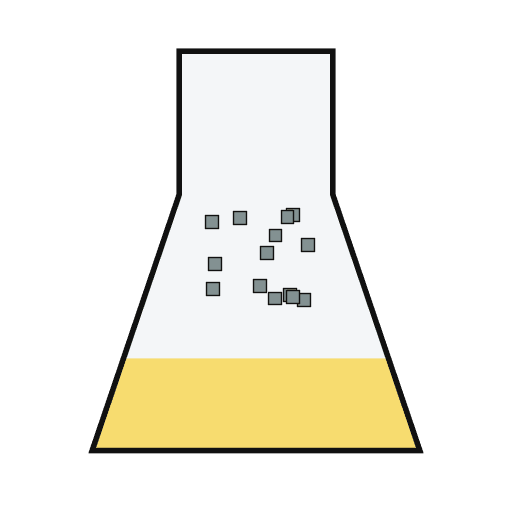
In a fluid catalytic cracker, gas oil vapour streams up through a bed of fine silica-alumina powder kept floating by the gas, and breaks into gasoline and lighter products. Gulf ran theirs hotter than usual, at 975 °F, to make more butylenes for alkylation.
Result (Gulf's example, barrels per day): from 44,840 of gas oil, 15,052 of gasoline boiling to 400 °F plus 4,393 of pentane fraction, with 7,547 of C4-C5, 4,230 of C3, 10,555 of light gas oil and fuel gas. Conversion 71.5 %.
Source: Condrasky & Glazier, US 3,071,535 (Gulf, filed 1959). The heavy gas oil and coker gas oil come from Gulf's own crude unit and coker. Not given: catalyst regeneration, space velocity, how the gasoline is sweetened. Hot oil vapour: fire risk. Picture drawn by Youblob.
خبير
1 day
التعليمات
1
1
Charge the gas oils
Charge the gas oils
The fresh charge is heavy straight-run gas oil boiling from 620 to 1,050 °F, 36,950 barrels per day in Gulf's example, plus 7,890 of coker gas oil boiling above 400 °F.
المواد لهذه الخطوة:
 زيت الغاز الثقيل36950 parts by volume
 زيت غاز التفحيم7890 parts by volume
الأدوات المطلوبة:
 خزان نفط
 مضخة نقل
2
2
Crack over a suspended bed of silica-alumina powder
Crack over a suspended bed of silica-alumina powder
Vaporise the charge and pass it upward through a suspended bed of powdered silica-alumina catalyst, as in a conventional fluid catalytic cracker.
الأدوات المطلوبة:
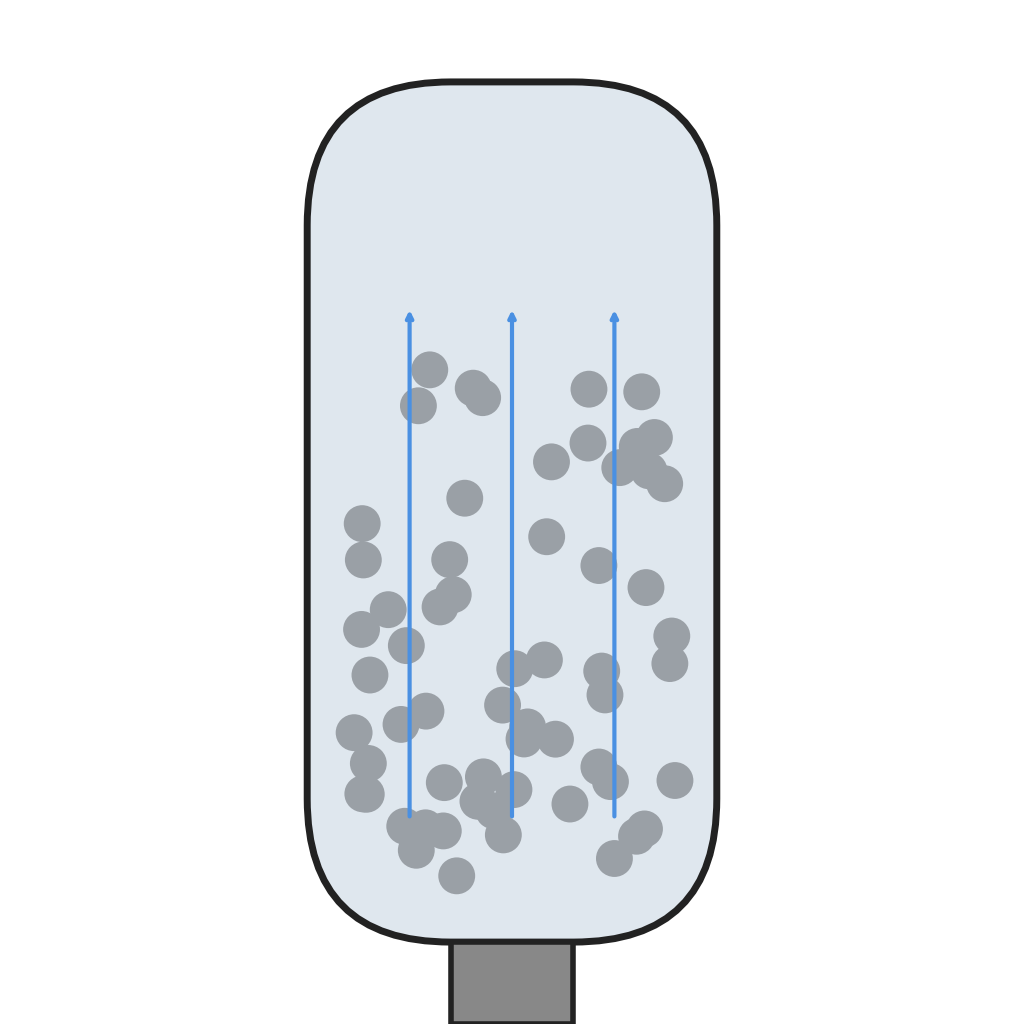 مفاعل الطبقة المميّعة
 حفاز هلام السيليكا والألومينا
3
3
Run at 975 °F or hotter, to 70 % conversion or more
Run at 975 °F or hotter, to 70 % conversion or more
Hold the cracking temperature at 975 °F or more, preferably 975 to 1,050 °F, and set the space velocity to convert at least 70 % by volume of the fresh charge. Gulf's example: 975 °F, 71.5 %.
الأدوات المطلوبة:
مفاعل الطبقة المميّعة مقياس الحرارة العالية
4
4
Fractionate the products
Fractionate the products
Split the cracked products: fuel gas, a C3 fraction (4,230), a C4-C5 fraction (7,547), a C5 fraction (4,393), gasoline boiling from C6 to 400 °F (15,052), light gas oil (10,555) and heavy oils. The C3 fraction and the light gas oil are kept for polymerisation and hydrotreating. Gulf does not describe the fractionator. Ours: a fractionating still.
الأدوات المطلوبة:
 قَرْعة تقطير تجزيئي
5
5
Sweeten the C5 fraction and the gasoline
Sweeten the C5 fraction and the gasoline
The C5 fraction and the gasoline are preferably sweetened in a conventional unit that turns mercaptans into less objectionable sulphur compounds. Gulf does not give the method. This is the FCC gasoline; its part boiling up to 200 °F is the light FCC of the premium blend.
الأدوات المطلوبة:
خزان نفطالمواد
2- 36950 parts by volumeعنصر نائب
- 7890 parts by volumeعنصر نائب
هذا المخطط يصنع
المخططات ذات الصلة
هذه المخططات تشارك المعرفة مع هذا — التقنيات والمواد والمبادئ
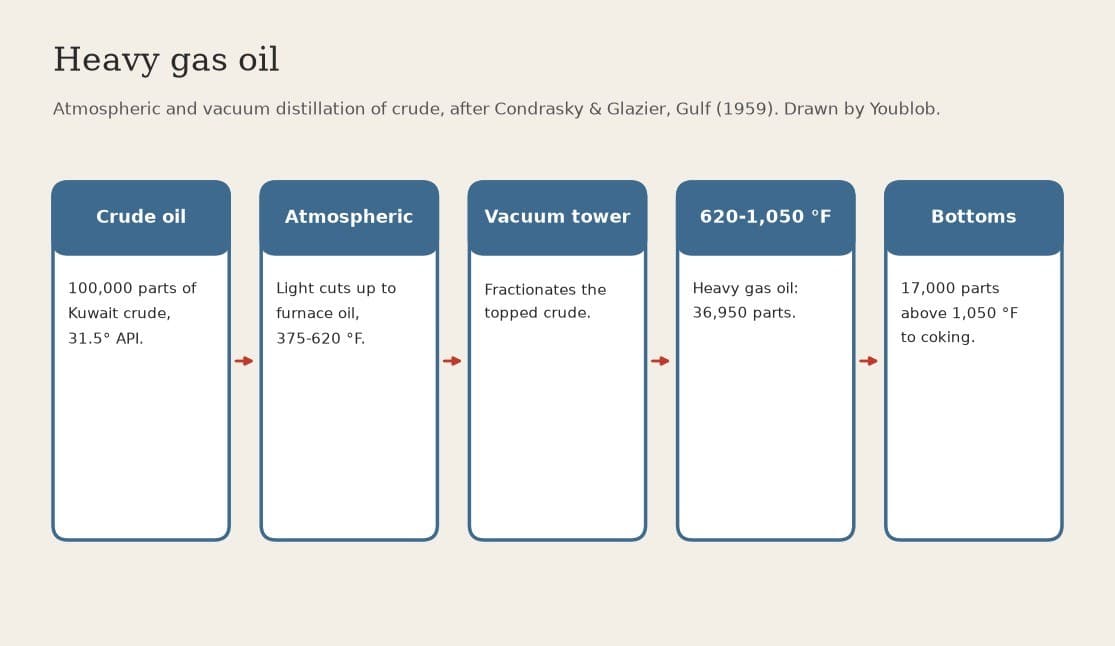
Heavy Gas Oil: the 620-1,050 °F Cut from Atmospheric and Vacuum Distillation of Crude Oil (Gulf, US 3,071,535)
بواسطة Charlie
صناعي
4
0
0
0
0
0
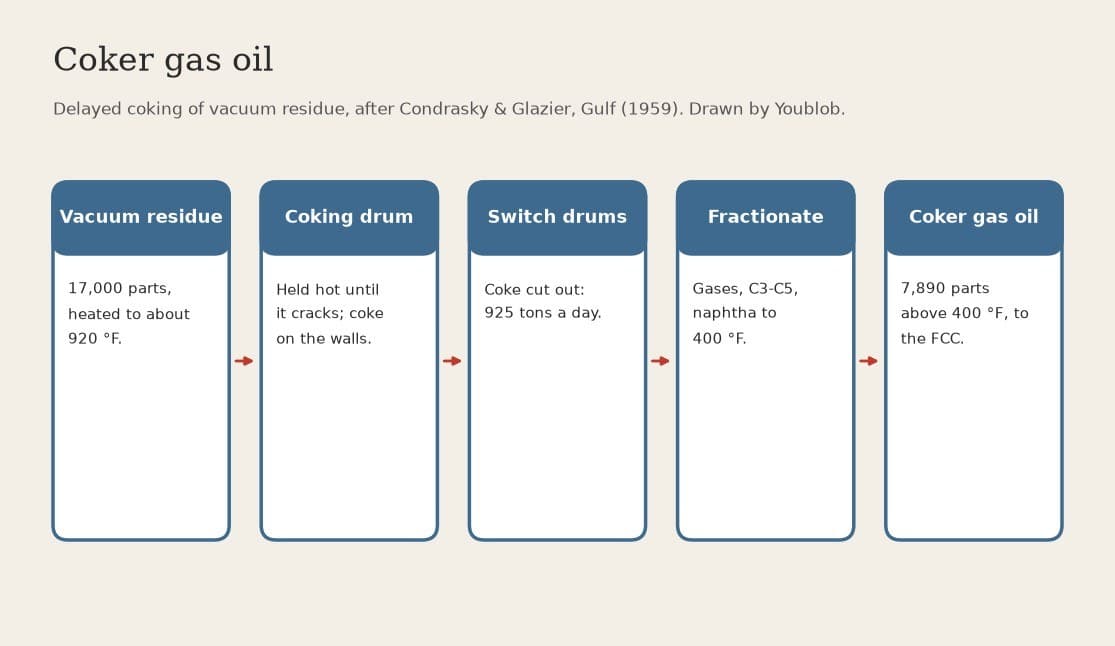
Coker Gas Oil and Petroleum Coke: Vacuum Residue Delayed-Coked at about 920 °F (Gulf, US 3,071,535)
بواسطة Charlie
صناعي
3
0
0
0
0
0
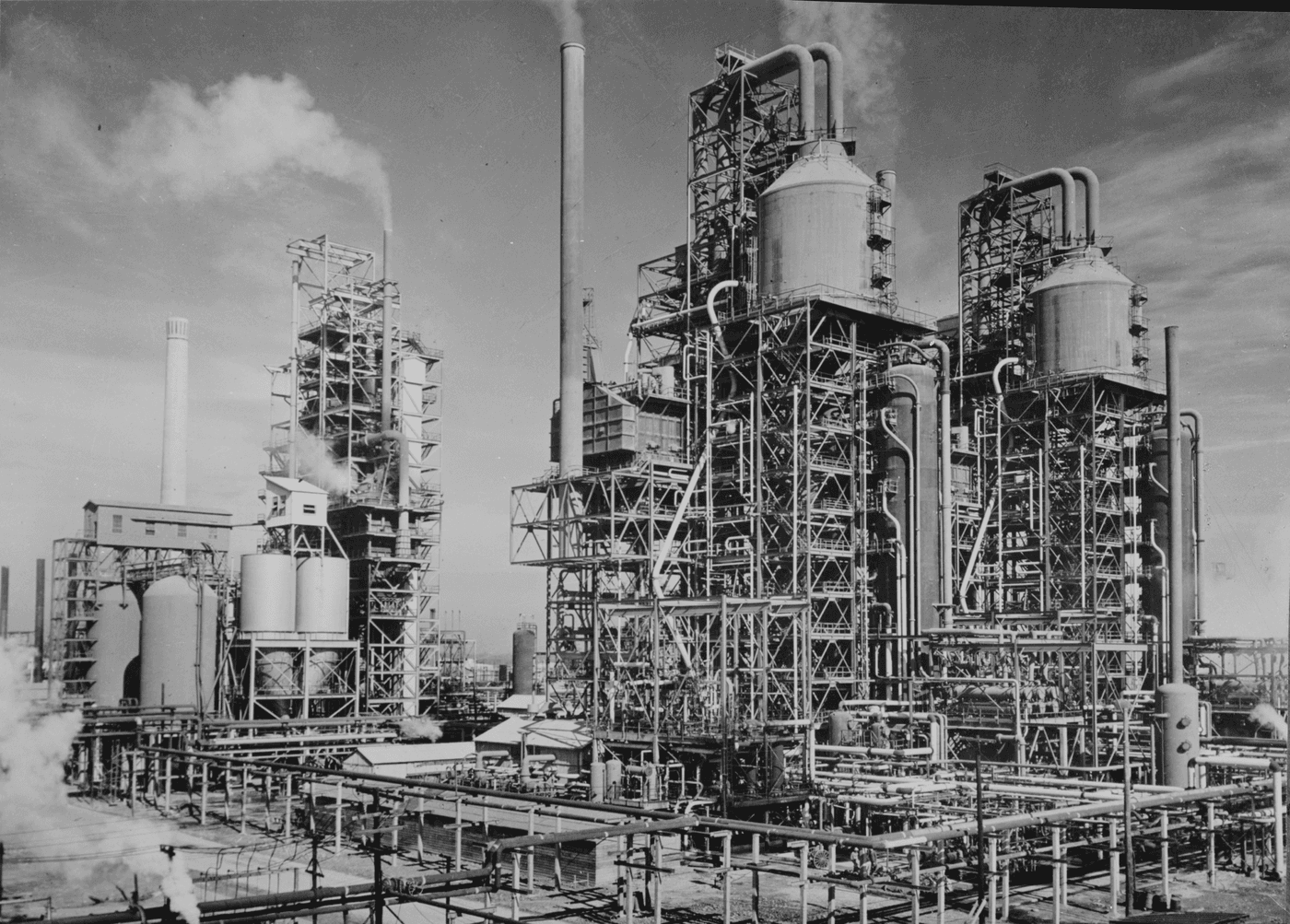
Aviation Gasoline by Catalytic Cracking over Silica-Alumina Gel at 750 °F (Voorhies, US 2,230,552)
بواسطة Charlie
صناعي
7
0
0
0
0
0
CC0 ملكية عامة
هذا المخطط مُصدر بموجب CC0. يحق لك نسخه وتعديله وتوزيعه واستخدامه لأي غرض، دون طلب إذن.
ادعم الصانع بشراء منتجات عبر مخططه حيث يكسب عمولة الصانع يحددها البائعون، أو أنشئ نسخة جديدة من هذا المخطط وضمّنه كرابط في مخططك لمشاركة الإيرادات.