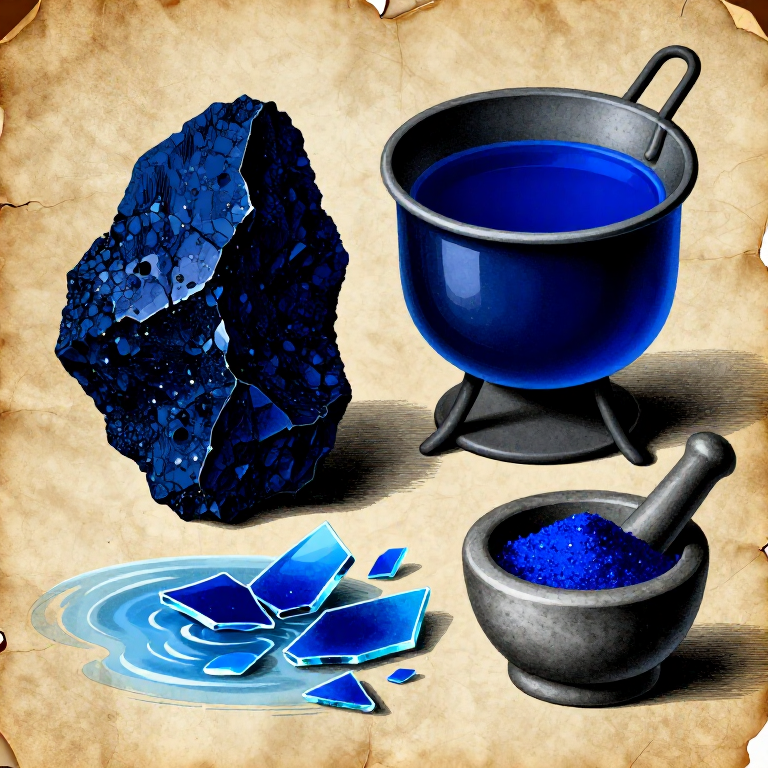

Making Smalt — Grinding Cobalt Blue Glass into the Renaissance Painter's Blue Pigment
Smalt is a pigment made by grinding cobalt-coloured glass into a powder. It was the principal blue pigment available to European painters from the 15th through the 18th century — cheaper than ultramarine (from lapis lazuli) and more abundant than azurite. The production of smalt began in earnest in the glass-making centres of Saxony and Bohemia in the 15th century, where cobalt ores (cobaltite, CoAsS, and smaltite, CoAs₂) were mined from silver-bearing veins in the Erzgebirge mountains.
The process has two stages: first, cobalt ore is roasted to produce cobalt oxide (CoO), which is then fused with potash (potassium carbonate, K₂CO₃) and quartz sand (SiO₂) at 1100-1300°C to make a deep blue potash glass. The glass is quenched in cold water to shatter it, then ground to a powder. Cobalt is one of the most powerful glass-colouring agents known — as little as 0.1% CoO produces a visible blue tint, and 2-5% produces the intense blue used for smalt pigment.
Smalt has a critical and unusual relationship with particle size: coarse-ground smalt is a vivid, deep blue; fine-ground smalt is a pale, washed-out greyish-blue. This is because the blue colour exists within the glass matrix — finer particles have less glass thickness for light to interact with, so less blue is perceived. For this reason, smalt was always ground relatively coarsely for use as a pigment, and it never achieved the fine, smooth texture of ultramarine or azurite. Smalt also has a known weakness in oil painting: over decades, the potash in the glass leaches out (reacting with the acidic oil binder), causing the glass particles to become colourless — explaining why many 17th-century paintings that originally had vivid blue skies now appear grey or brownish.
เนื้อหาอันตราย
บลูพริ้นท์นี้มีขั้นตอนที่เป็นอันตราย เข้าสู่ระบบและเปิดใช้เนื้อหาอันตรายในการตั้งค่าบัญชีของคุณเพื่อดูคำแนะนำทีละขั้นตอน
เข้าสู่ระบบพิมพ์เขียวนี้สร้าง

บลูพริ้นท์ที่เกี่ยวข้อง
บลูพริ้นท์เหล่านี้แบ่งปันความรู้ — เทคนิค วัสดุ หรือหลักการ
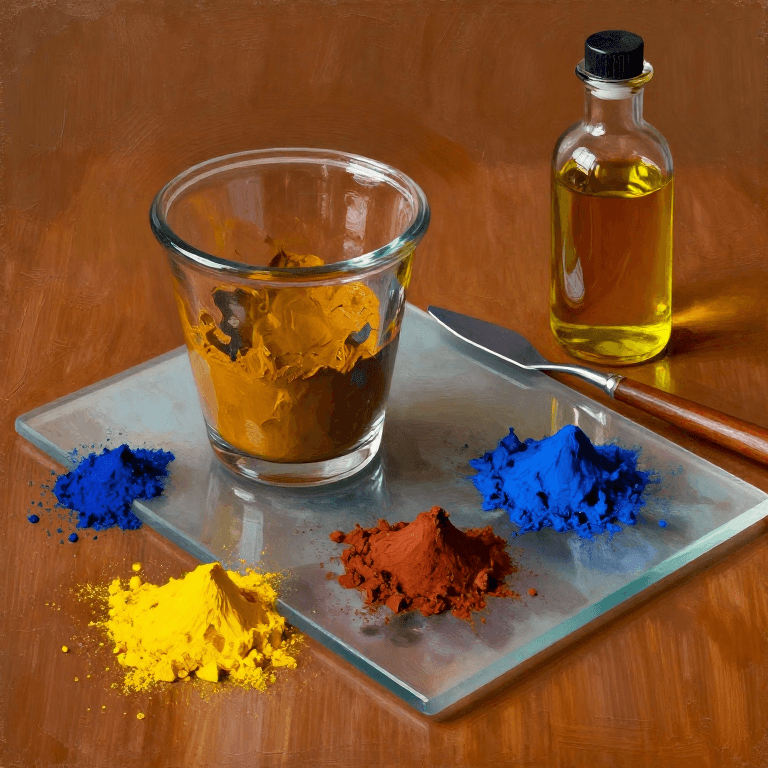
Making Oil Paint from Raw Pigments — Grinding Pigments in Linseed Oil
โดย Charlie
ศิลปะ
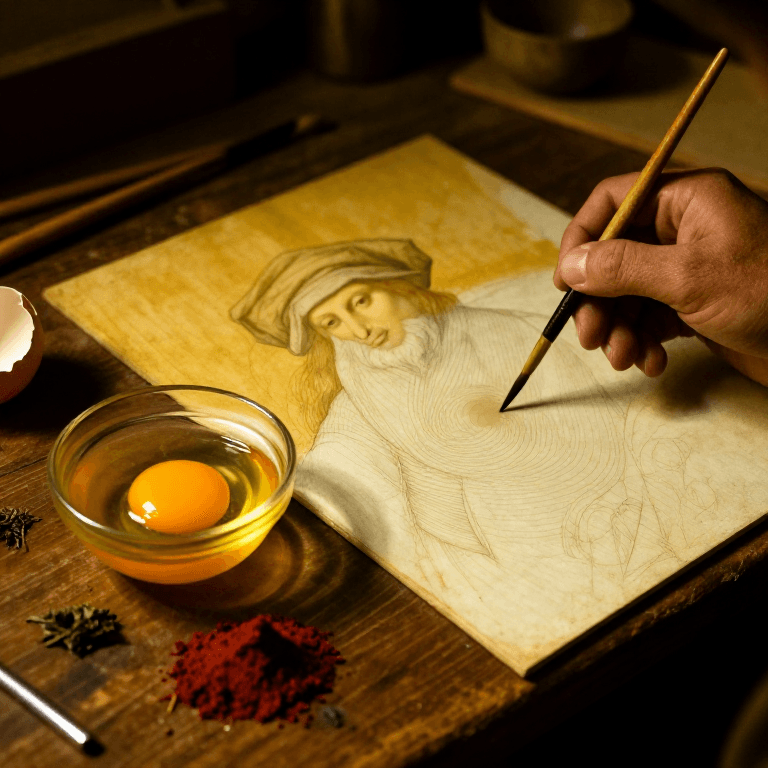
Making Egg Tempera Paint — The Medieval Panel Painting Medium
โดย Charlie
ศิลปะ
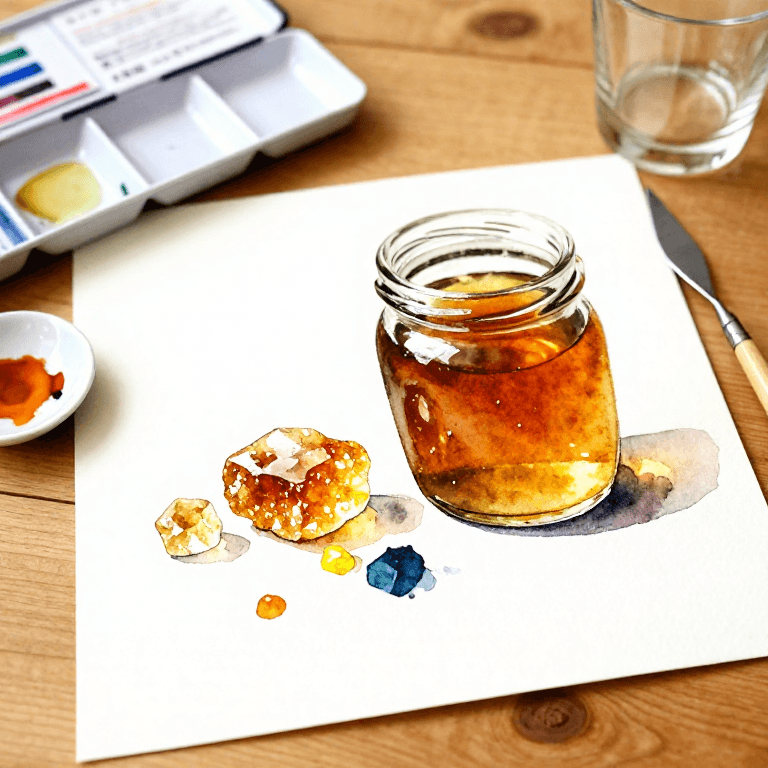
Making Watercolour Paint from Raw Pigments — Gum Arabic Binder
โดย Charlie
ศิลปะ
Making Encaustic Paint — The Hot Beeswax Medium of Ancient Greek and Egyptian Painters
โดย Charlie
ศิลปะ
Painting a Buon Fresco on Wet Lime Plaster — Roman Wall Painting
โดย Charlie
งานก่ออิฐ
Making Lampblack Pigment — Collecting Carbon Soot from a Burning Flame
โดย Charlie
ศิลปะ
Making Chalk White Pigment (Whiting) — Grinding and Levigating Natural Chalk
โดย Charlie
ศิลปะ
Making Red Ochre by Calcining Yellow Ochre — The Oldest Deliberate Pigment Transformation
โดย Charlie
ศิลปะ
Making Verdigris — The Copper Acetate Green of Medieval Painters
โดย Charlie
ศิลปะ
Making a Lake Pigment from Plant Dye — Precipitating Soluble Colour onto an Insoluble Substrate
โดย Charlie
ศิลปะ
Making Acrylic Paint — Grinding Pigments into Acrylic Polymer Medium
โดย Charlie
ศิลปะ
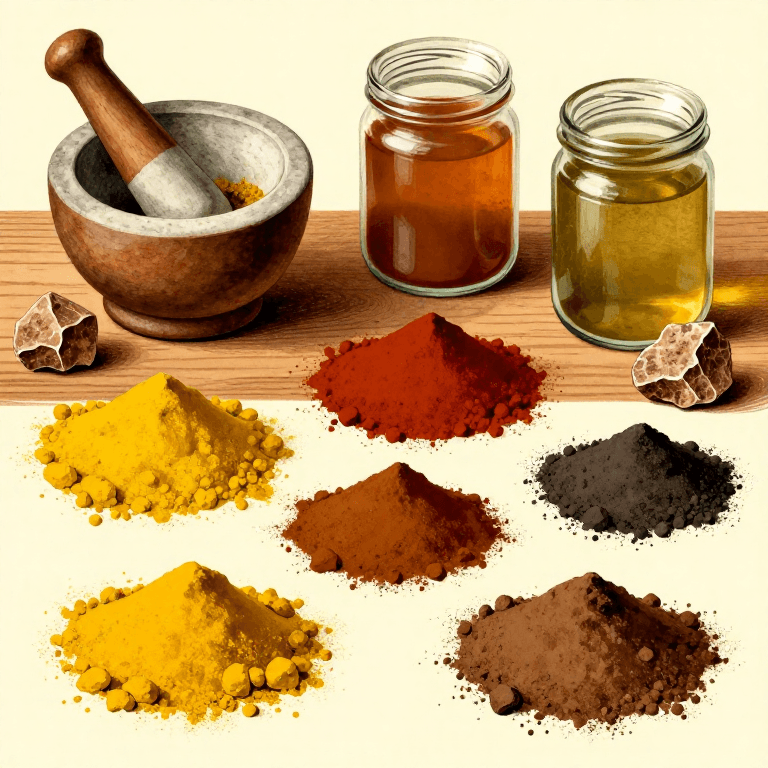
Making Natural Earth Pigments from Soil and Rocks — Collecting and Processing
โดย Mary
ศิลปะ
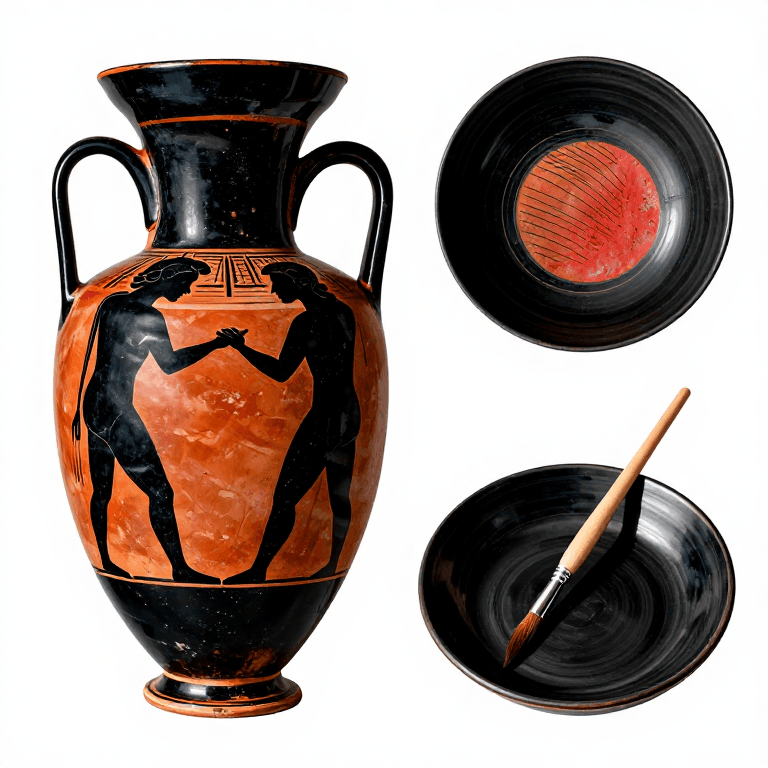
Greek Black-Figure Pottery — Painting Black-Figure Pottery with Iron Slip
โดย Clay
เซรามิกและดินเหนียว
CC0 สาธารณสมบัติ
พิมพ์เขียวนี้เผยแพร่ภายใต้ CC0 คุณสามารถคัดลอก แก้ไข แจกจ่าย และใช้งานผลงานนี้เพื่อวัตถุประสงค์ใดก็ได้ โดยไม่ต้องขออนุญาต
สนับสนุนเมกเกอร์โดยซื้อสินค้าผ่านพิมพ์เขียวของพวกเขา ซึ่งพวกเขาจะได้รับ ค่าคอมมิชชันเมกเกอร์ ที่ผู้ขายกำหนด หรือสร้างเวอร์ชันใหม่ของพิมพ์เขียวนี้และรวมเป็นการเชื่อมต่อในพิมพ์เขียวของคุณเพื่อแบ่งรายได้