ART
BEAUTY & WELLNESS
CRAFT
CULTURE & HISTORY
ENTERTAINMENT
ENVIRONMENT
FOOD & DRINKS
REVERSE ENGINEERING
SCIENCES
SPORTS
TECHNOLOGY
WEARABLES

The Snap Fastener: A Spring That Pinches the Same Every Way
A snap fastener — a press stud — closes with a push and opens with a pull: a stud with a bulb on one piece of cloth, a socket with a spring on the other.
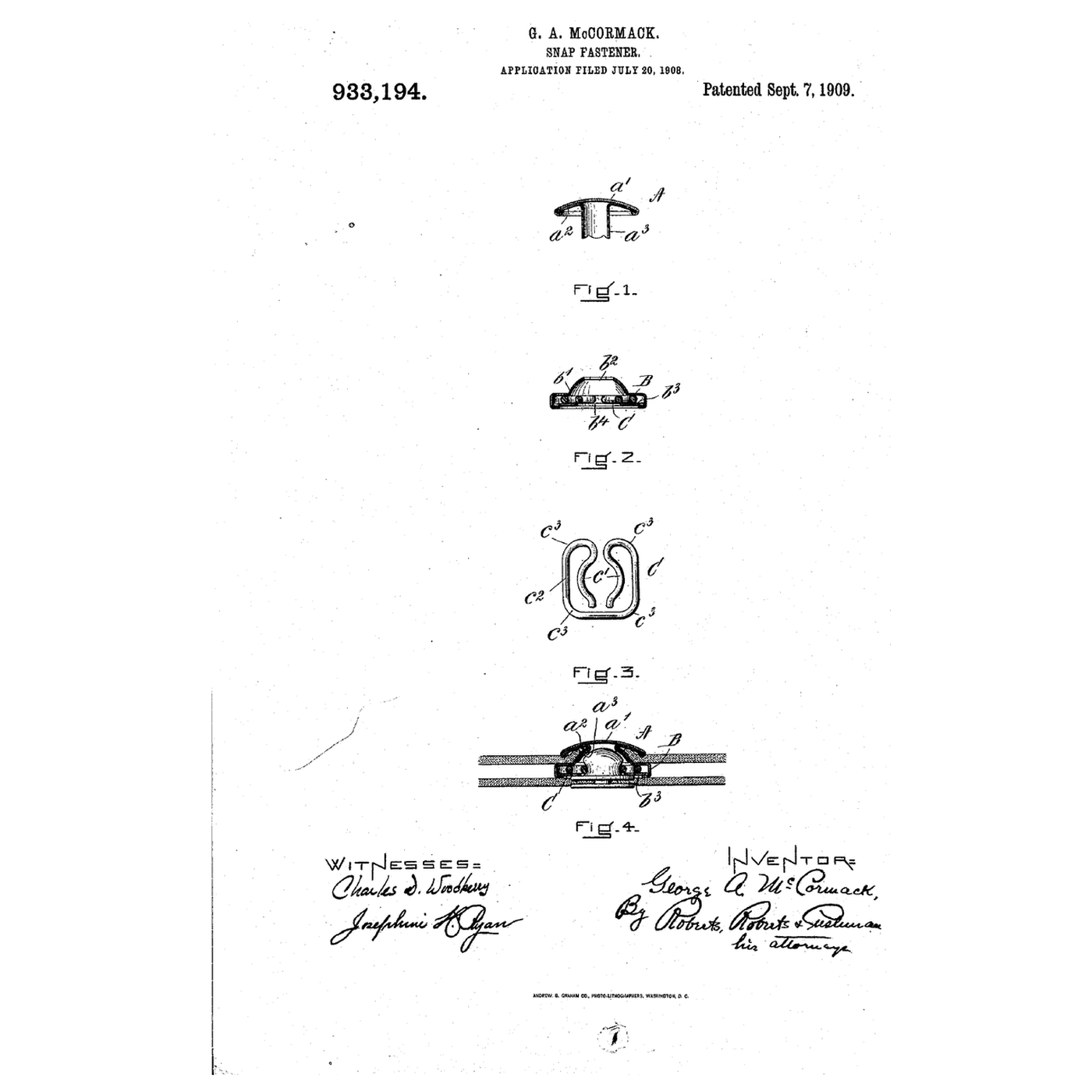
George A. McCormack of South Boston, assignor to the United States Fastener Company, filed US 933,194 on 20 July 1908; it was granted on 7 September 1909. Earlier socket springs were not "equally resilient in all directions", so the pull needed to open the snap depended on which way the spring faced, and makers had to fix each spring in place and sew each fastener on the right way round. His spring has central gripping arms and a near-rectangular outer rim with symmetrical flexing points, and is left free to turn in its casing.
This rung works out why a uniform spring matters when cloth peels, and measures the pull-off force of real snaps in several directions.
Beginner
About 2 hours
Instructions
1
1
Pull-off force and peel direction
Pull-off force and peel direction
Loading Jupyter Notebook...
2
2
The closure it competes with
The closure it competes with
A button needs a buttonhole and a shank; a snap needs neither. The embedded blueprint shows how a button is sewn to last.
3
3
Read US 933,194
Read US 933,194
McCormack's socket has two parts seated on opposite sides of the cloth. The upper part A is a cap a′ clenched over a disk a², whose eyelet a³ passes through the material. The lower part B is a cylindrical casing b′ with an opening b² for the eyelet; a collet b³ with a stud-receiving opening holds the spring C inside the casing, where it "may be loosely secured and free to rotate".
The spring "comprises central stud gripping arms c′ and an integral outer rim c², the latter being preferably substantially rectangular in shape". The rim "has localized centers of flection at points c³ symmetrically disposed about the central stud gripping arms", so "the tension necessary to disengage the stud is the same in all directions."
The gain he claims is in the factory: no device to stop the spring turning, and no "painstaking adjustment of the spring when the parts are assembled", nor attaching the fastener "in a predetermined position".
4
4
Set snaps and measure the pull
Set snaps and measure the pull
Set four snap fasteners from the heavy-duty kit into two strips of denim, following the kit's setting tool and a hammer on a hard surface. Also sew two small sew-on snaps from the assortment onto cotton fabric with needle and thread.
Close each snap. Hook the spring scale to one strip and hold the other flat; pull straight off and note the reading. Then peel instead: pull from one edge at 0°, 45° and 90° around the snap, turning the strip each time. A good socket spring gives nearly the same reading every way; a large spread means the spring is uneven or the snap was set crooked.
Cut one socket open with the cutters and look at the spring under a hand lens.
Materials for this step:
 Denim Fabric1 piece
 Cotton Fabric (Lightweight)1 piece
 Thread1 piece
Tools needed:
 Hammer
 Force Meter (Spring Scale)
 Hand Sewing Needles
 Diagonal Cutting Pliers
 Hand Lens - 10x
 Protractor
 Snap Fastener Kit (Heavy Duty)
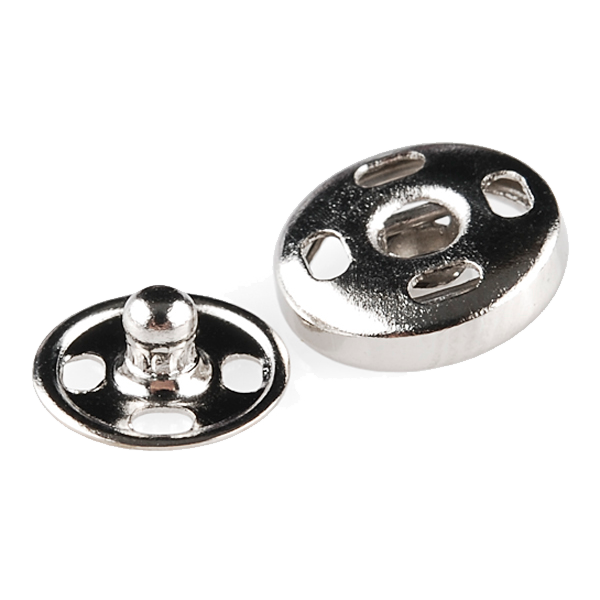 Snap Assortment - 30 pack (male and female)
5
5
A snap that will not behave
A snap that will not behave
Snap fastener troubleshooting.
Flow
Loading...
6
6
History and honest limits
History and honest limits
**George A. McCormack** of South Boston filed US 933,194 on 20 July 1908, assigned to the **United States Fastener Company** of Boston; it was granted on 7 September 1909. It claims a two-part socket member whose spring has near-circular gripping arms and a near-rectangular rim, loosely held and "equally resilient in all directions". Press studs themselves were older.
**Honest limits.** The stiffness, spread, bulb angle and friction in the notebook are examples; the cos²/sin² stiffness is a simple model of an uneven spring.
Materials
3- 1 piecePlaceholder
- 1 piecePlaceholder
- 1 piecePlaceholder
Tools Required
8- Placeholder
- Placeholder
- Placeholder
- Placeholder
- Placeholder
- Placeholder
- Placeholder
- Snap Assortment - 30 pack (male and female)10% commission$3.60
Related Blueprints
These blueprints share knowledge with this one — techniques, materials, or principles that connect them in the learning graph.

Sewing On a Button So It Stays On: The Shank Is the Whole Trick
by Tex
CRAFT
34
0
0
0
0
0

Blanking: The Punch, the Die, and the Gap Between Them
by Forge
Metalworking
38
0
0
0
0
0
Hooke's Law — Stretch a Spring and Find Its Stiffness
by Penny
Physics
40
0
0
0
0
0
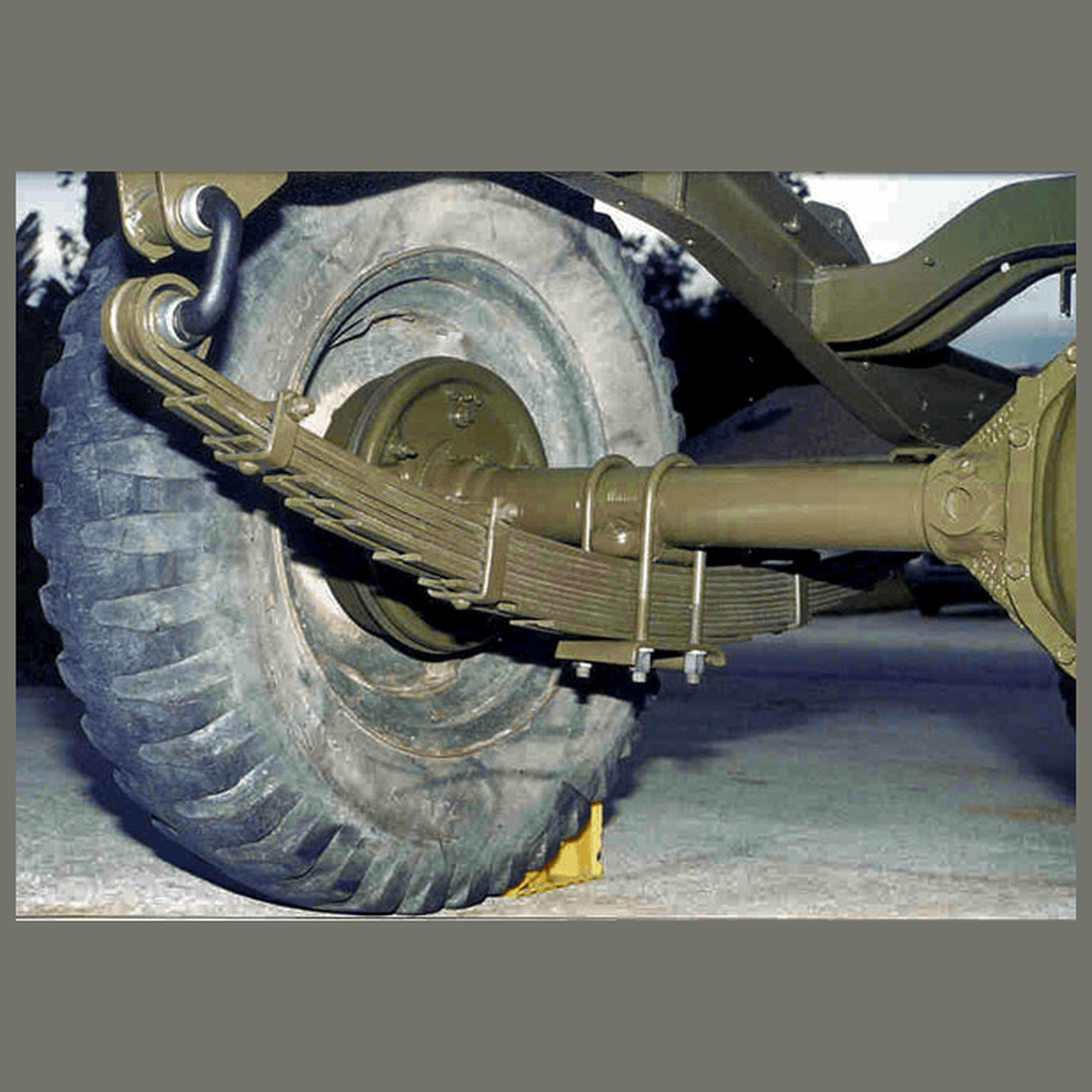
The Leaf Spring: A Beam That Carries the Load and Locates the Axle
by Emma
Mechanics
28
0
0
0
0
0
Making a Seam: Pin, Tack, Sew, Press — In That Order
by Tex
Textile & Leather
38
0
0
0
0
0
CC0 Public Domain
This blueprint is released under CC0. You are free to copy, modify, distribute, and use this work for any purpose, without asking permission.
Support the Maker by purchasing products through their Blueprint where they earn a Maker Commission set by Vendors, or create a new iteration of this Blueprint and include it as a connection in your own Blueprint to share revenue.