ART
BEAUTY & WELLNESS
CRAFT
CULTURE & HISTORY
ENTERTAINMENT
ENVIRONMENT
FOOD & DRINKS
REVERSE ENGINEERING
SCIENCES
SPORTS
TECHNOLOGY
WEARABLES


X-Beater Centrifugal-Tube Churn: Crossed Beaters With Tubes That Throw the Cream Out
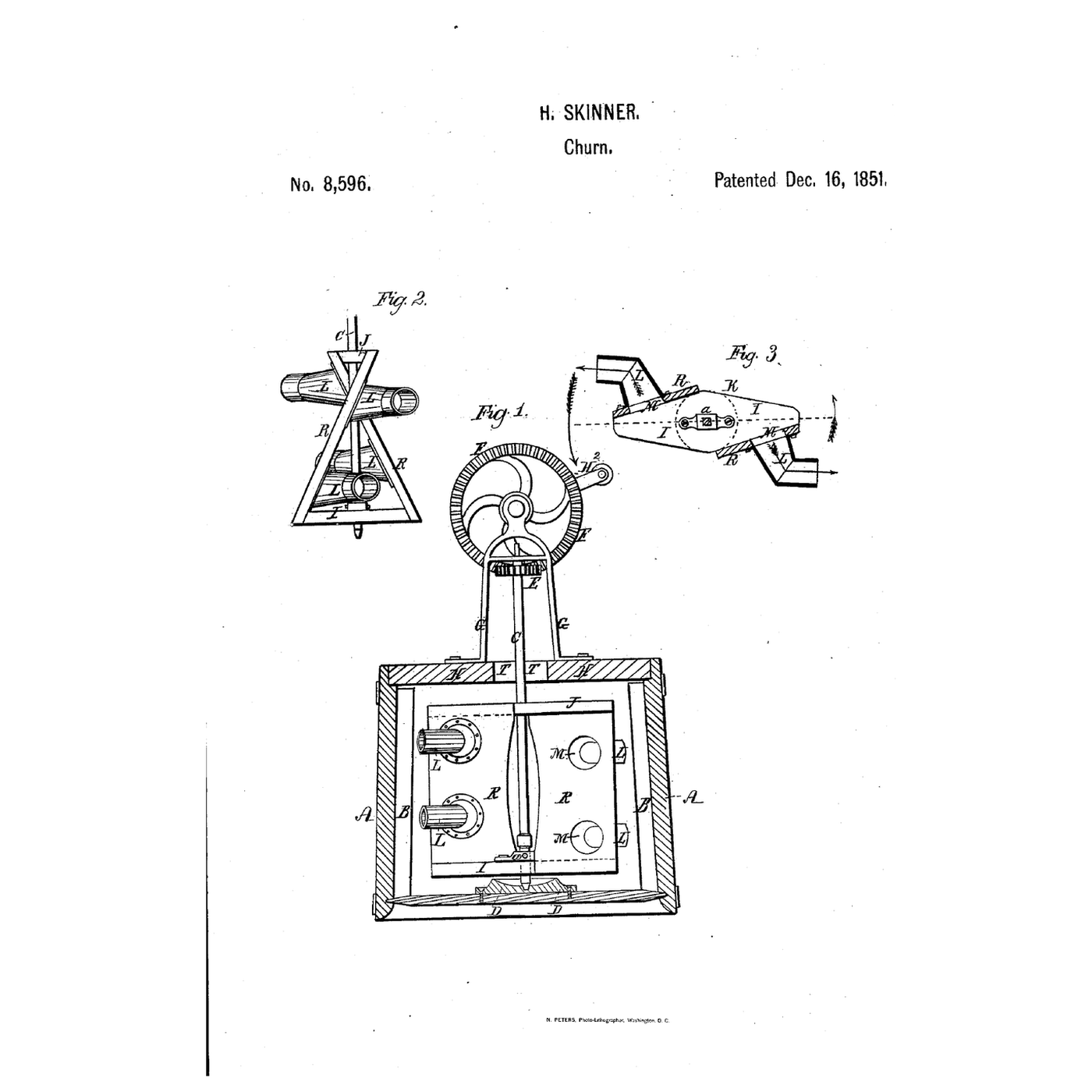
Skinner wanted to stop the cream "being carried round with the beaters in a circular mass."
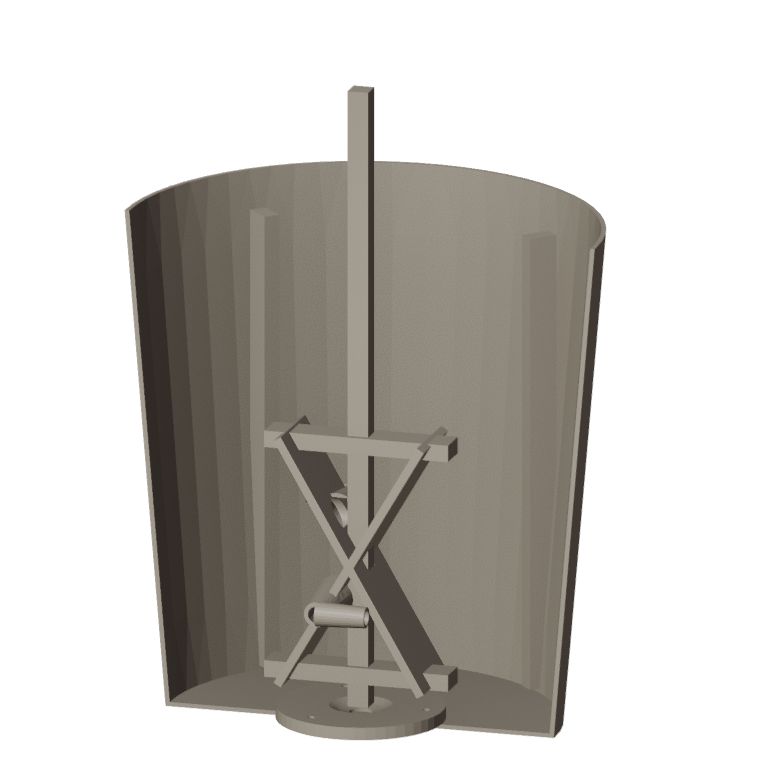
Henry Skinner of Attica, New York, received US 8,596, dated 16 December 1851, for a churn tub shaped as a frustum of a cone with four vertical ledges inside, and a dasher of two beaters fixed at their lower ends to an angular board and at their upper ends to a cross piece, inclining upward in contrary directions "so as to form a figure resembling the letter X." Tapered tin tubes from openings in the beaters, not in the same horizontal plane, discharge the cream centrifugally against the ledges and the tub. A dish-shaped plate in the bottom guides the shaft's point into its bearing.
This rung works out the throw, then prints the X beaters with their tubes and the dish plate, fits them in a tub, and makes butter.
Intermediate
About 3 hours, plus printing
Instructions
1
1
The throw
The throw
Loading Jupyter Notebook...
2
2
Breaking the cream's swirl before it
Breaking the cream's swirl before it
The embedded blueprint shapes its floats against the swirl. Skinner adds ledges in the tub and throws the cream out through tubes.
3
3
Read US 8,596
Read US 8,596
"The use of this dish shape or concave plate D, is to catch the point of the vertical shaft C, when placing it with the beaters into the tub, and direct it to the central hole in which said shaft revolves."
4
4
Print the parts
Print the parts
Print the X beaters with their tapered elbow tubes in one piece, with supports (/uploads/blueprints/x-beater-centrifugal-tube-churn-beaters.stl). Print the dish plate (/uploads/blueprints/x-beater-centrifugal-tube-churn-dish-plate.stl) and the crank arm (/uploads/blueprints/x-beater-centrifugal-tube-churn-crank-arm.stl). Print in PETG at 0.2 mm layers, 30 % infill, 4 walls; wash before first use.
Materials for this step:
 PETG Filament1 piece
Tools needed:
 FDM 3D Printer
5
5
The tub
The tub
Use a tapered food-grade bucket. Glue four plywood strips upright inside it at equal distances as his ledges, and screw the dish plate to the centre of its floor, sealed with silicone.
Materials for this step:
 20-Liter Bucket1 piece
 Plywood Sheet1 piece
 Silicone Sealant1 piece
 #8 x 1" Wood Screw1 piece
Tools needed:
 Coping Saw
 Screwdriver Set
 Clamps
6
6
Shaft and crank
Shaft and crank
Glue the beaters on a 10 mm square hardwood shaft, its foot rounded to a point to sit in the dish. Pass it through a plywood lid with a centre hole and glue on the crank arm and a dowel handle.
Materials for this step:
 Hardwood Dowels1 piecePlywood Sheet1 piece
 Wood Glue1 piece
Tools needed:
 Hand Saw
 Sandpaper
 Cordless Drill
7
7
The build in 3D
The build in 3D
FreeCAD model of this build, not of the patent: the tapered tub cut away to show the ledges, the dish plate, and the crossed beaters with their tapered elbow tubes on the shaft.
8
8
Crank and make butter
Crank and make butter
Let the heavy cream stand until it reaches about 15 °C, checked with the thermometer. Pour in 2 litres. Crank steadily; time until the butter comes. Pour off the buttermilk, add cold water, churn a little and pour off again until it runs clear; work in a pinch of salt and weigh the butter.
Materials for this step:
 Heavy Cream2000 ml
 Coarse Sea Salt1 piece
 Water1 piece
Tools needed:
 Leave-In Probe Thermometer
 Stopwatch
 Digital Kitchen Scale
 Stainless Steel Mixing Bowl (Large)
9
9
Tubes that don't throw, a shaft that wanders
Tubes that don't throw, a shaft that wanders
X-beater centrifugal-tube troubleshooting.
Flow
Loading...
10
10
History and honest limits
History and honest limits
**Henry Skinner** of Attica, Wyoming County, New York, received US 8,596, dated 16 December 1851. A pinion on the shaft's top matched a cog wheel on a metal frame on the lid's middle section, with an arm for the handle to increase the leverage; the side sections of the lid lifted off once the butter was collected. He claimed no originality in the parts except the dasher with inclined perforated paddles and tapered elbow tubes combined.
**Honest limits.** Our crank turns the shaft directly, without his cog wheel and pinion; a bucket and printed parts stand in for his tub and tin tubes. FDM prints hold food in their layer lines, so wash well and replace when worn. Your times and weights are the result.
Materials
10- 1 piecePlaceholder
- 1 piecePlaceholder
- 1 piecePlaceholder
- 1 piecePlaceholder
- 1 piecePlaceholder
- 1 piecePlaceholder
- 1 piecePlaceholder
- 2000 mlPlaceholder
- 1 piecePlaceholder
- 1 piecePlaceholder
Tools Required
11- Placeholder
- Placeholder
- Placeholder
- Placeholder
- Placeholder
- Placeholder
- 1 vendor sell this, none ship to you yetPlaceholder
- Placeholder
- Placeholder
- Placeholder
- Placeholder
Design Files
1Related Blueprints
These blueprints share knowledge with this one — techniques, materials, or principles that connect them in the learning graph.
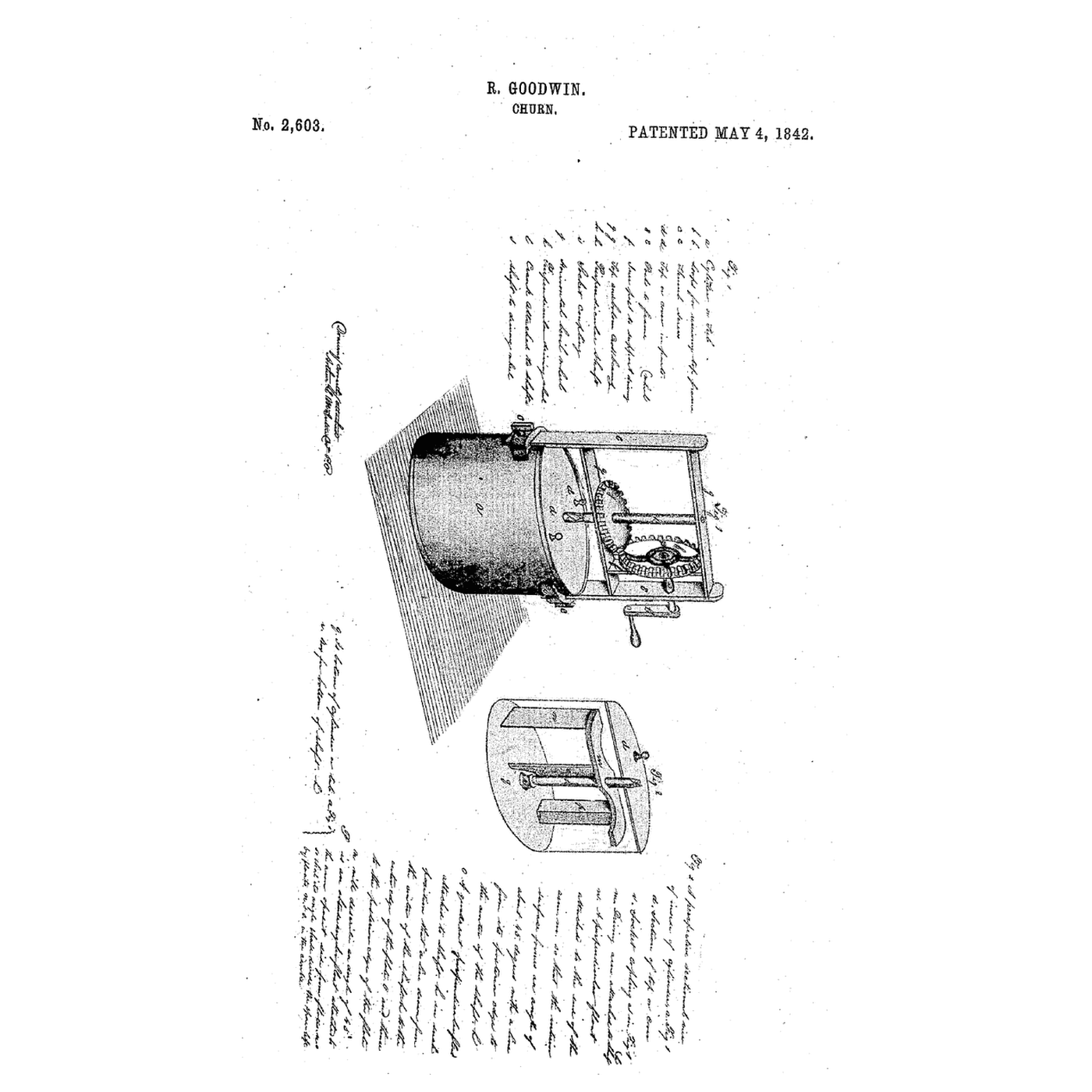
Rotary Stirring Churn: Three Floats That Stop the Cream Merely Going Round
by YourGrandma
FOOD & DRINKS
1
0
0
0
0
0
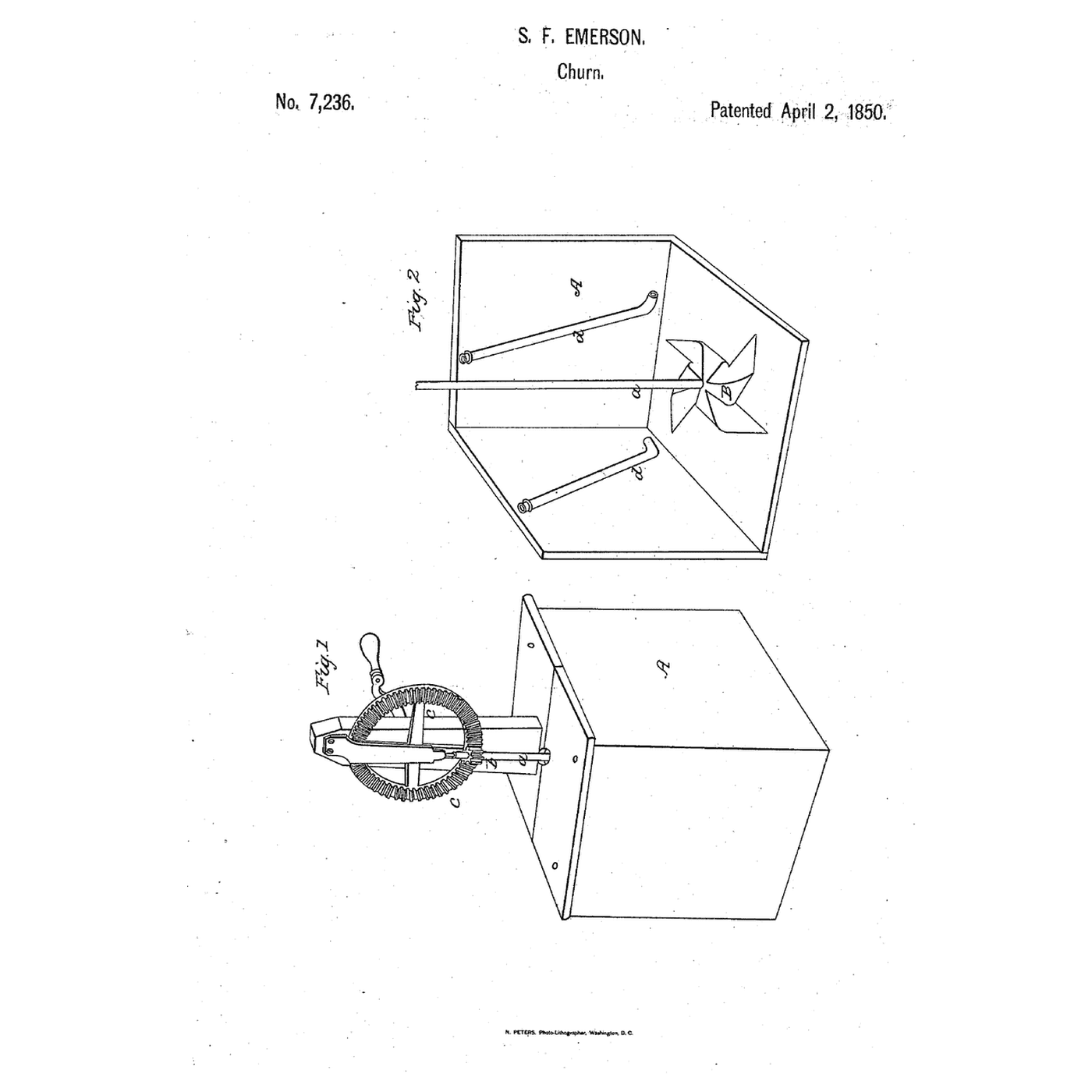
Pinwheel Air-Tube Churn: A Beater Cut From One Tin Sheet, Tubes That Feed the Wave
by YourGrandma
FOOD & DRINKS
2
0
0
0
0
0
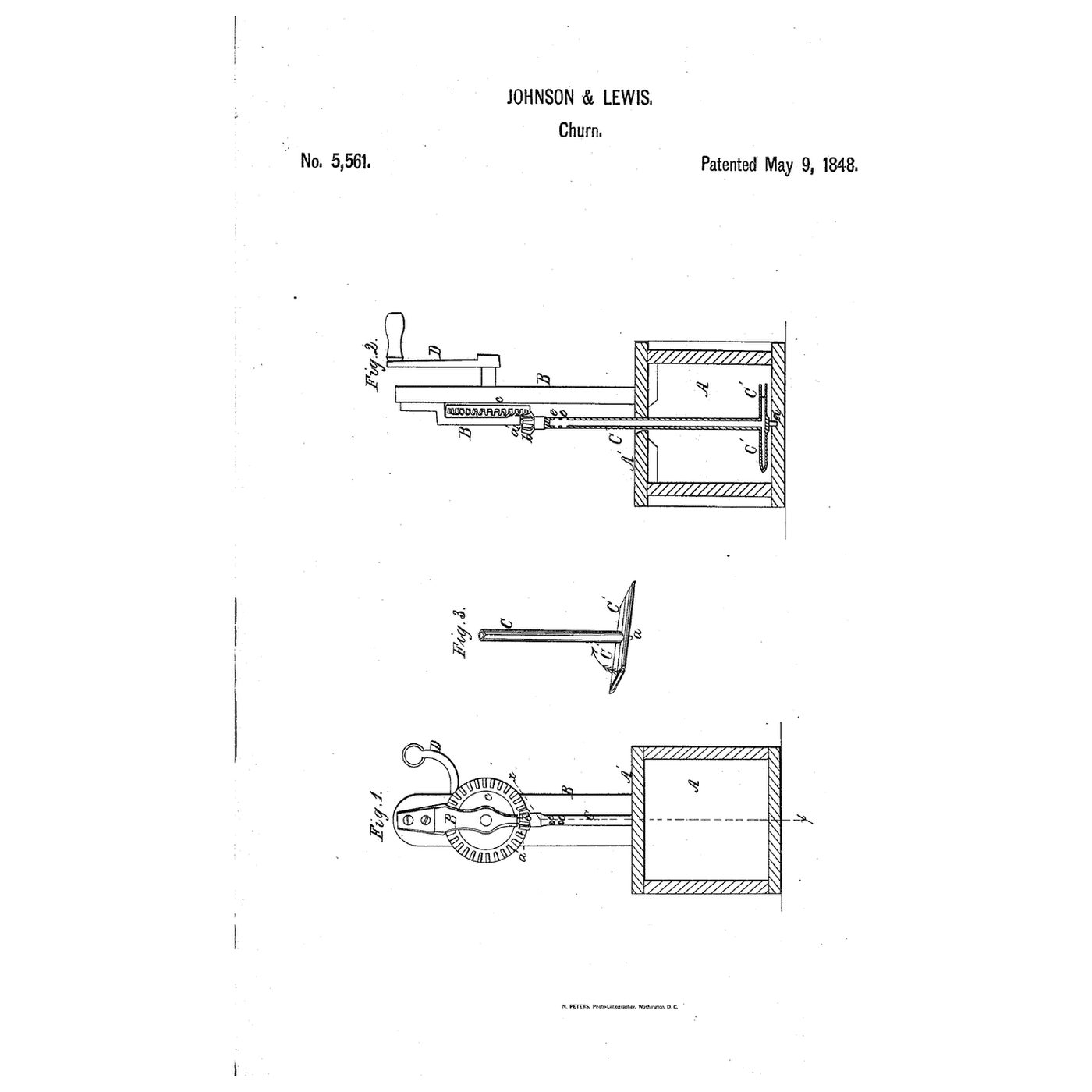
Hollow-Arm Air Churn: A Spinning Dasher That Breathes Air Into the Cream
by Emma
FOOD & DRINKS
1
0
0
0
0
0
CC0 Public Domain
This blueprint is released under CC0. You are free to copy, modify, distribute, and use this work for any purpose, without asking permission.
Support the Maker by purchasing products through their Blueprint where they earn a Maker Commission set by Vendors, or create a new iteration of this Blueprint and include it as a connection in your own Blueprint to share revenue.