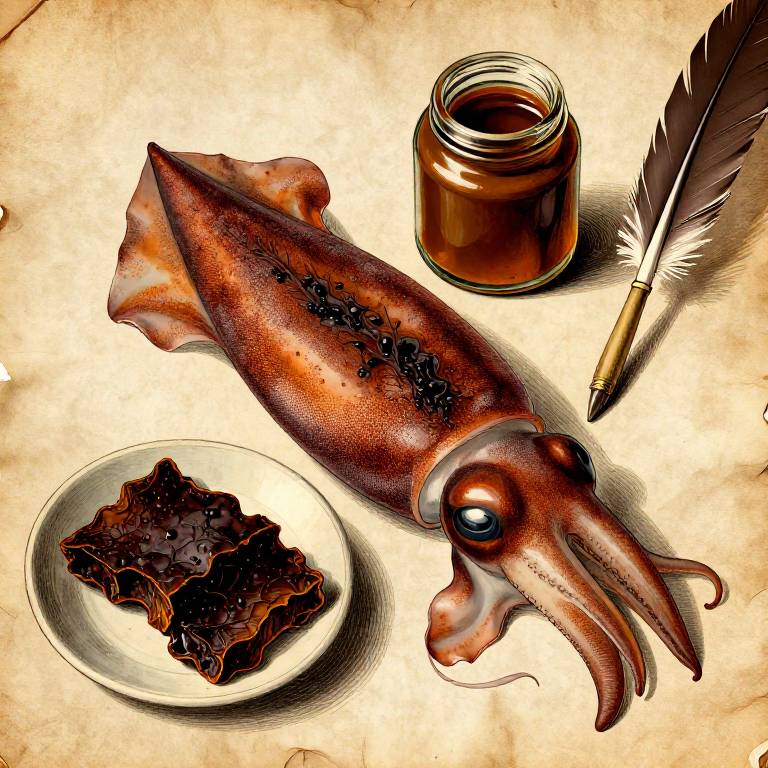

Making Sepia Ink from Cuttlefish — The Natural Brown Ink of Mediterranean Artists
Sepia is a rich, warm brown ink obtained from the ink sac of the common cuttlefish (Sepia officinalis) and related cephalopods. The word 'sepia' itself comes from the Greek σηπία (sēpía), meaning cuttlefish. The ink is a natural suspension of melanin — the same pigment that colours human skin and hair — along with mucus and minor components. Cuttlefish and squid expel this ink as a defensive cloud to confuse predators.
Sepia ink has been used as a writing and drawing medium since Classical antiquity. Cicero mentions writing with the ink of the cuttlefish, and Roman-era inkwells have been found containing residues of cephalopod ink. As a drawing ink, sepia produces warm, transparent brown washes with a beautiful range of tones from pale golden-brown to deep chocolate. It was particularly favoured by Old Master draughtsmen — Rembrandt, Claude Lorrain, and many 18th-century watercolourists used sepia extensively for sketches and wash drawings.
Sepia ink is non-toxic, moderately lightfast (it fades very slowly in strong light over decades), and has a naturally warm, organic quality that no synthetic brown can replicate. The preparation is simple: the ink sac is extracted, dried, and the dried ink is reconstituted in water with a small amount of gum arabic as a binder.
Instruções
Extract the ink sac from the cuttlefish
Extract the ink sac from the cuttlefish
Obtain a fresh cuttlefish from a fishmonger or fish market. The ink sac is a small, silvery-black, pear-shaped organ located in the body cavity near the head, between the gills. Carefully cut open the mantle (body) along one side and locate the ink sac — it is fragile, so handle gently. Remove the sac intact by cutting the small duct that connects it to the siphon. One large cuttlefish yields approximately 2-5 ml of liquid ink. For larger quantities, collect sacs from several cuttlefish. You can also use squid ink sacs, though these are smaller. Place the intact sacs in a clean bowl.
Materiais para este passo:
 Bolsa de tinta de choco10 peças
Ferramentas necessárias:
 Faca de sílex
Extract and collect the raw ink
Extract and collect the raw ink
Carefully puncture each ink sac over a clean glass jar and squeeze out the liquid ink. The raw ink is a thick, very dark brown-black liquid with a faint marine smell. Rinse the emptied sacs with a small amount of clean water to extract remaining ink. The total volume from 10 cuttlefish sacs should be approximately 20-50 ml of concentrated ink. If you can obtain pre-extracted cuttlefish ink (sold by some fishmongers and specialty food suppliers), this step can be simplified — the commercial product is identical.
Ferramentas necessárias:
 Frascos de vidro com tampa
Dry the ink to a concentrate
Dry the ink to a concentrate
Pour the collected liquid ink into a shallow ceramic dish and place in a warm, dry, well-ventilated area away from direct sunlight. The ink slowly dries over 5-7 days to a hard, brittle, very dark brown-black cake or crust. This drying concentrates the melanin pigment and removes the water and volatile components. The dried sepia cake can be stored indefinitely in this form — it does not degrade. Historically, sepia was traded in dried cake form across the Mediterranean. Once fully dry, the cake should be hard and brittle, snapping cleanly when broken.
Ferramentas necessárias:
 Copo de precipitação de borossilicato
Grind and reconstitute the ink
Grind and reconstitute the ink
Break the dried sepia cake into small pieces and grind to a fine powder in a mortar. To prepare usable ink, dissolve the powder in warm water — start with approximately 1 part sepia powder to 10 parts water, and adjust the concentration to taste. More powder gives a darker, more intense brown; more dilution gives pale, golden washes. Add a small amount of gum arabic (approximately 5% by weight of the dissolved ink) as a binder — this gives the ink body, improves flow from a pen, and helps it adhere to paper. Stir thoroughly until completely dissolved.
Materiais para este passo:
 Goma-arábica5 g
Ferramentas necessárias:
 Almofariz e pilão de pedra
 Vareta de agitação
Store and use
Store and use
Store the reconstituted sepia ink in a tightly sealed dark glass jar. The ink keeps well for weeks in liquid form, though it may develop a slight marine smell over time — adding a drop of clove oil prevents mould growth. Sepia ink is a superb drawing and wash medium: it flows beautifully from a quill or reed pen, produces warm, transparent washes when diluted, and has a natural tonal range from pale cream-brown to deep chocolate. Unlike iron gall ink (which eats into paper over centuries), sepia is gentle on paper and does not corrode. For watercolour washes, dilute further with water. Store extra dried sepia cake in a sealed jar — it keeps indefinitely and can be reconstituted at any time.
Ferramentas necessárias:
 Frascos de vidro escuro com fecho hermético
Materiais
2- 10 peçasReferência
- 5 gReferência
Ferramentas necessárias
6- Referência
- Referência
- Referência
- Referência
- Referência
Materiais de Blueprints conectados
Este projeto faz
Blueprints relacionados
Estes blueprints compartilham conhecimento — técnicas, materiais ou princípios
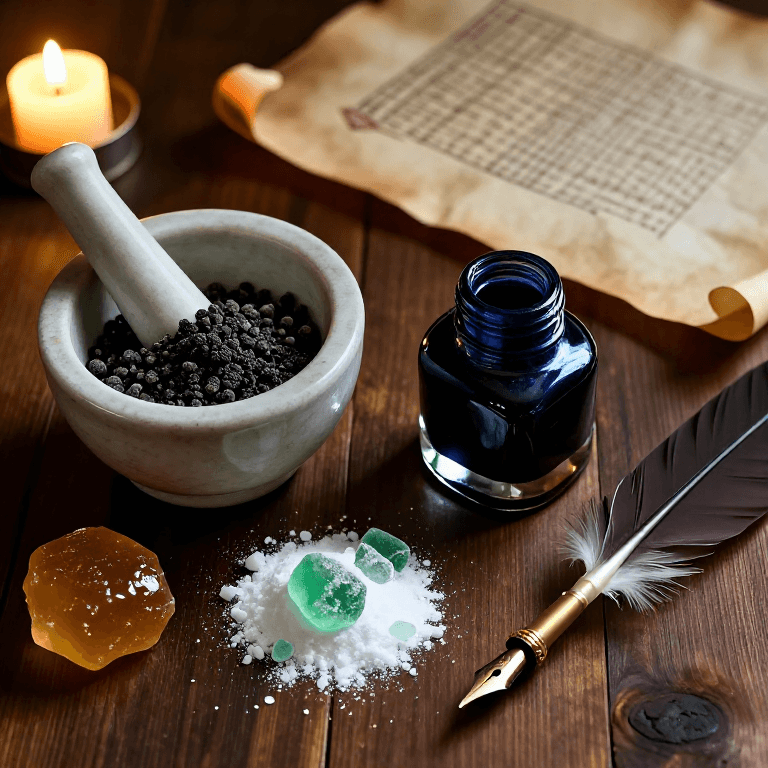
Making Iron Gall Ink from Oak Galls — Medieval Writing Ink
por Charlie
Química
Making Iron Gall Ink from Oak Galls
por Tex
ARTE
Making Watercolour Paint from Raw Pigments — Gum Arabic Binder
por Charlie
ARTE
Making Egg Tempera Paint — The Medieval Panel Painting Medium
por Charlie
ARTE
Making Bone Black Pigment — Calcining Animal Bones into the Warm Black of Old Master Painters
por Charlie
ARTE
Making Raw and Burnt Umber — The Manganese Earth Pigments of Warm Shadow and Deep Brown
por Charlie
ARTE
Making Raw and Burnt Sienna — The Warm Iron Earth from Tuscany
por Charlie
ARTE
Making Gamboge Yellow — Preparing the Tree Resin Pigment of Southeast Asian Painters
por Charlie
ARTE
Making Dammar Varnish — The Clear Picture Varnish for Oil Paintings
por Charlie
ARTE
CC0 Domínio Público
Este blueprint é liberado sob CC0. Você é livre para copiar, modificar, distribuir e usar este trabalho para qualquer finalidade, sem pedir permissão.
Apoie o Maker comprando produtos através do Blueprint, onde ele ganha uma Comissão Maker definida pelos vendedores, ou crie uma nova versão deste Blueprint e inclua-o como conexão no seu próprio Blueprint para compartilhar receita.