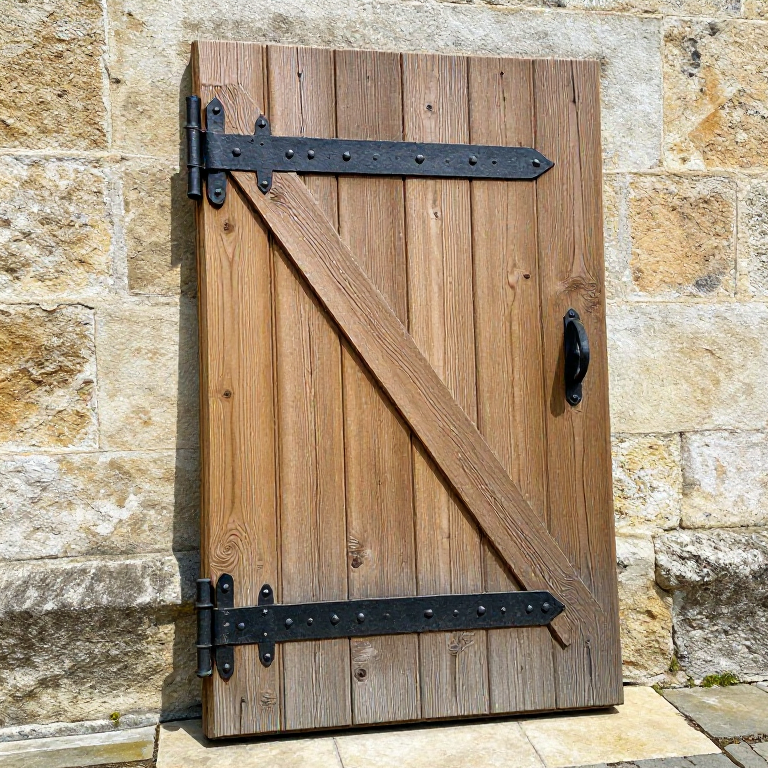


Building a Plank Door — A Battened Door from Riven Timber and Iron Nails
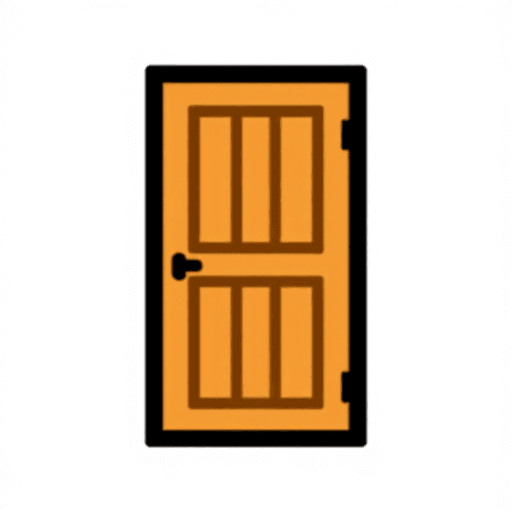
The simplest type of door — and the most common in medieval Europe — is the plank-and-batten door: several wide boards laid side by side and held together by horizontal battens nailed across the back. No frame, no panel, no joinery more complex than a nail. Despite this simplicity, a well-made plank door lasts for centuries — examples survive in English churches dating to the 12th century.
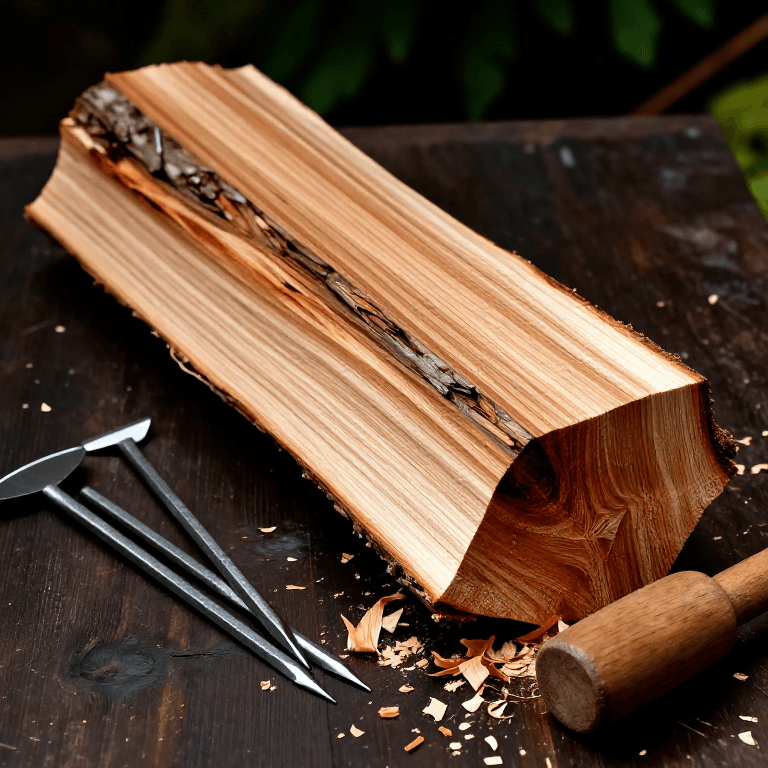
The planks must be riven, not sawn. Riven planks follow the natural grain of the wood, making them resistant to moisture penetration and warping. The battens (horizontal crosspieces) are nailed across the back, preventing the planks from cupping or separating. A diagonal brace running from the hinge side at the top to the latch side at the bottom prevents the door from sagging under its own weight — without this brace, a heavy plank door drops at the free corner within months.
Iron hinges and a latch complete the door. The strap hinge — a long iron bar attached to the batten and pivoting on a pin driven into the door frame — is the traditional hinge for plank doors, distributing the weight across several battens rather than concentrating it at two points.
Anweisungen
Rive and dress the door planks
Rive and dress the door planks
Benötigte Werkzeuge:
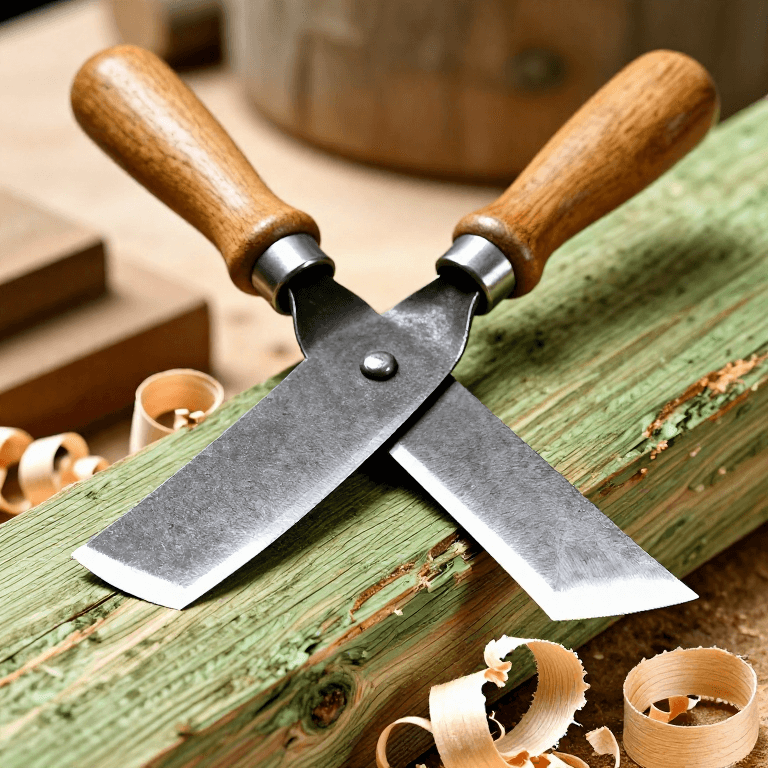
 Zugmesser
Lay out the planks and mark the battens
Lay out the planks and mark the battens
Cut and attach the battens
Cut and attach the battens
Materialien für diesen Schritt:
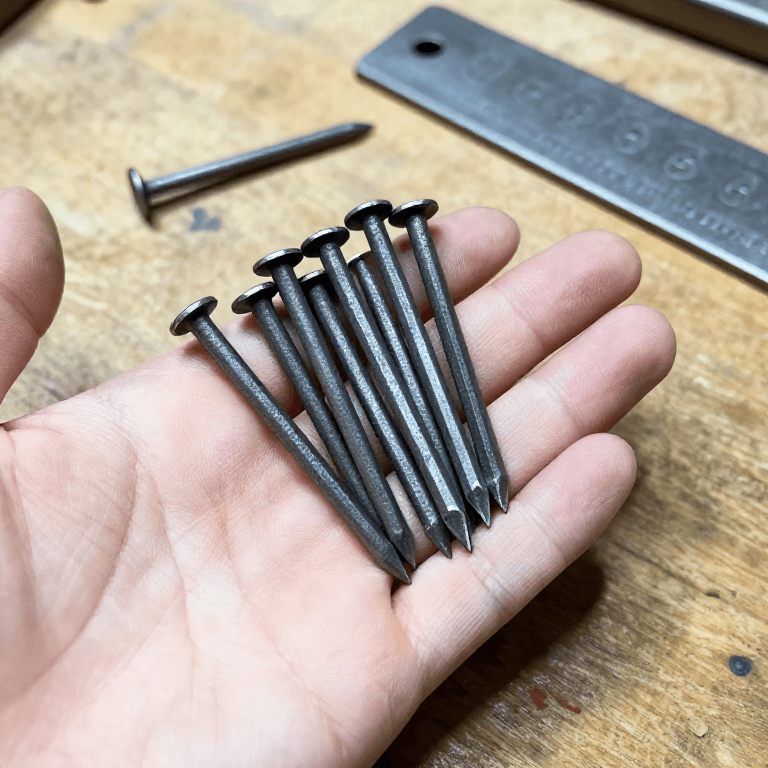
 Eisennägel30 Stück
Benötigte Werkzeuge:
 Schmiedehammer
Fit the diagonal brace
Fit the diagonal brace
Hang the door on strap hinges
Hang the door on strap hinges
Benötigte Werkzeuge:
 Eisernes Langband
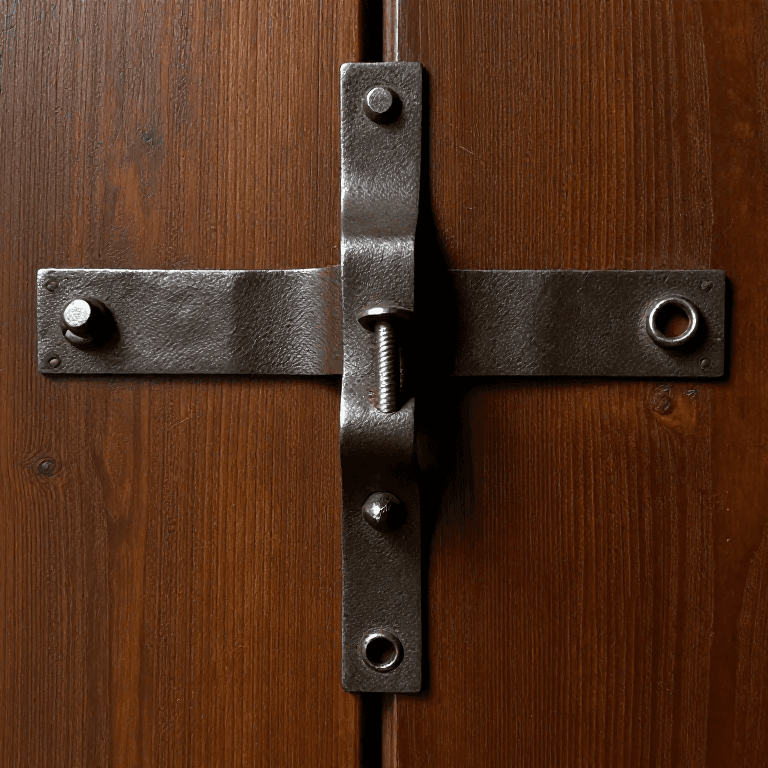
Fit a latch and check the swing
Fit a latch and check the swing
Materialien
1- 30 StückPlatzhalter
Benötigte Werkzeuge
3- Platzhalter
- Platzhalter
- Platzhalter
Materialien verbundener Blueprints
Dieser Bauplan stellt her
Verwandte Blueprints
Diese Blueprints teilen Wissen — Techniken, Materialien oder Prinzipien
CC0 Gemeinfrei
Dieser Blueprint ist unter CC0 veröffentlicht. Sie dürfen dieses Werk für jeden Zweck frei kopieren, ändern, verbreiten und verwenden, ohne um Erlaubnis zu fragen.
Unterstützen Sie den Maker, indem Sie Produkte über seinen Blueprint kaufen, wo er eine Maker-Provision von Anbietern festgelegt, verdient. Oder erstellen Sie eine neue Iteration dieses Blueprints und verbinden Sie ihn in Ihrem eigenen Blueprint, um Einnahmen zu teilen.