
アート
美容とウェルネス
工芸
文化と歴史
エンターテインメント
環境
食品と飲料
グリーンフューチャー
リバースエンジニアリング
科学
スポーツ
テクノロジー
ウェアラブル
Making Treenails — Wooden Pegs for Timber Framing and Shipbuilding
Woody

作成者

Woody

26. 5月 2026NO
0
0
0
0
0

Making Treenails — Wooden Pegs for Timber Framing and Shipbuilding

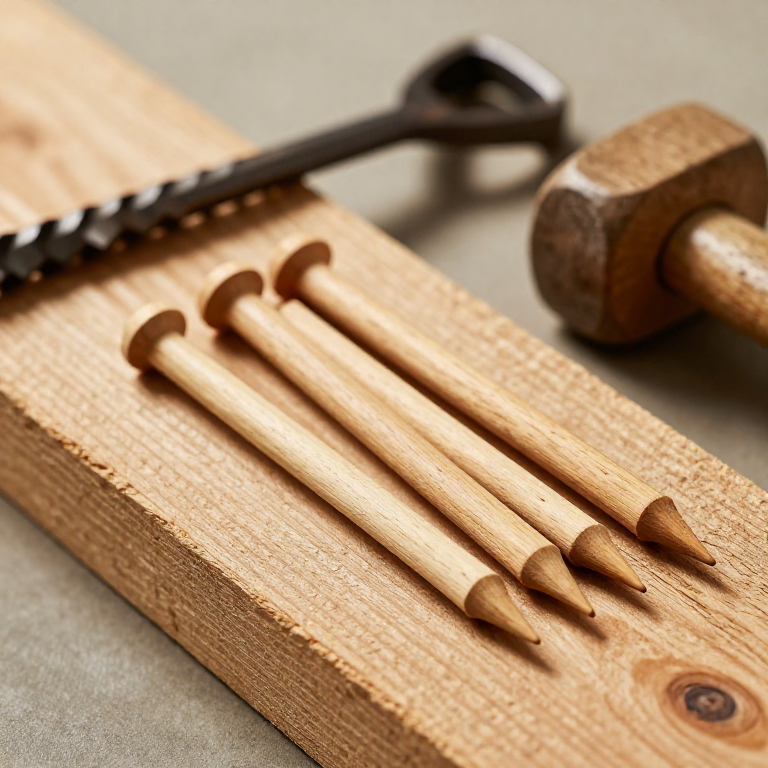
Before iron nails were cheap, wood was fastened with wood. A treenail (pronounced 'trunnel') is a cylindrical wooden peg driven into a bored hole to lock a timber joint together. Treenails held together medieval roof trusses, Viking longships, and post-and-beam barns for centuries. In many applications they outperform iron nails — they do not rust, they swell when wet to tighten the joint, and they flex with the timber instead of working loose.

Treenails are always made from a wood harder or at least as hard as the timber they join. Oak treenails in oak frames, or locust treenails in softwood construction. They are riven from straight-grained stock, never sawn — riving preserves the grain continuity that gives the peg its shear strength. A sawn peg has cut fibres that snap under load.

The technique is simple: rive a billet into rough square sections, then round them by driving through a steel plate with a round hole (a rounding die) or by shaving with a drawknife. The finished treenail is slightly tapered so it can be started in the hole and driven home with a mallet. Some traditions split the protruding end and drive a small hardwood wedge into the split, locking the treenail permanently.

初心者
1-2 hours (for a batch of 20-30 pegs)

手順

1

Select straight-grained hardwood

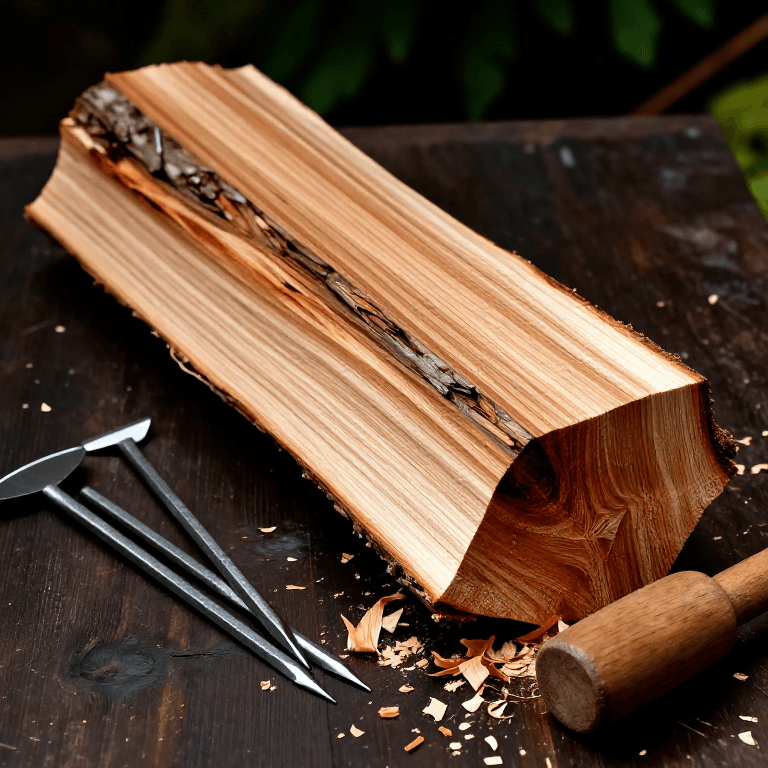
Choose a piece of oak, ash, locust, or similar dense hardwood with perfectly straight grain and no knots. The grain must run the full length of the peg without deviation — any cross-grain weakness means the treenail will snap under shear load. Green wood works best for riving. You need a billet about 30-40 cm long and at least 8 cm in diameter to produce a useful batch of pegs.
2

Rive the billet into square blanks

Split the billet lengthwise into quarters using a froe or wedge, then split each quarter into pieces roughly 2-3 cm square in cross-section. The exact size depends on the hole diameter you are pegging — the blanks should be slightly larger than the finished peg. Each split must follow the grain precisely. Discard any blanks where the grain runs out the side — these will be weak pegs.

必要な工具:

FroeFroe
3

Round the blanks

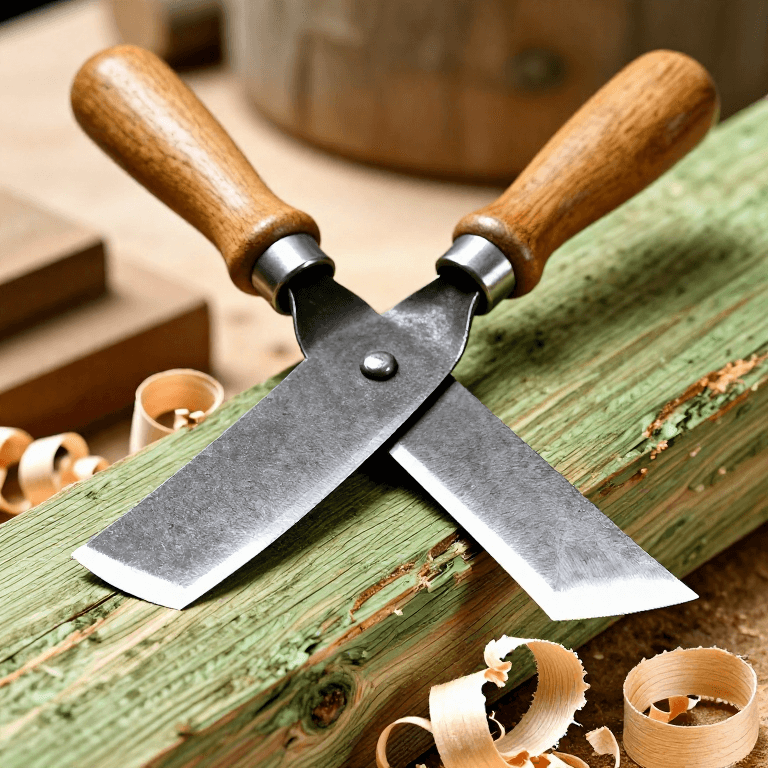
Each square blank must be rounded to fit a bored hole. The traditional method is a rounding die — a thick iron plate with a round hole slightly smaller than the blank. Place the blank on the hole and drive it through with a mallet. The plate shaves off the corners and produces a cylindrical peg in one stroke. Without a die, use a drawknife on a shave horse to whittle the blank round, turning it frequently to keep the cross-section circular.
4

Taper the leading end

Shave a slight taper on one end of each peg — about 2-3 cm of gradual narrowing to a blunt point. The taper lets the peg start in the hole and self-centre as it is driven. Do not sharpen to a point — a sharp tip splits the surrounding timber. The taper should be gentle enough that the peg contacts the hole walls within the first centimetre of driving.
5

Bore the holes and drive the treenails

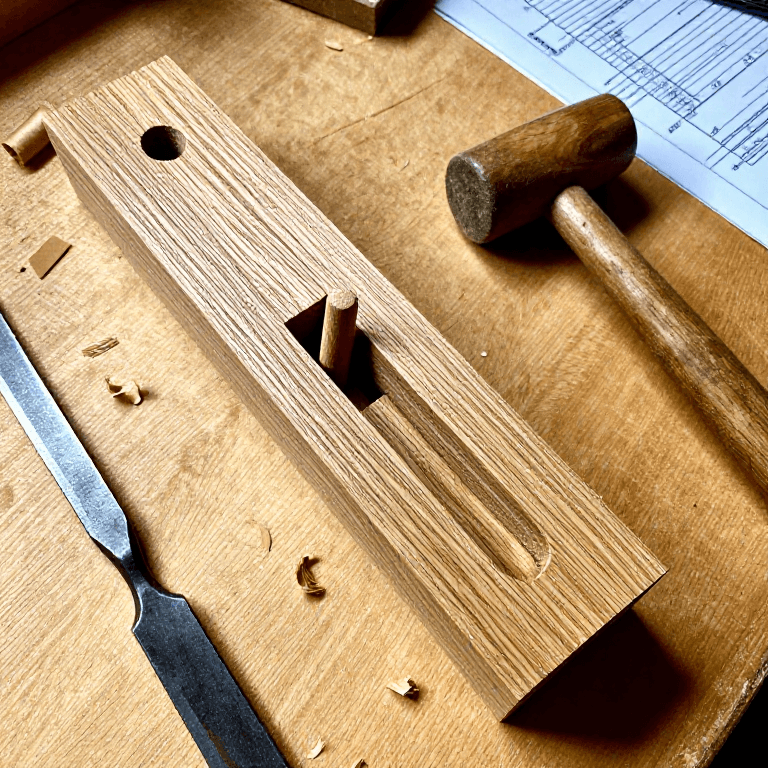
Bore holes through the timber joint with an auger. The hole diameter should match the peg diameter closely — a loose peg has no holding power. In traditional timber framing, the hole in the tenon is offset slightly from the hole in the mortise (draw-boring). When the treenail is driven through both, it pulls the joint tight. Drive the peg with a wooden mallet, not a metal hammer — metal mushrooms the end of the peg. Drive until the peg is snug and flush or slightly protruding.

必要な工具:

Hand AugerHand Auger
Wooden MalletWooden Mallet
6

Wedge the protruding end (optional lock)

For a permanent joint, let the treenail protrude 1-2 cm beyond the far face of the timber. Split the protruding end with a chisel and drive a thin hardwood wedge into the split. The wedge expands the end of the peg inside the hole, making it impossible to pull out. This is the same principle as a through-wedged tenon. In shipbuilding, treenails were always wedged on both ends — the inner end wedged before the plank was offered up, the outer end wedged after driving.

必要な工具

3

接続ブループリントの材料

CC0 パブリックドメイン

このブループリントはCC0で公開されています。許可を求めずに、自由にコピー、修正、配布、あらゆる目的で使用できます。

メイカーを応援するには、ブループリント経由で製品を購入してください。メイカーには メイカーコミッション がベンダーにより設定されています。または、このブループリントの新しいイテレーションを作成し、自分のブループリントにコネクションとして含めて収益を共有できます。

ディスカッション

(0)

ログイン してディスカッションに参加

コメントを読み込み中...