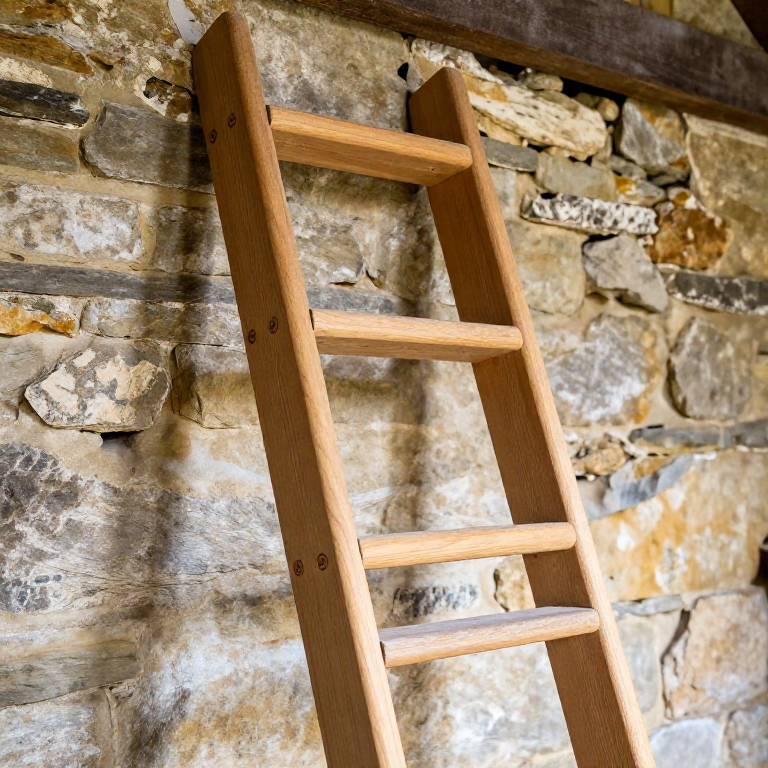


Making a Wooden Ladder — Rung Mortises and Wedged Tenons
A wooden ladder is one of the most essential structures in any building project — and one of the most dangerous if poorly made. A rung ladder consists of two long poles (the stiles) with a series of horizontal rungs mortised through them. Every rung is a structural beam carrying the full weight of the climber, and every joint must hold under dynamic loading — the shock of a foot landing on a rung is several times the climber's static weight.
The stiles must be straight-grained poles, ideally from a naturally straight tree like ash, spruce, or larch. Ash is the traditional choice — strong, flexible, and light for its strength. The rungs are short pieces of hard, dense wood — oak or beech — with tenons that pass through the stile and are wedged on the far side. The wedge locks the rung permanently and prevents the joint from working loose under repeated loading.
A well-made wooden ladder lasts for decades and has one advantage over metal: it does not conduct electricity. For this reason, wooden ladders remain in use by electricians even today. The technique described here — through-mortised, wedged rungs — is the strongest form of ladder construction and has been used unchanged since at least the Bronze Age.
手順
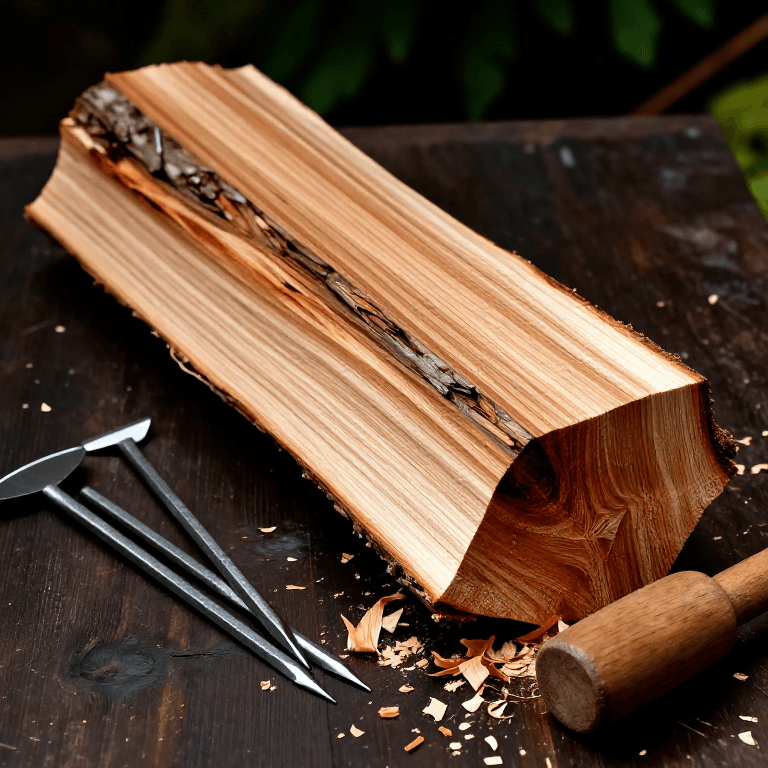
Select and prepare the stiles
Select and prepare the stiles
必要な工具:
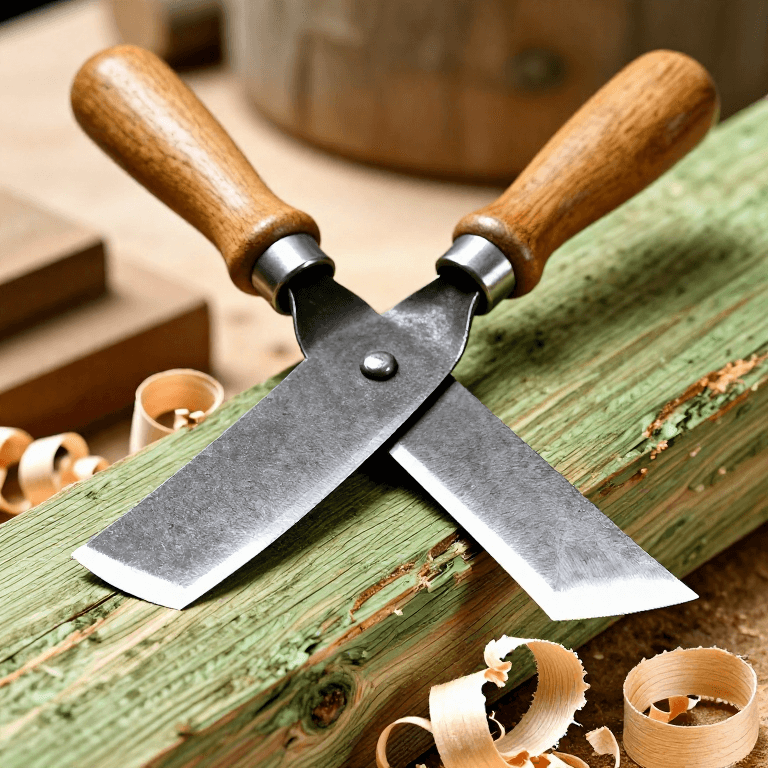
 ドローナイフ
Bore the rung mortises
Bore the rung mortises
必要な工具:
 手回しぎり(オーガー)
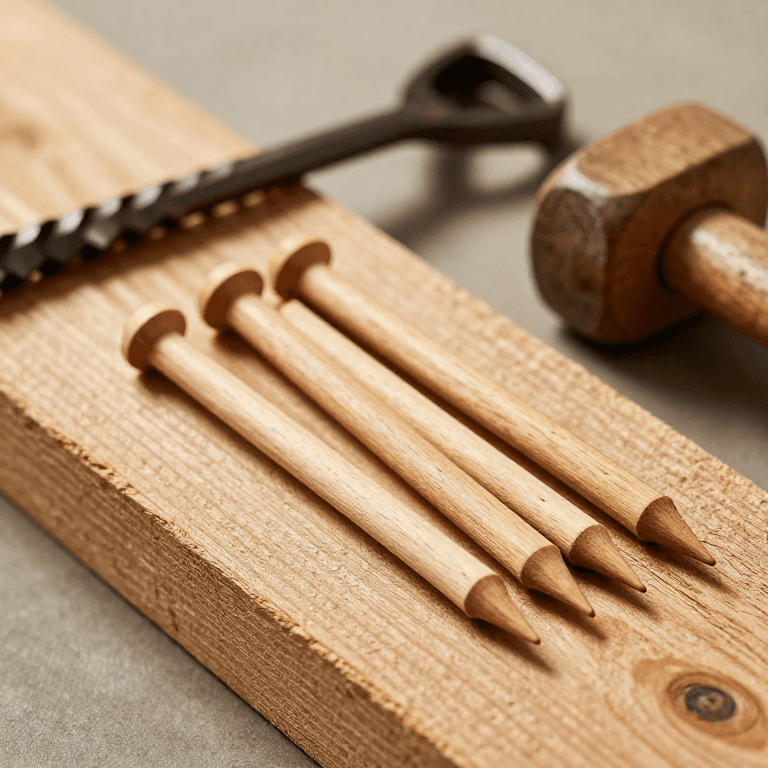
Turn or shape the rungs
Turn or shape the rungs
必要な工具:
ドローナイフAssemble the ladder
Assemble the ladder
必要な工具:
 木槌
木槌Wedge the rung tenons
Wedge the rung tenons
このステップの材料:
 堅木の楔1 個
必要な工具:
 木工のみセット
Test and inspect every joint
Test and inspect every joint
接続ブループリントの材料
この設計図で作るもの

関連ブループリント
これらのブループリントは知識を共有しています — 技術、材料、原理
CC0 パブリックドメイン
このブループリントはCC0で公開されています。許可を求めずに、自由にコピー、修正、配布、あらゆる目的で使用できます。
メイカーを応援するには、ブループリント経由で製品を購入してください。メイカーには メイカーコミッション がベンダーにより設定されています。または、このブループリントの新しいイテレーションを作成し、自分のブループリントにコネクションとして含めて収益を共有できます。