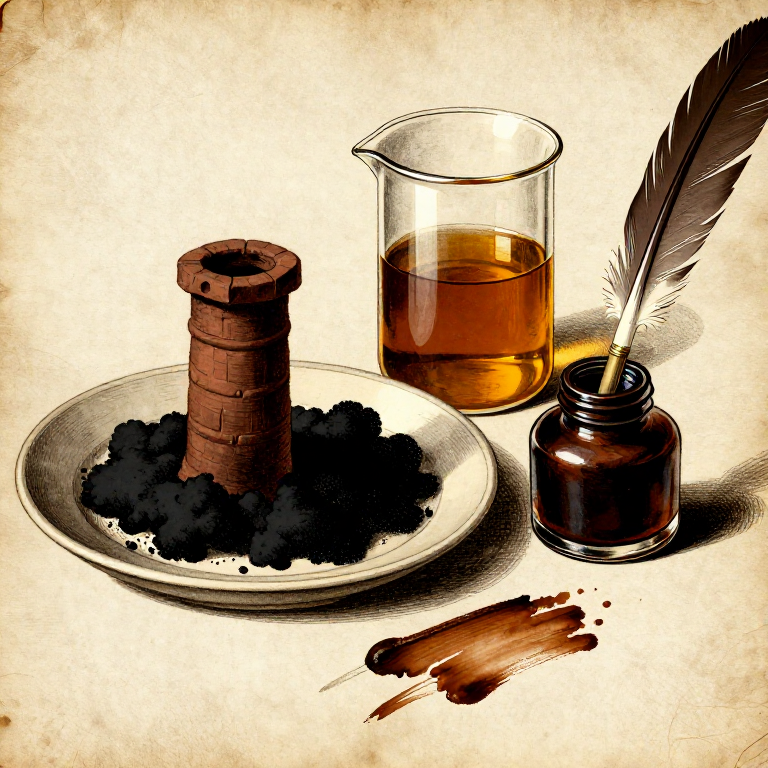

Making Bistre Ink from Wood Soot — The Warm Brown Drawing Ink of Old Masters
Bistre is a warm, transparent brown ink and pigment made by extracting the soluble tarry compounds from wood soot (particularly beech, birch, or other hardwood soot). Unlike lampblack (which is pure carbon and produces a cool, neutral black), bistre derives its warm golden-brown colour from the partially combusted organic compounds — tars, phenols, and other pyrolysis products — present in wood soot. These compounds are water-soluble and can be extracted by boiling the soot in water.
Bistre was extensively used as a drawing and wash medium by European artists from the 14th to 19th centuries. Rembrandt used bistre for many of his pen-and-wash drawings, as did Claude Lorrain, Giovanni Battista Tiepolo, and countless others. Its warm, golden-brown transparency made it ideal for sketching and tonal washes — producing a range from pale honey-gold to deep chocolate-brown. Bistre predates sepia in European art and was gradually replaced by it in the 18th century (sepia being warmer and more uniform).
Bistre is non-toxic, simple to make, and requires only wood soot and water. Its lightfastness is moderate — it fades slowly in strong light over decades, but drawings kept in albums survive centuries. The colour varies depending on the wood species: beech soot gives a warm golden-brown, birch soot a slightly cooler brown, and pine soot a darker, more reddish-brown.
안내
Collect wood soot from a chimney or flue
Collect wood soot from a chimney or flue
Scrape soot from the inside of a chimney, stove flue, or fireplace that has been burning hardwood (beech, birch, oak, or ash). The soot should be the soft, brownish-black deposit that accumulates on the inner walls — not the hard, glossite creosote deposits (which are too tarry). Chimney soot from hardwood fires contains a mixture of carbon particles and water-soluble tarry compounds that give bistre its characteristic warm brown colour. Collect approximately 50-100 g. Softwood soot (pine, fir) can also be used but produces a darker, more reddish-brown ink due to higher resin content.
이 단계의 재료:
 활엽수 장작5 kg
필요한 도구:
 도자 판
도자 판 부싯돌 칼
부싯돌 칼Extract the soluble compounds by boiling
Extract the soluble compounds by boiling
Place the collected soot in a glass beaker and add approximately 5 parts water to 1 part soot. Bring to a gentle boil and simmer for 30-60 minutes, stirring occasionally. The water turns a deep golden-brown to dark chocolate-brown as the soluble tar compounds dissolve. The carbon particles do not dissolve — they remain suspended as black specks. Longer boiling extracts more colour. After simmering, remove from heat and let cool slightly.
필요한 도구:
 내열 유리 비커
 젓개
젓개Filter out the carbon particles
Filter out the carbon particles
Strain the brown liquid through fine cheesecloth or cotton cloth into a clean jar. The cloth catches the insoluble carbon particles and any grit, leaving a clear, deep golden-brown to chocolate-brown liquid. This filtered liquid IS bistre — the colour comes entirely from the dissolved organic compounds, not from suspended carbon. If the liquid is very dark, dilute with water to your preferred strength. For a more concentrated ink, let the filtered liquid evaporate partially by leaving it uncovered in a warm place.
필요한 도구:
 고운 치즈클로스
 뚜껑 있는 유리병
Add gum arabic binder
Add gum arabic binder
For use as a drawing ink, add a small amount of gum arabic — approximately 5-10% by weight of the liquid — and stir until dissolved. The gum arabic acts as a binder, giving the ink body, improving its flow from pen or brush, and helping it adhere to paper. Without gum, bistre tends to be thin and slightly fugitive on paper. With gum, it produces rich, warm washes and clean pen lines. For watercolour-style washes, the ink can be diluted further with water — bistre is beautifully transparent and produces a wide range of warm tones from pale gold to deep brown.
이 단계의 재료:
 아라비아검10 g
Store the finished bistre ink
Store the finished bistre ink
Store the finished bistre ink in a tightly sealed glass jar. The ink keeps for months if sealed. Over time, some sediment may form — shake or stir before use. If mould develops (the organic compounds can support microbial growth), add a drop of clove oil as a preservative. Bistre is at its best as a wash medium for drawing: load a brush, touch it to dampened paper, and the warm brown colour flows and blooms beautifully. For pen drawing, use with a quill or reed pen. The characteristic warm golden-brown tone of bistre is immediately recognisable in Old Master drawings — it has a warmth and transparency that neither carbon ink (too cool) nor iron gall ink (too grey-black) can match.
필요한 도구:
 밀폐 뚜껑이 있는 어두운 유리병
연결된 블루프린트 재료
이 블루프린트로 만드는 것

관련 블루프린트
이 블루프린트들은 지식을 공유합니다 — 기술, 재료 또는 원리
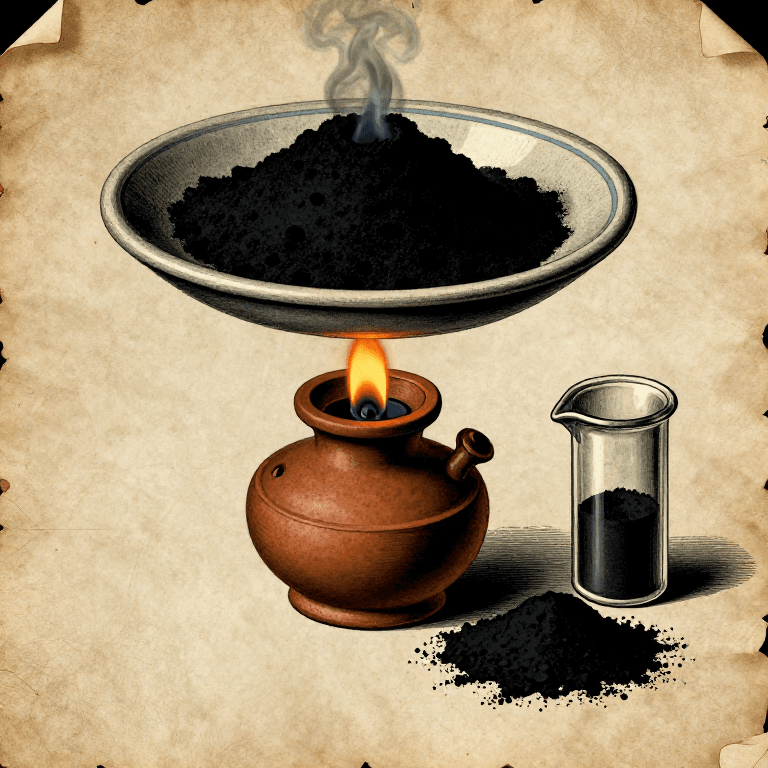
Making Lampblack Pigment — Collecting Carbon Soot from a Burning Flame
Charlie 작성
예술
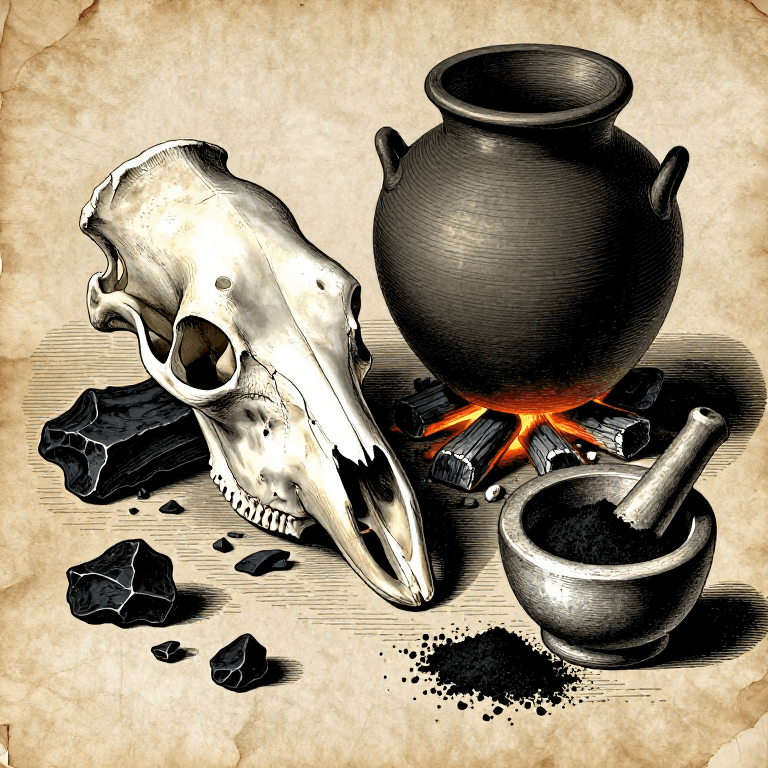
Making Bone Black Pigment — Calcining Animal Bones into the Warm Black of Old Master Painters
Charlie 작성
예술
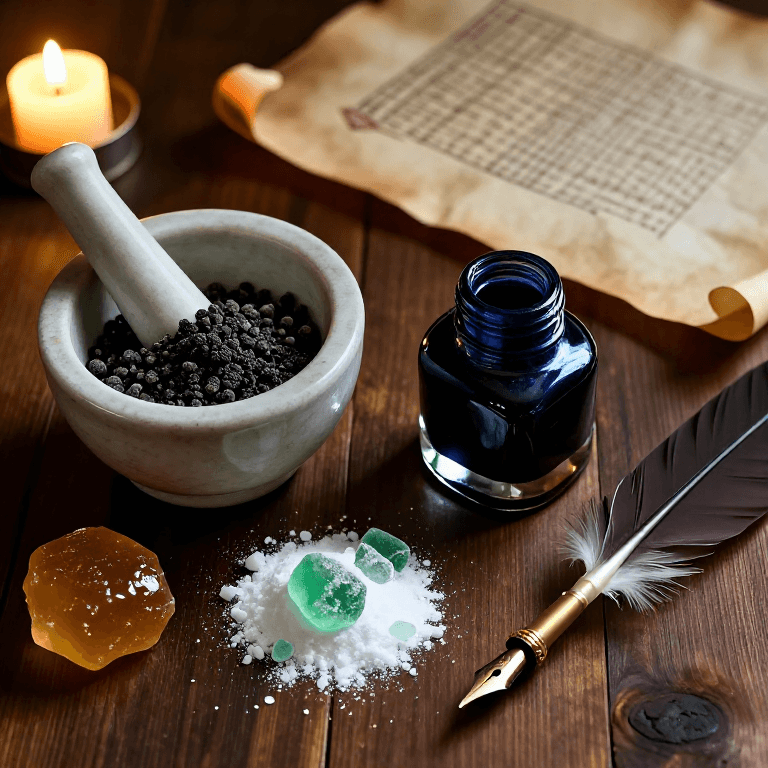
Making Iron Gall Ink from Oak Galls — Medieval Writing Ink
Charlie 작성
화학
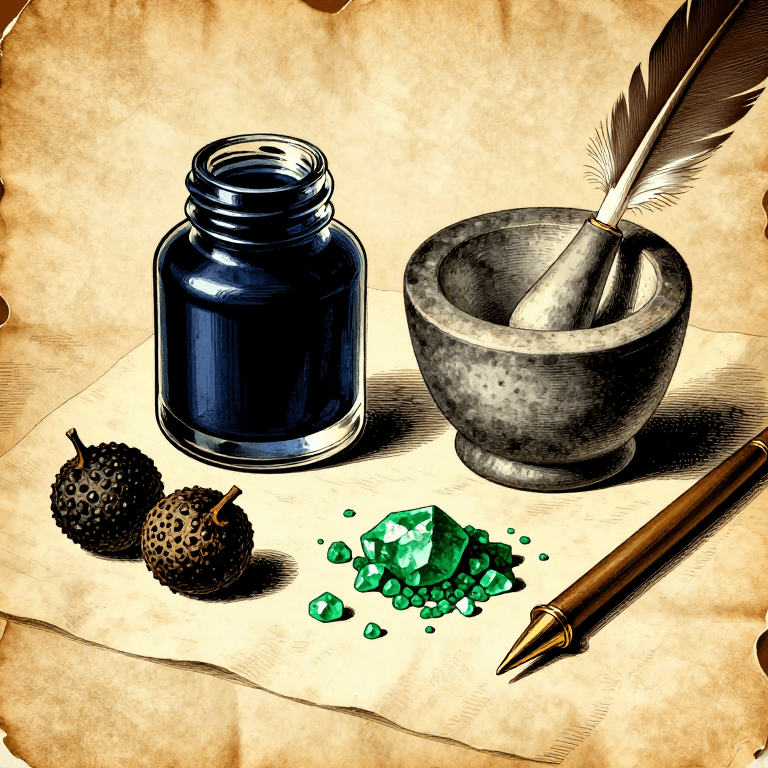
Making Iron Gall Ink from Oak Galls
Tex 작성
예술
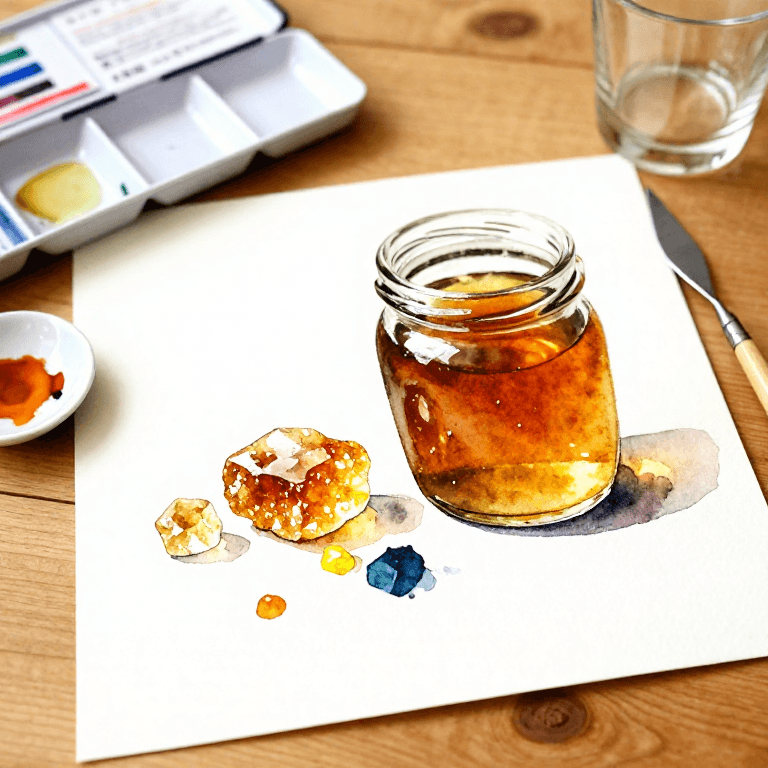
Making Watercolour Paint from Raw Pigments — Gum Arabic Binder
Charlie 작성
예술
Making Egg Tempera Paint — The Medieval Panel Painting Medium
Charlie 작성
예술
Making Charcoal from Hardwood — Pyrolysis in a Pit Kiln
Charlie 작성
화학
Making Raw and Burnt Umber — The Manganese Earth Pigments of Warm Shadow and Deep Brown
Charlie 작성
예술
Making Raw and Burnt Sienna — The Warm Iron Earth from Tuscany
Charlie 작성
예술
Making Gamboge Yellow — Preparing the Tree Resin Pigment of Southeast Asian Painters
Charlie 작성
예술
CC0 퍼블릭 도메인
이 블루프린트는 CC0로 공개되었습니다. 어떤 목적으로든 자유롭게 복사, 수정, 배포 및 사용할 수 있습니다.
제품 구매를 통해 메이커를 지원하세요. 판매자가 설정한 메이커 커미션 을 받거나, 이 블루프린트의 새로운 반복을 만들어 연결로 포함시킬 수 있습니다.