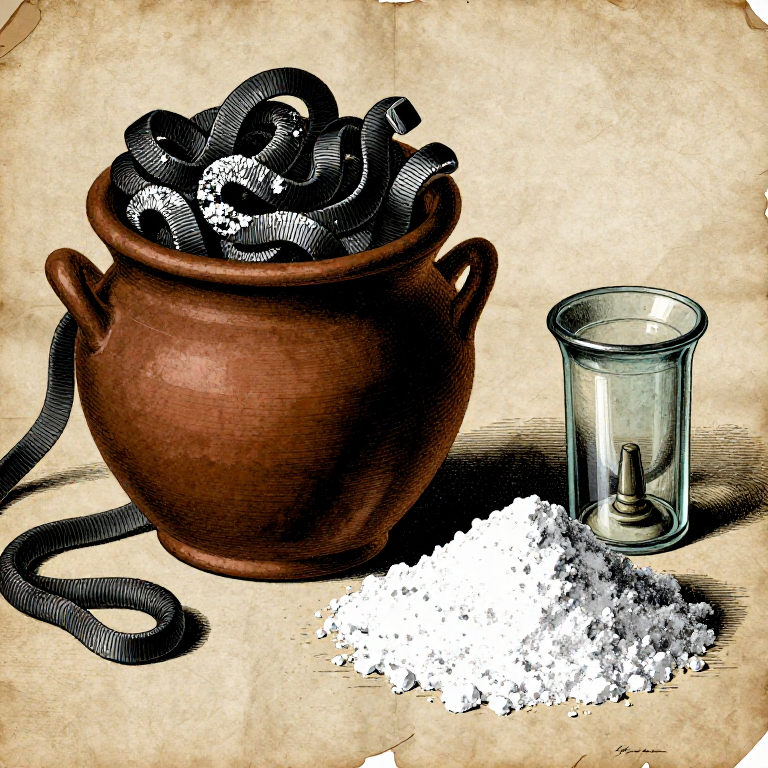

Making Lead White (Flake White) — The Dutch Stack Process for the Most Important Pigment in Oil Painting History
Lead white (basic lead carbonate, 2PbCO₃·Pb(OH)₂) was the only white pigment available to painters from antiquity until zinc white appeared in the late 18th century — and it remained the preferred white for oil painting well into the 20th century. No other white pigment matches its combination of opacity, warmth, buttery handling, and ability to form a tough, flexible paint film. The Greek historian Theophrastus described its manufacture around 300 BC, and the process changed remarkably little in over two thousand years.
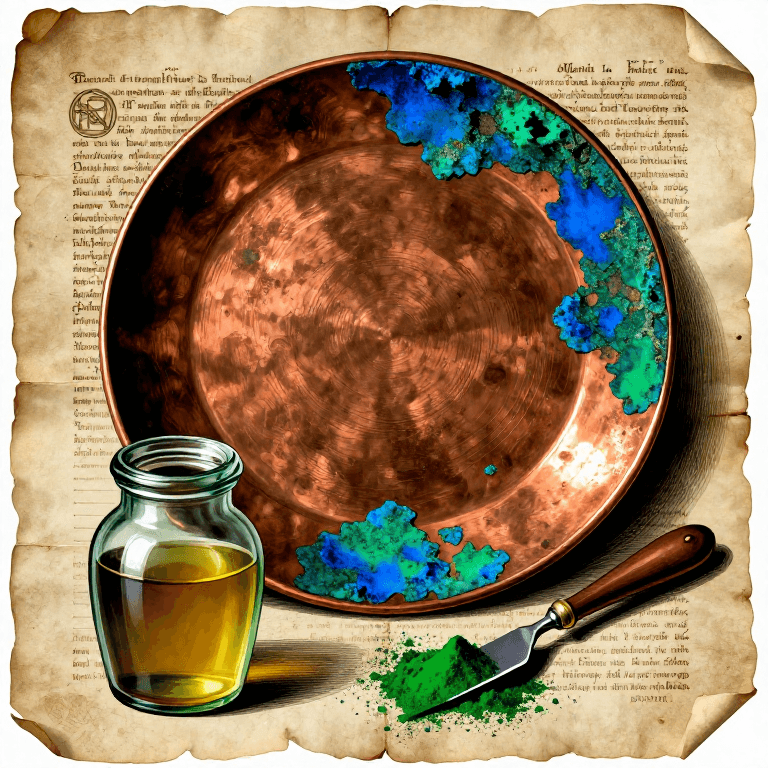
The Dutch stack process (stapelproces) was the industrial-scale version developed in the Netherlands by the 17th century. Lead strips are coiled and placed in earthenware pots with vinegar at the bottom. The pots are stacked in beds of composting horse dung, which generates gentle warmth (35-50°C) and carbon dioxide. Acetic acid vapour from the vinegar attacks the lead surface, forming lead acetate, which then reacts with CO₂ and moisture to form basic lead carbonate — the brilliant, dense white pigment.
SAFETY WARNING: Lead is a powerful cumulative neurotoxin. There is NO safe level of lead exposure. Lead white dust must NEVER be inhaled or ingested. All handling must be done with a P100 respirator, chemical splash goggles, and gloves. Never eat, drink, or smoke in the work area. Keep lead white WET during grinding to suppress dust. Wash hands and equipment thoroughly after use. Dispose of all waste water and materials as hazardous waste. Children and pregnant women must not be present during any stage of production. This blueprint is for historical and educational purposes — use extreme caution.
안내
Safety preparation
Safety preparation
MANDATORY SAFETY: Lead is a cumulative neurotoxin with NO safe exposure level. Before beginning, equip yourself with a P100 or FFP3 respirator (NOT a simple dust mask — lead particles are too fine), chemical splash goggles, and chemical-resistant gloves. Prepare your work area outdoors or in a dedicated, well-ventilated space that can be cleaned with wet wiping (never sweep — sweeping raises dust). Have wet rags available for immediate cleanup. Never eat, drink, or smoke in the work area. Keep all lead-containing materials WET whenever possible to suppress dust. Children and pregnant women must be excluded from the work area at all times.
필요한 도구:
P100 Respirator
Chemical Splash GogglesPrepare thin lead strips
Prepare thin lead strips
Obtain pure lead ingots and cast or beat them into thin sheets approximately 1-2 mm thick. Cut the sheets into strips roughly 5 cm wide and 30 cm long. Roll or coil each strip loosely into a spiral, leaving gaps between the layers so that air and acetic acid vapour can reach the maximum surface area. The thinner the lead and the more surface area exposed, the faster and more complete the corrosion will be. You need approximately 1-2 kg of lead to produce a useful quantity of pigment — roughly 500 g of lead white per kg of lead consumed.
이 단계의 재료:
Crude Lead Ingot (from galena smelting)2 kgSet up the corrosion pots
Set up the corrosion pots
Use unglazed earthenware pots or ceramic jars with a narrow ledge or internal support about one-third of the way up from the bottom. Pour wine vinegar into the bottom of each pot to a depth of 3-5 cm (the vinegar must NOT touch the lead). Place the coiled lead strips on the ledge above the vinegar level. The vinegar provides acetic acid vapour, which initiates the corrosion — without it, the lead would simply oxidise to litharge (lead monoxide, PbO), which is yellow, not white. Close each pot loosely with an earthenware lid — the lid should not be airtight, as CO₂ must be able to enter.
이 단계의 재료:
Wine Vinegar1 리터필요한 도구:
Ceramic Storage Jar with LidStack pots in composting horse dung
Stack pots in composting horse dung
Build a stack outdoors: lay a thick layer of fresh horse dung (15-20 cm), place a row of the loaded pots on top, cover with another layer of dung, then another row of pots, and so on. The stack should be covered on all sides with dung and protected from rain. The composting dung serves two critical chemical functions: (1) it generates gentle, steady warmth of 35-50°C as it decomposes, which accelerates the chemical reaction, and (2) the decomposition produces carbon dioxide (CO₂), which is the essential reagent that converts lead acetate into basic lead carbonate (the white pigment). Without the CO₂, only lead acetate would form — a soluble, non-pigment compound.
이 단계의 재료:
Fresh Stable Manure200 kgMonitor the corrosion over 4-12 weeks
Monitor the corrosion over 4-12 weeks
Leave the stack undisturbed for 4-12 weeks, checking the dung temperature periodically by inserting a hand. It should feel distinctly warm (35-50°C). If the dung cools and stops composting before the process is complete, add a fresh outer layer of dung to restart fermentation. After 6-8 weeks, open one test pot to check progress — the lead strips should be substantially or completely coated in a thick, white, flaky crust of basic lead carbonate. If significant metallic lead remains, re-seal and wait longer. Complete corrosion can take up to 12 weeks depending on temperature and ventilation.
Harvest, wash, and grind the lead white
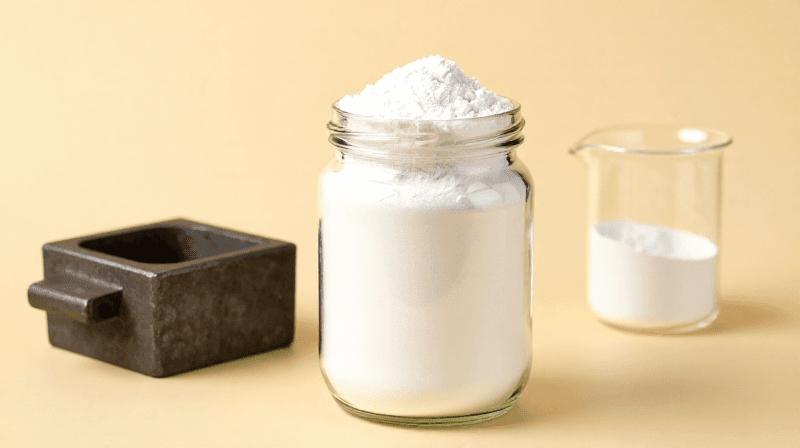
Wearing full protective equipment (respirator, goggles, gloves), remove the pots and scrape the white corrosion crust from the lead strips. Any remaining metallic lead can be re-used in future batches. Wash the white flakes several times with clean water to remove residual vinegar and impurities. Keep the pigment WET at all times during handling to prevent dust. Grind the wet flakes on a glass muller with a small amount of water until smooth, then spread the paste to dry in a well-ventilated area away from foot traffic. Once dry, store in sealed glass jars, clearly labelled as toxic. Lead white is supremely opaque, warm-toned, and produces the most beautiful, buttery oil paint of any white pigment — but it must always be handled with extreme caution.
필요한 도구:
Glass Muller
Clean Glass Jars with Lids재료
3- 1 리터플레이스홀더
- 200 kg플레이스홀더
연결된 블루프린트 재료
CC0 퍼블릭 도메인
이 블루프린트는 CC0로 공개되었습니다. 어떤 목적으로든 자유롭게 복사, 수정, 배포 및 사용할 수 있습니다.
제품 구매를 통해 메이커를 지원하세요. 판매자가 설정한 메이커 커미션 을 받거나, 이 블루프린트의 새로운 반복을 만들어 연결로 포함시킬 수 있습니다.