Współpraca
SZTUKA
Piękno i dobre samopoczucie
RZEMIOSŁO
KULTURA I HISTORIA
ROZRYWKA
ŚRODOWISKO
JEDZENIE I NAPOJE
INŻYNIERIA ODWROTNA
NAUKI
LEKKOATLETYKA
TECHNOLOGIA
URZĄDZENIA DO NOSZENIA
Water-and-Air Tube Churn: Two Tubes of Warm or Cold Water and an Open Air Tube Stand by the Wall, Blades Sweep Under and Between
Buttercup

Autor

Buttercup

12. listopad 2026IE
10
0
0
0
0

Water-and-Air Tube Churn: Two Tubes of Warm or Cold Water and an Open Air Tube Stand by the Wall, Blades Sweep Under and Between

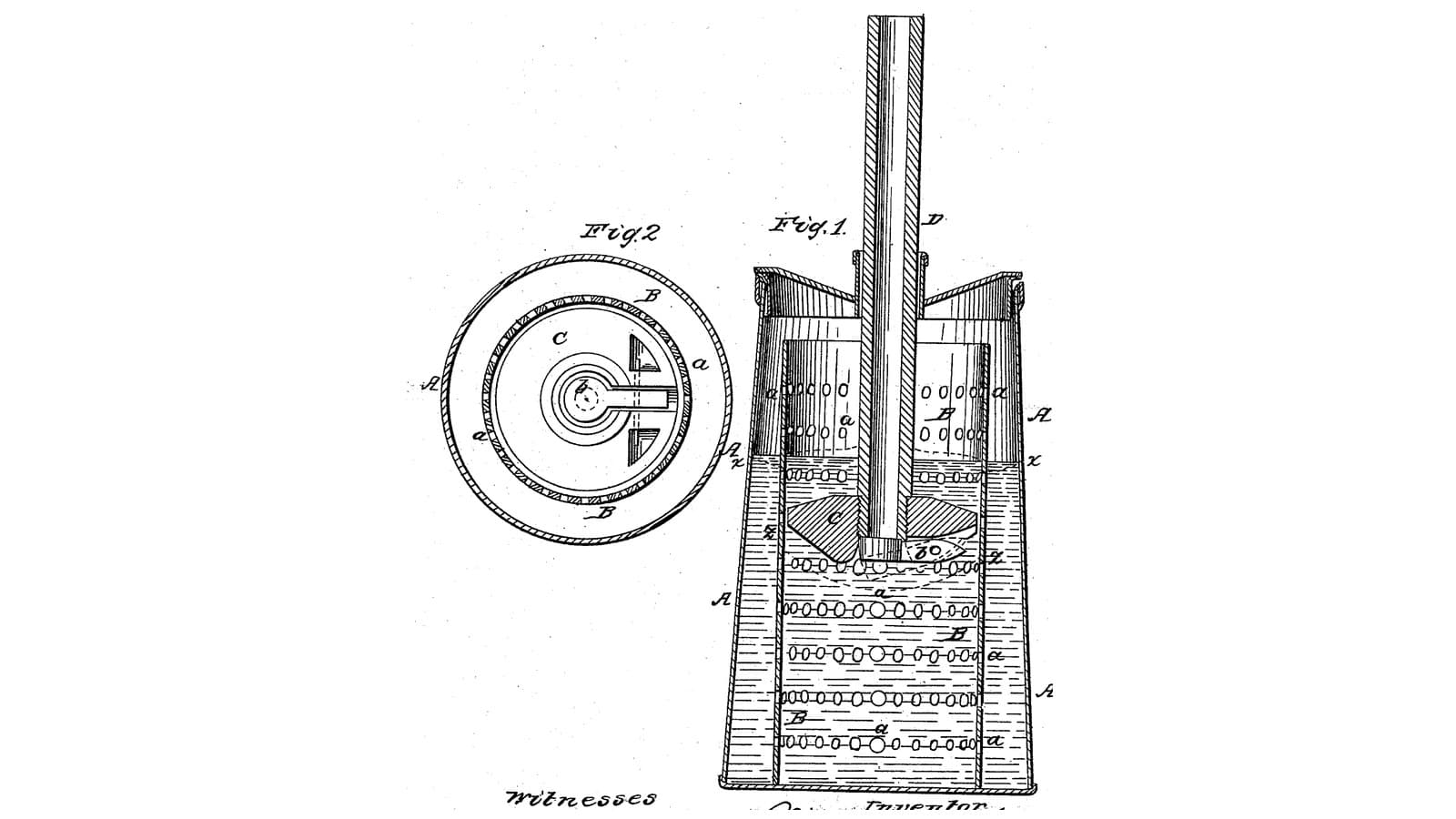
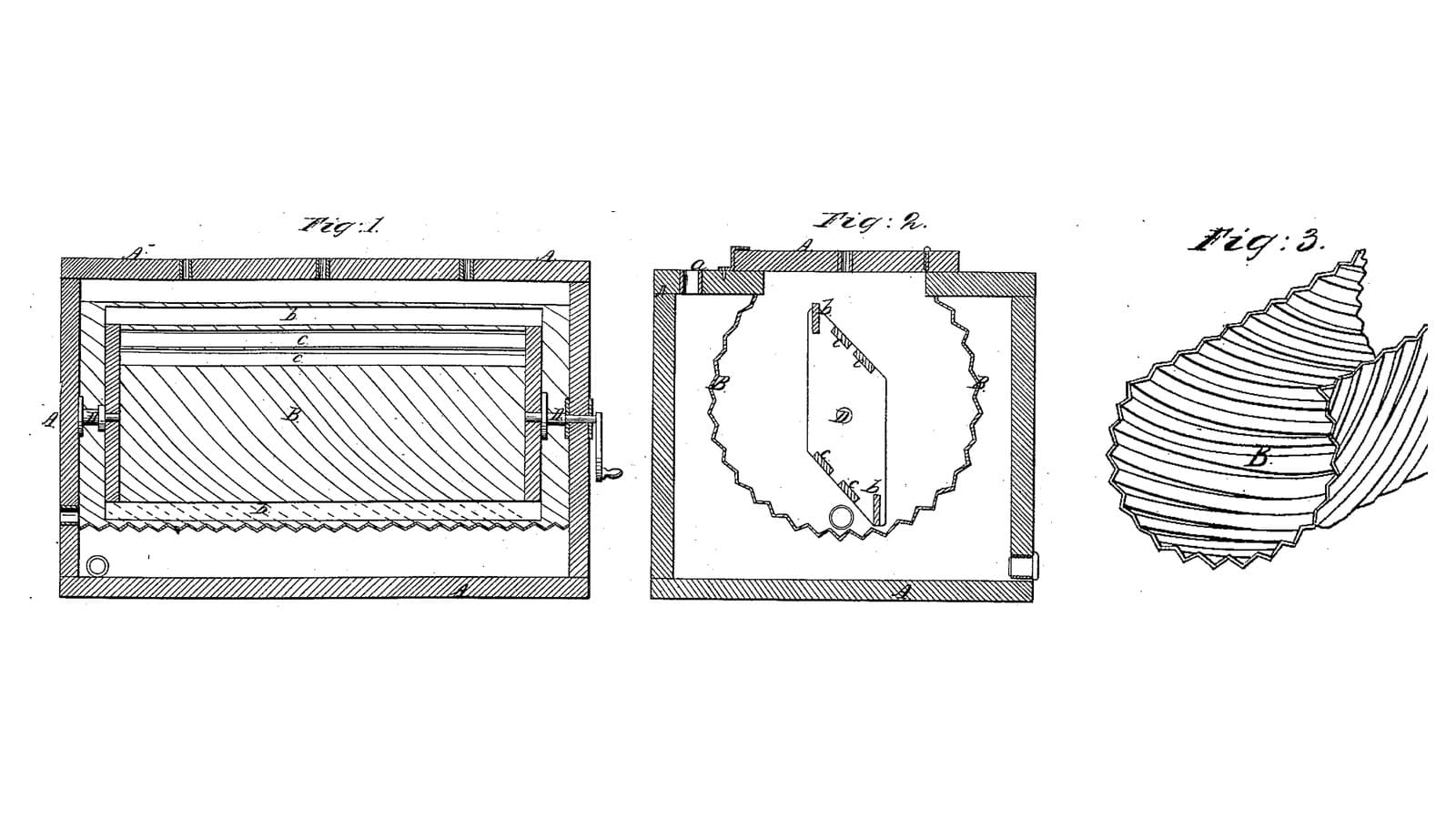
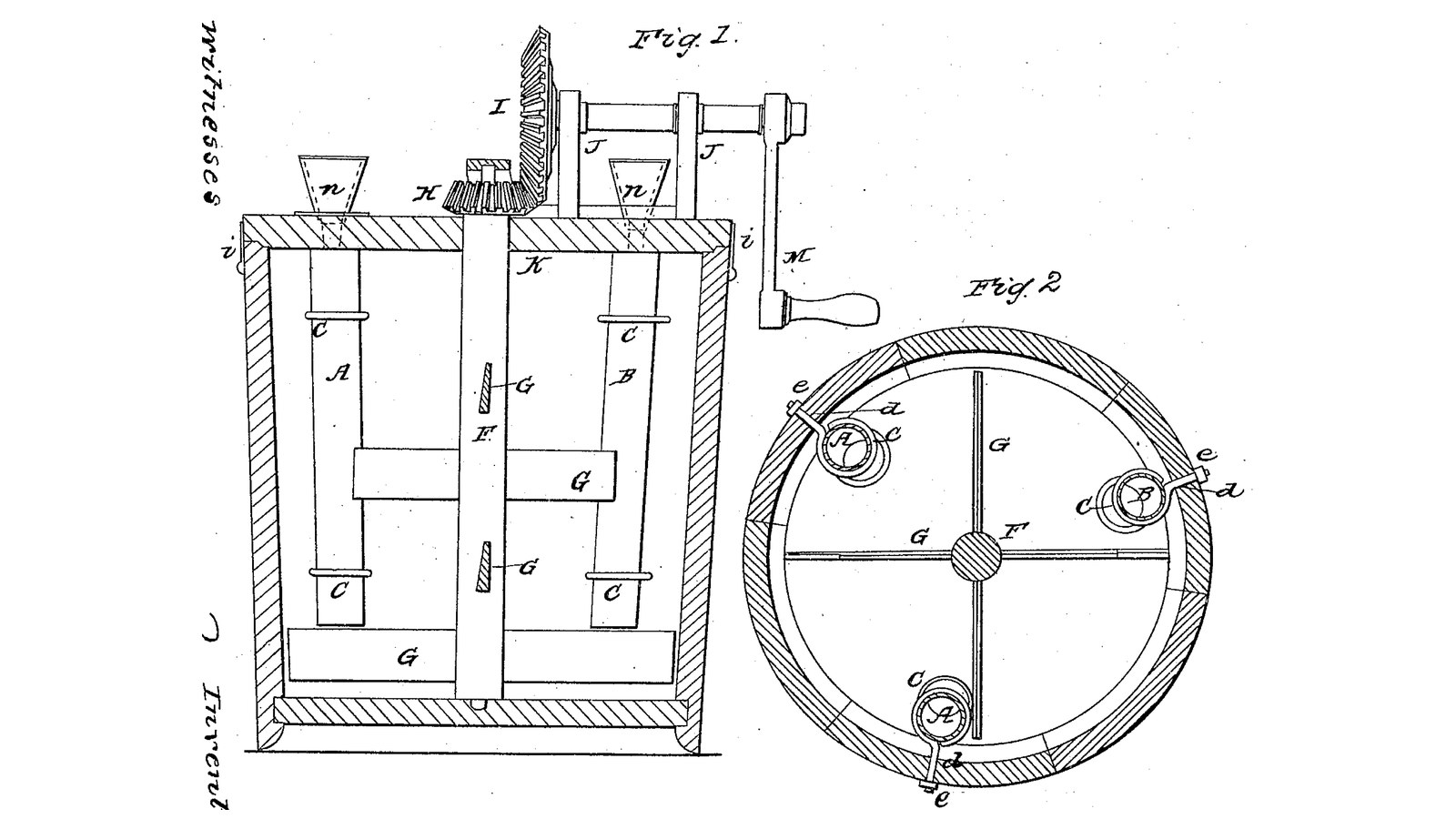
Thomas A. Jebb of Buffalo, New York, received US 32,697, dated 2 July 1861, for a geared churn with three tubes standing just inside its wall. Two are closed at the bottom and filled with cold water or ice in summer, warm water in winter, to bring the cream to the right warmth; the third is open at both ends, and the long lower dash blade, sweeping under its foot, draws air down it into the cream. The tubes also split the swirling cream, part through the gap by the wall and part back toward the shaft. Funnels in the cover feed the tubes without lifting it. The gap between the tubes and the wall is the patent's; every other size here is ours.
Średniozaawansowany
About 2 days

Instrukcje

1

Tempering the cream from inside

Wczytywanie notatnika Jupyter…
2

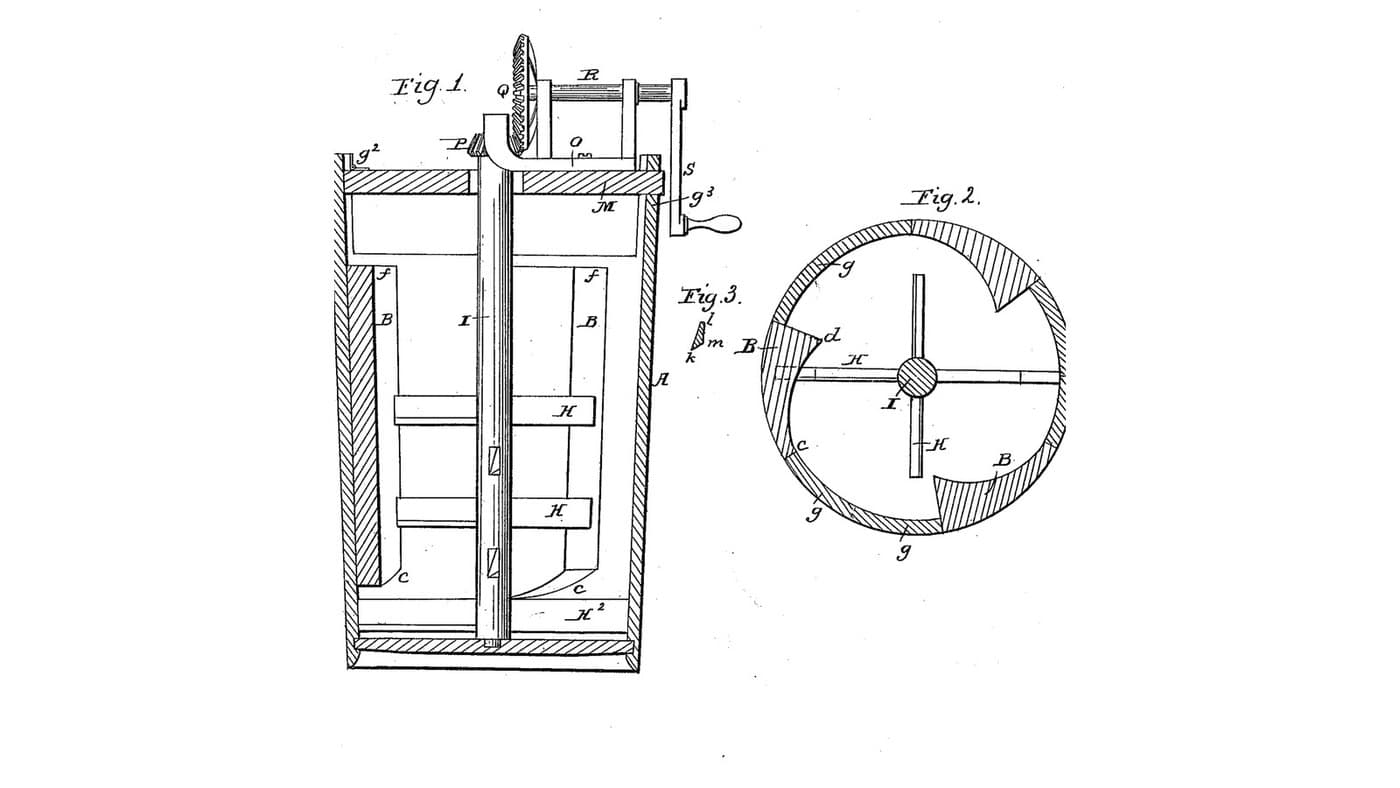
Jebb's earlier churn, a year and a half before

In his first churn Jebb split the current with thick staves and swept a long blade beneath them. Here tubes do the splitting, and also temper and air the cream.
3

Read US 32,697

"The nature of this invention relates to the application and use of three tubes (A, A,) and (B) so arranged within the churn as to serve the threefold purpose of, 1st, breaking and dividing the body of cream, as it is set in motion by the dash blades, 2d, graduating the temperature of the cream by the use of warm or cold water in the tubes (A, A,) and 3d, ventilating, by causing a current of air to pass down the tube (B,) into the midst of the cream."
4

Print the tube plugs (two)

A plug sealing the bottom of a water tube: 37.6 mm across, 15 long, with a 42 mm lip. Print two; seal them in with silicone. PETG, 0.2 mm layers, 30 % infill, 4 walls.
Plik projektowySTLCC0 - Free
5

Print the rings C (six)

A ring round a tube: 50 mm across, 40.2 bore, 12 high, with a boss and a 5.2 mm hole for the shank. Print six. PETG, 0.2 mm layers, 30 % infill, 4 walls.
Plik projektowySTLCC0 - Free
6

Tubes A, A and B, rings C, shanks d and nuts e

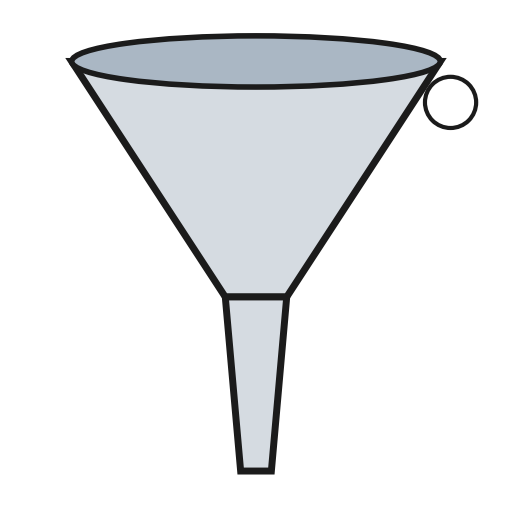
Use a 20-litre food-grade bucket as the churn. Cut three 40 mm stainless tubes 315 mm long. Seal a printed plug into the bottom of two of them, the water tubes A; leave the third, the air tube B, open at both ends. Stand them a third of a turn apart round the inside, 40 mm off the floor, their outsides 15 mm from the wall all the way up (the patent's half to three quarters of an inch), leaning with the wall. Put two rings C on each, 110 and 280 mm up, run an M6 threaded rod shank d from each ring out through a hole in the wall, and tighten a nut e and washer on it outside, sealed with silicone.

Materiały do tego kroku:

Wiadro 20-litroweWiadro 20-litrowe1 sztuka
Rura ze stali nierdzewnejRura ze stali nierdzewnej1 sztuka
Filament PETGFilament PETG1 sztuka
Uszczelniacz silikonowyUszczelniacz silikonowy1 sztuka
Pręt gwintowanyPręt gwintowany1 sztuka
Nakrętka sześciokątnaNakrętka sześciokątna12 sztuk
Podkładka płaskaPodkładka płaska12 sztuk

Potrzebne narzędzia:

Drukarka 3D z filamentem (FDM)Drukarka 3D z filamentem (FDM)
Piła do metaluPiła do metalu
Pilniki (pilnik ręczny)Pilniki (pilnik ręczny)
Wiertarko-wkrętarka akumulatorowaWiertarko-wkrętarka akumulatorowa
Zestaw wiertełZestaw wierteł
Klucz nastawnyKlucz nastawny
Miara zwijanaMiara zwijana
7

Print the step

The step on the floor: 40 mm across, 12 high, with a 16.8 mm hole 8 deep. PETG, 0.2 mm layers, 30 % infill, 4 walls.
Plik projektowySTLCC0 - Free
8

Shaft F and dash blades G

Cut a 16 mm stainless shaft 440 mm long. Mortise three hardwood dash blades G 24 x 8 mm through hardwood hubs on it: the lower 250 mm long, 20 mm above the floor, sweeping under the tubes' ends; the other two 140 mm long, at 150 and 260 mm, turned 60 and 120 degrees from it, sweeping between the tubes. Stand the shaft in the step.

Materiały do tego kroku:

Pręt ze stali nierdzewnejPręt ze stali nierdzewnej1 sztuka
Deska z drewna liściastegoDeska z drewna liściastego1 sztuka
Kołki z twardego drewnaKołki z twardego drewna1 sztuka
Klej do drewnaKlej do drewna1 sztuka

Potrzebne narzędzia:
Pilarka stołowaPilarka stołowa
Komplet dłut do drewnaKomplet dłut do drewna
Wiertarko-wkrętarka akumulatorowaWiertarko-wkrętarka akumulatorowa
Zestaw wiertełZestaw wierteł
Piła do metaluPiła do metalu
9

Print the pinion H

The pinion on the shaft's top: 14 teeth, module 2.5, 16.2 mm bore. PETG, 0.2 mm layers, 30 % infill, 4 walls.
Plik projektowySTLCC0 - Free
10

Print the wheel I

The driving wheel: a crown wheel of 42 teeth, module 2.5, 16.2 mm bore. PETG, 0.2 mm layers, 30 % infill, 4 walls.
Plik projektowySTLCC0 - Free
11

Cover K, tunnels n, frame J, wheels H and I, winch M, hooks l

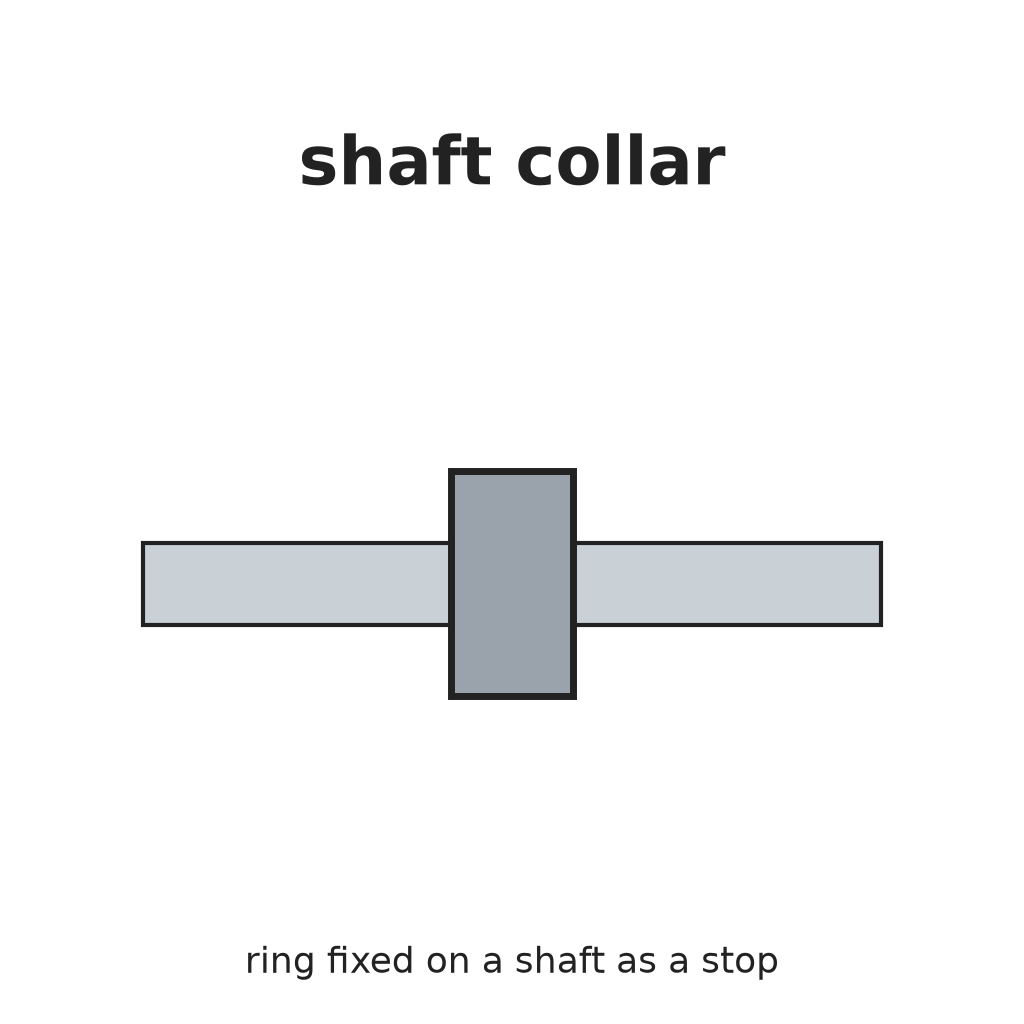
Cut a 12 mm HDPE cover K to the bucket's top, bored 16.8 mm at the centre and 21 mm over each tube's mouth. Set a small kitchen funnel in each of those holes, its spout reaching down into the tube, as the tunnels n. Pin the pinion H on the shaft 40 mm above the cover. Screw two hardwood blocks 50 x 25 x 118 mm, the frame J, to the cover 60 and 125 mm from the centre, bored 16.6 mm across 93 mm up; run a 16 mm stainless shaft 150 mm long through them with the wheel I pinned on meshing H, a shaft collar, and a winch M of mild steel flat bar, 100 mm throw, with a hardwood handle. Fix two hooks and eyes l to hold the cover to the bucket.

Materiały do tego kroku:

Płyta HDPEPłyta HDPE1 sztuka
Lejek kuchennyLejek kuchenny3 sztuk
Deska z drewna liściastegoDeska z drewna liściastego1 sztuka
Pręt ze stali nierdzewnejPręt ze stali nierdzewnej1 sztuka
Shaft CollarShaft Collar1 sztuka
ZawleczkaZawleczka3 sztuk
Płaskownik ze stali miękkiejPłaskownik ze stali miękkiej1 sztuka
Kołki z twardego drewnaKołki z twardego drewna1 sztuka
Wkręty do drewnaWkręty do drewna6 sztuk
HaftkaHaftka2 sztuk
Filament PETGFilament PETG1 sztuka

Potrzebne narzędzia:

Drukarka 3D z filamentem (FDM)Drukarka 3D z filamentem (FDM)
KompasKompas
WyrzynarkaWyrzynarka
Zestaw wierteł łopatkowychZestaw wierteł łopatkowych
Wiertarko-wkrętarka akumulatorowaWiertarko-wkrętarka akumulatorowa
Zestaw wiertełZestaw wierteł
Piła do metaluPiła do metalu
Pilniki (pilnik ręczny)Pilniki (pilnik ręczny)
Imadło warsztatoweImadło warsztatowe
Zestaw wkrętakówZestaw wkrętaków
12

The build in 3D

FreeCAD model of this build, the bucket cut open: the two closed water tubes and the open air tube on their rings and shanks, the shaft with the long lower blade under the tubes and two short blades between them, the cover with its funnels, and the gearing and winch.
Plik projektowyBLENDCC0 - Free
13

Temper and churn

Pour about 10 litres of heavy cream into the bucket and hook on the cover. Pour cold water or ice water into the two water tubes through their funnels if the cream is warm, warm water if it is cold; each filling moves the cream only a degree or two, so start with cream near 15 °C, checked with the thermometer, and refill the tubes as it drifts. Leave the air tube's funnel open. Turn the winch steadily, timing it. When the butter comes, unhook and lift off the cover and gearing, lift out the shaft, take out the butter, pour the buttermilk into a bowl, wash the butter in cold water until it runs clear, salt and weigh it. Empty the water tubes.

Materiały do tego kroku:

Śmietanka kremówkaŚmietanka kremówka10 l
WodaWoda1 sztuka
Sól morska gruboziarnistaSól morska gruboziarnista1 sztuka

Potrzebne narzędzia:

Termometr z sondą pozostawianą w potrawieTermometr z sondą pozostawianą w potrawie

StoperStoper
Cyfrowa waga kuchennaCyfrowa waga kuchenna
Duża misa ze stali nierdzewnejDuża misa ze stali nierdzewnej
14

Troubleshooting

Tube churn troubleshooting.

Flow

Loading...
15

History and honest limits

**Thomas A. Jebb** of Buffalo, Erie County, New York, US 32,697, 2 July 1861, "Churn". He claimed "the described arrangement of the water tubes A, A, air tube B, and dash blades G, G, G within the churn tub, so that a space may be left between the said tubes and the sides of the churn tub, and so that the lower dash blade shall revolve under the lower ends of said tubes, while the other dash blades shall revolve in the space between said tubes". His text calls the shaft both F and E. His tub widened toward the bottom; ours, a bucket, widens toward the top, and our tubes lean with it. The gap of half to three quarters of an inch is his; every other size here is ours.

Materiały

21

Wymagane narzędzia

18

Pliki projektowe

6

CC0 Domena publiczna

Ten plan jest udostępniany na licencji CC0. Możesz go swobodnie kopiować, modyfikować, rozpowszechniać i wykorzystywać do dowolnych celów, bez konieczności uzyskiwania zgody.

Wesprzyj Makera kupując produkty przez jego plan, za co zarabia Prowizja Makera ustalony przez sprzedawców, lub stwórz nową iterację tego planu i dołącz go jako połączenie w swoim własnym planie, aby dzielić się przychodami.

Dyskusja

(0)

Zaloguj się aby dołączyć do dyskusji

Ładowanie komentarzy...