
艺术
美容与健康
工艺
文化与历史
娱乐
环境
食品与饮料
绿色未来
逆向工程
科学
体育
技术
可穿戴设备
Making a Wooden Ladder — Rung Mortises and Wedged Tenons
Woody

创建者

Woody

26. 五月 2026NO
13
0
0
0
0

Making a Wooden Ladder — Rung Mortises and Wedged Tenons

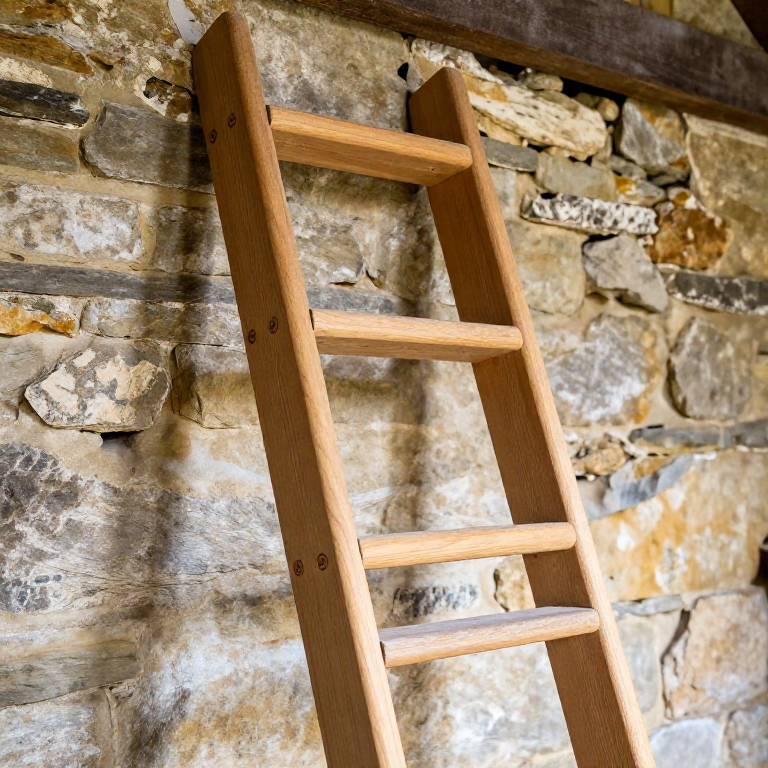
A wooden ladder is one of the most essential structures in any building project — and one of the most dangerous if poorly made. A rung ladder consists of two long poles (the stiles) with a series of horizontal rungs mortised through them. Every rung is a structural beam carrying the full weight of the climber, and every joint must hold under dynamic loading — the shock of a foot landing on a rung is several times the climber's static weight.

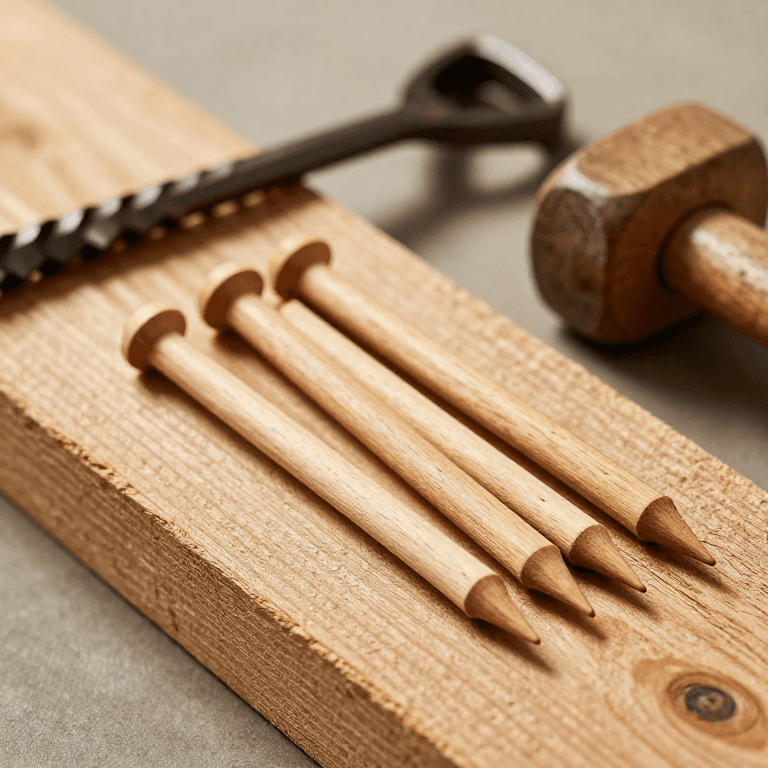
The stiles must be straight-grained poles, ideally from a naturally straight tree like ash, spruce, or larch. Ash is the traditional choice — strong, flexible, and light for its strength. The rungs are short pieces of hard, dense wood — oak or beech — with tenons that pass through the stile and are wedged on the far side. The wedge locks the rung permanently and prevents the joint from working loose under repeated loading.

A well-made wooden ladder lasts for decades and has one advantage over metal: it does not conduct electricity. For this reason, wooden ladders remain in use by electricians even today. The technique described here — through-mortised, wedged rungs — is the strongest form of ladder construction and has been used unchanged since at least the Bronze Age.

中级
4-6 hours

说明

1

Select and prepare the stiles

Choose two straight poles of ash, spruce, or larch — each 3-5 metres long and about 7-10 cm in diameter. The grain must run the full length without knots or significant deviation. Remove the bark with a drawknife and let the poles dry for a few weeks if possible — green stiles shrink around the rungs as they season, tightening the joints. Mark the rung positions on both stiles simultaneously, spacing them 25-30 cm apart. Lay the stiles side by side and transfer each mark across to ensure the rungs align exactly.

所需工具:

DrawknifeDrawknife
2

Bore the rung mortises

At each marked position, bore a hole through the stile using a hand auger. The hole diameter must match the rung tenon — typically 25-30 mm. Bore perpendicular to the face of the stile, not angled. Some builders taper the ladder by setting the stiles slightly closer at the top than the bottom — in this case, the rungs get progressively shorter toward the top and the holes are angled slightly inward. Keep the boring chips clear and check that each hole goes cleanly through both sides of the stile.

所需工具:

Hand AugerHand Auger
3

Turn or shape the rungs

Cut rungs from dense hardwood — oak or beech. Each rung should be about 40-50 cm long (the width of the ladder plus the thickness of both stiles plus 2-3 cm for protruding tenons on each side). The central section is round or oval, about 30-35 mm diameter — comfortable to grip and strong enough to bear weight. The ends are shaped into round tenons that match the bored holes. Shave the tenons with a drawknife, checking the fit in a test hole frequently. The fit should be snug — not so tight that it splits the stile, not so loose that it rattles.
4

Assemble the ladder

Lay one stile flat and insert all the rungs into their holes. Then lift the second stile and push it down onto the protruding rung tenons. This is easiest with two people — one holds the stile while the other aligns and seats each rung. Tap each rung home with a mallet until the tenons protrude evenly on the outer face of both stiles. Check that the ladder lies flat and does not twist — sight along its length from one end.

所需工具:

Wooden MalletWooden Mallet
5

Wedge the rung tenons

Split a thin hardwood wedge for each protruding tenon. Use a chisel to make a shallow saw cut across the end of each tenon (perpendicular to the grain of the stile to avoid splitting it). Drive the wedge into this cut with a mallet. The wedge expands the tenon inside the hole, locking it permanently. Trim the excess tenon and wedge flush with the face of the stile using a sharp chisel or saw. Each wedged joint is now mechanically locked — it cannot pull out even under heavy load.
6

Test and inspect every joint

Before use, inspect every rung joint carefully. Lean the ladder against a wall at the correct angle (about 75 degrees — one metre out from the wall for every four metres of height). Climb slowly, putting full weight on each rung in turn. Listen for creaking — a creaking joint means the tenon is loose and the wedge has not expanded it fully. Any suspect joint must be re-wedged or the rung replaced. A ladder failure at height causes serious injury. Do not use a ladder with even one questionable rung.

所需工具

3

已连接蓝图材料

CC0 公共领域

此蓝图以 CC0 协议发布。你可以自由复制、修改、分发和使用此作品,无需征得许可。

通过购买蓝图中的产品支持创客,他们将获得 创客佣金 (由供应商设定),或创建此蓝图的新版本并将其作为连接包含在你自己的蓝图中以分享收入。

讨论

(0)

登录 加入讨论

加载评论中...